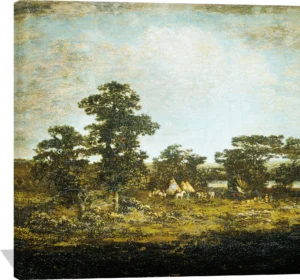
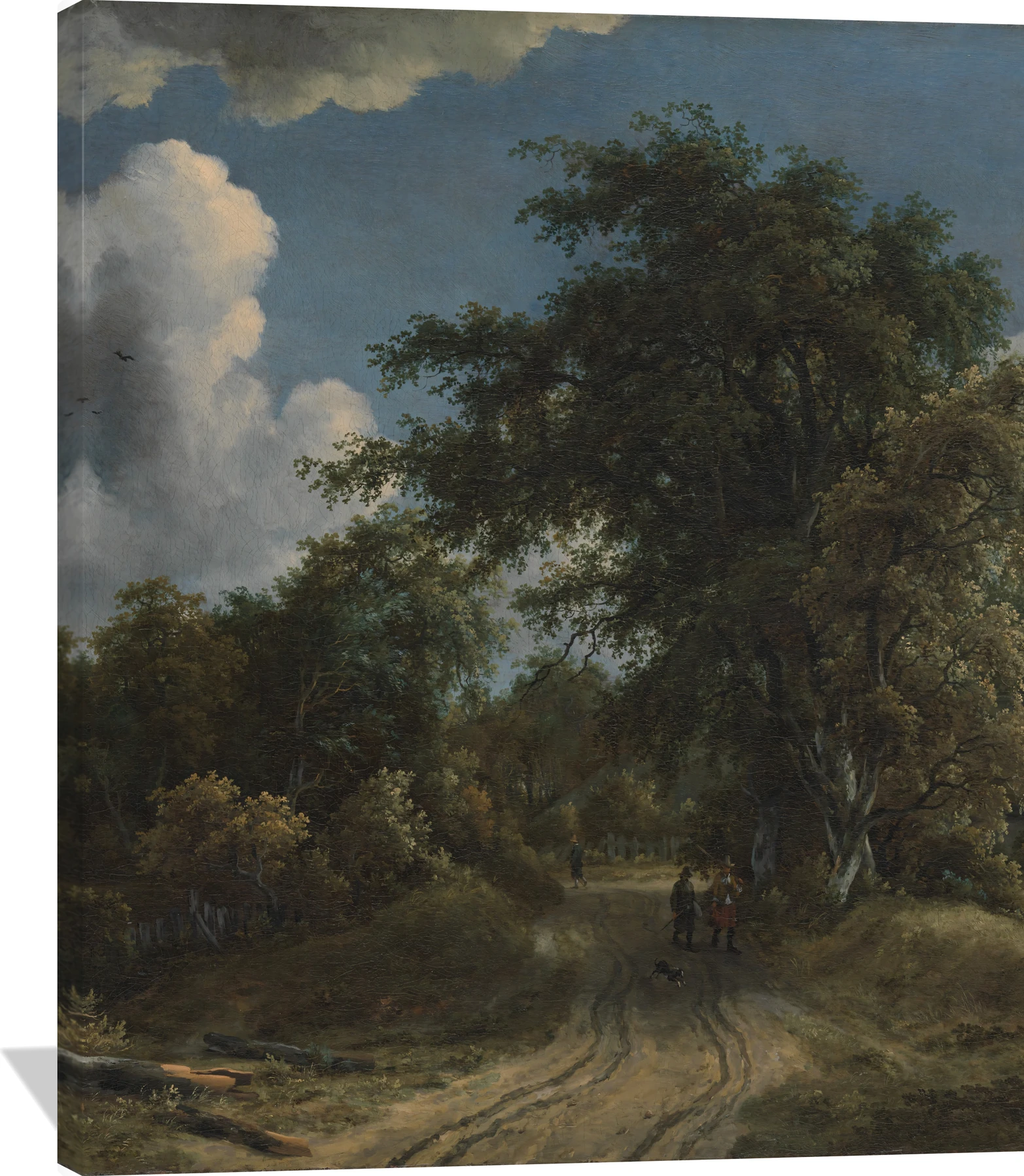
Meyndert Hobbema’s Woodland Road canvas captures the serene beauty of a sunlit country path winding through towering oaks beneath a vast, cloud-strewn sky. Earthy greens, warm browns, and soft blues blend in a masterful play of light and shadow, evoking the quiet rhythm of nature after rain. The gentle movement of figures along the road adds depth and life to this tranquil landscape.
This classic Dutch wall art brings timeless calm and natural elegance to any space. Ideal as a statement canvas print for a living room, study, or entryway, Woodland Road invites reflection and a sense of peaceful escape with every glance.
Meyndert Hobbema (1638–1709), a Dutch painter born and active in Amsterdam, is celebrated as one of the foremost landscape artists of the Dutch Golden Age. Closely associated with the circle of Jacob van Ruisdael, whose influence is evident in his early development, Hobbema forged a distinctive vision that set his work apart within the flourishing 17th‑century Dutch art scene.
Artistic Style
Hobbema’s paintings are defined by their balanced compositions, naturalistic detail, and luminous depiction of the Dutch countryside. His mastery of light and shadow, combined with a keen sensitivity to atmospheric effects, allowed him to elevate everyday rural scenery into evocative, contemplative works. He often emphasized depth through winding paths, reflective water surfaces, and carefully arranged clusters of trees, creating landscapes that feel both intimate and expansive.
Subjects and Notable Contributions
Known for forested lanes, watermills, and rustic village views, Hobbema brought enduring charm to subjects drawn from ordinary life. His works such as The Avenue at Middelharnis demonstrate a remarkable ability to structure space with clarity and rhythm, showcasing his signature precision and a subtle sense of movement. These compositions became influential models for later landscape painters across Europe.
Cultural and Historical Significance
Though not widely celebrated during his lifetime, Hobbema’s paintings came to be highly valued in the centuries that followed, admired for their authenticity and poetic restraint. Today, he is recognized as a key figure in Dutch landscape painting, contributing significantly to the genre’s evolution. His refined portrayal of rural environments, along with his enduring influence on subsequent generations, secures his place as one of the most important landscape artists of the period.