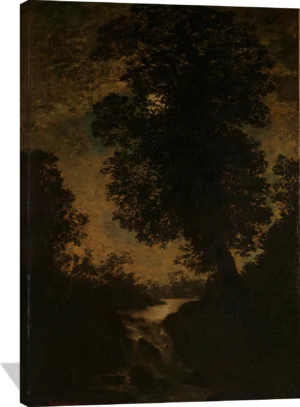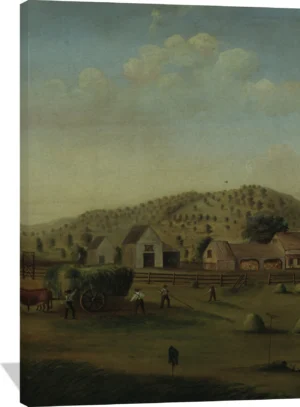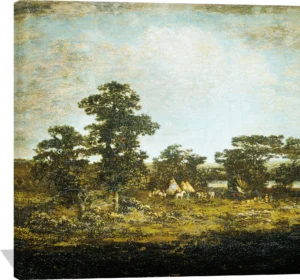

The Jacob van Ruisdael Wheat Fields canvas captures the serene majesty of the Dutch countryside under a vast, cloud-filled sky. Soft golden fields stretch toward a distant horizon, framed by earthy browns, muted greens, and luminous blues that evoke both calm and grandeur. Ruisdael’s masterful brushwork brings movement to the clouds and quiet rhythm to the land below.
This fine art canvas print infuses any living room, study, or entryway with timeless elegance and natural tranquility. A classic piece of wall art, Wheat Fields reflects the enduring beauty of the 17th-century landscape tradition, making it a refined focal point for any sophisticated interior.
Jacob van Ruisdael (Dutch, Haarlem 1628/29–1682 Amsterdam) stands as one of the most influential landscape painters of the Dutch Golden Age, celebrated for transforming the genre into a vehicle for emotional depth and atmospheric drama.
Artistic Style
Ruisdael’s work is distinguished by a masterful command of light, texture, and natural detail. His paintings often balance meticulous observation with poetic intensity, creating landscapes that feel both real and profoundly expressive. He is especially known for his dynamic skies, deep tonal contrasts, and the sense of grandeur he brought to ordinary rural scenes.
Subjects and Themes
His subjects range from windmills and woodland paths to waterfalls, dunes, and sweeping panoramas. Even in tranquil settings, Ruisdael infused his compositions with a powerful emotional resonance, often using weather, shadow, and scale to evoke themes of impermanence and the sublime. Works such as his dramatic seascapes and richly wooded landscapes established new standards for the depiction of nature.
Contribution and Legacy
Ruisdael played a transformative role in elevating landscape painting within European art. His ability to capture nature with both accuracy and imagination influenced generations of artists, from his contemporaries in the Netherlands to later Romantic painters. Today he is regarded as a foundational figure whose vision helped define the visual identity of the Dutch Golden Age.
Ruisdael’s enduring appeal lies in his ability to combine technical brilliance with a profound sense of atmosphere, making his works timeless studies of nature’s power and beauty.