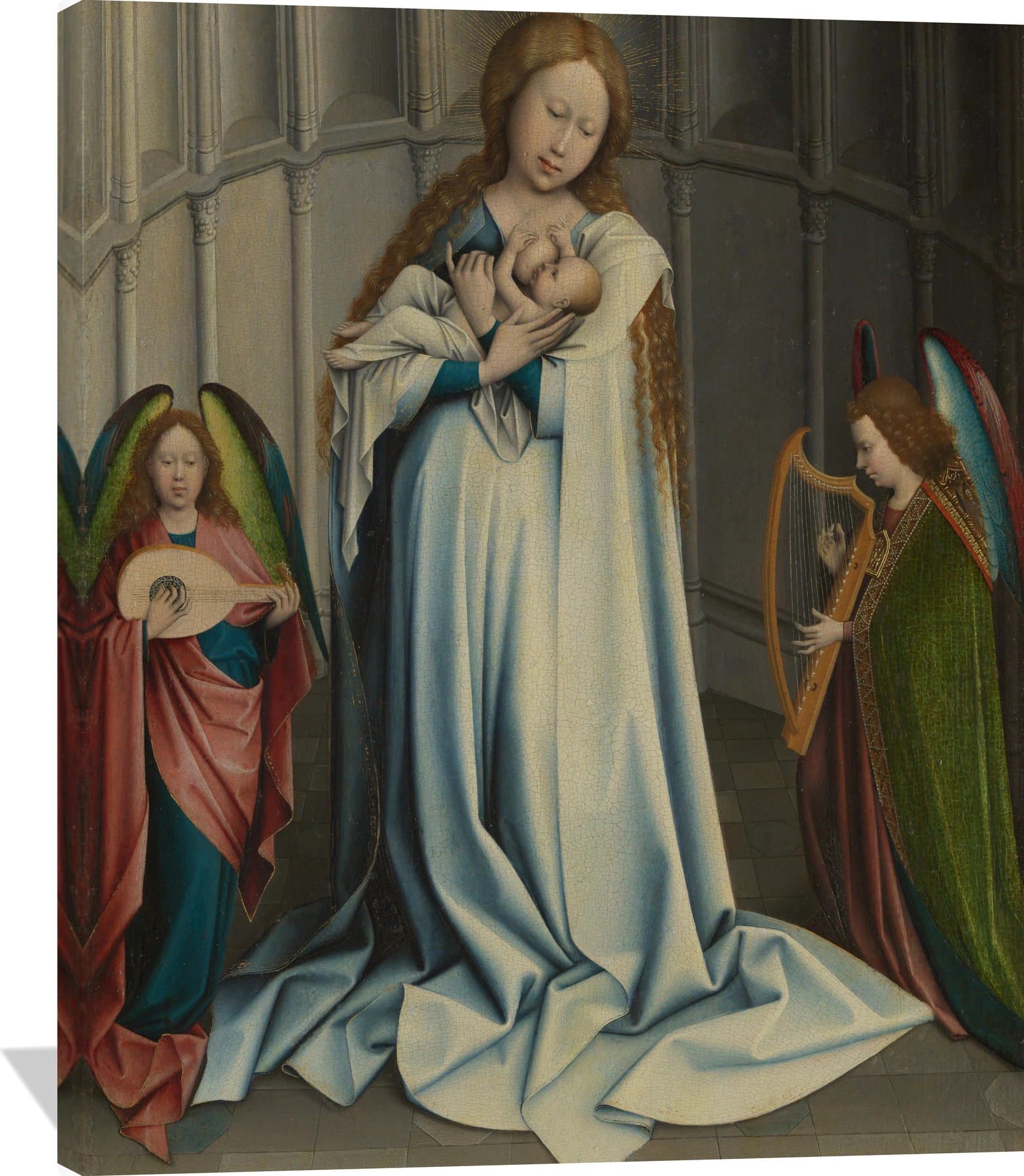
The Robert Campin Virgin and Child in an Apse canvas captures a moment of serene devotion, rendered in soft tones of ivory, blue, and rose. Campin’s masterful use of light and texture gives the sacred scene a quiet intimacy, as the Virgin cradles the Child amid graceful folds of drapery and angelic presence. The vertical composition and Gothic architectural backdrop lend timeless depth and elegance.
This premium canvas print brings a sense of harmony and reverence to any space. Ideal for a living room, study, or entryway, this exquisite wall art invites reflection and calm through its luminous detail and spiritual grace.
Robert Campin, often identified with the Master of Flémalle, stands as one of the earliest pioneers of Northern Renaissance painting. Active in Tournai during the early fifteenth century, he helped establish the foundations of the Netherlandish realist tradition that would shape generations of European art.
Artistic Style
Campin is renowned for his meticulous attention to detail, naturalistic textures, and sensitive handling of light. His paintings reveal an early mastery of oil technique, allowing for subtle tonal transitions and richly rendered surfaces. Everyday objects, domestic interiors, and refined facial expressions are depicted with striking clarity, offering viewers an intimate, almost tactile sense of realism.
Notable Contributions
Often considered a precursor to both Rogier van der Weyden and Jan van Eyck, Campin played a crucial role in developing the visual language that would define Northern Renaissance art. His workshop produced influential works such as the celebrated Mérrode Altarpiece, which showcases his ability to merge sacred themes with contemporary settings. This blend of spiritual content and ordinary life became a hallmark of early Netherlandish painting.
Subjects and Themes
Campin’s compositions typically center on religious narratives portrayed with an intimate, domestic sensibility. Interiors appear lived-in, objects hold symbolic resonance, and figures convey a quiet emotional depth. His work reflects a shift toward the humanization of sacred stories, bringing divine scenes into familiar, real-world environments. This approach gave viewers a more personal connection to the themes depicted, a quality that remains one of his most distinctive achievements.
Cultural Significance
As one of the earliest masters to embrace the expressive potential of oil paint, Campin helped shape the trajectory of Western art. His innovations in realism, combined with his subtle yet powerful storytelling, mark him as a foundational figure in Northern European painting. Today, he is celebrated for his role in transforming religious imagery into something both profoundly spiritual and recognizably earthly, a legacy that endures in the evolution of Renaissance visual culture.