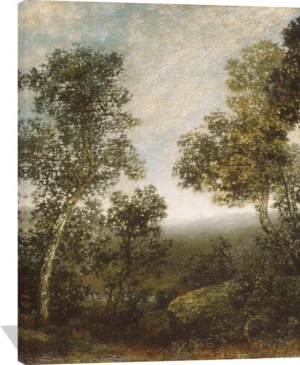
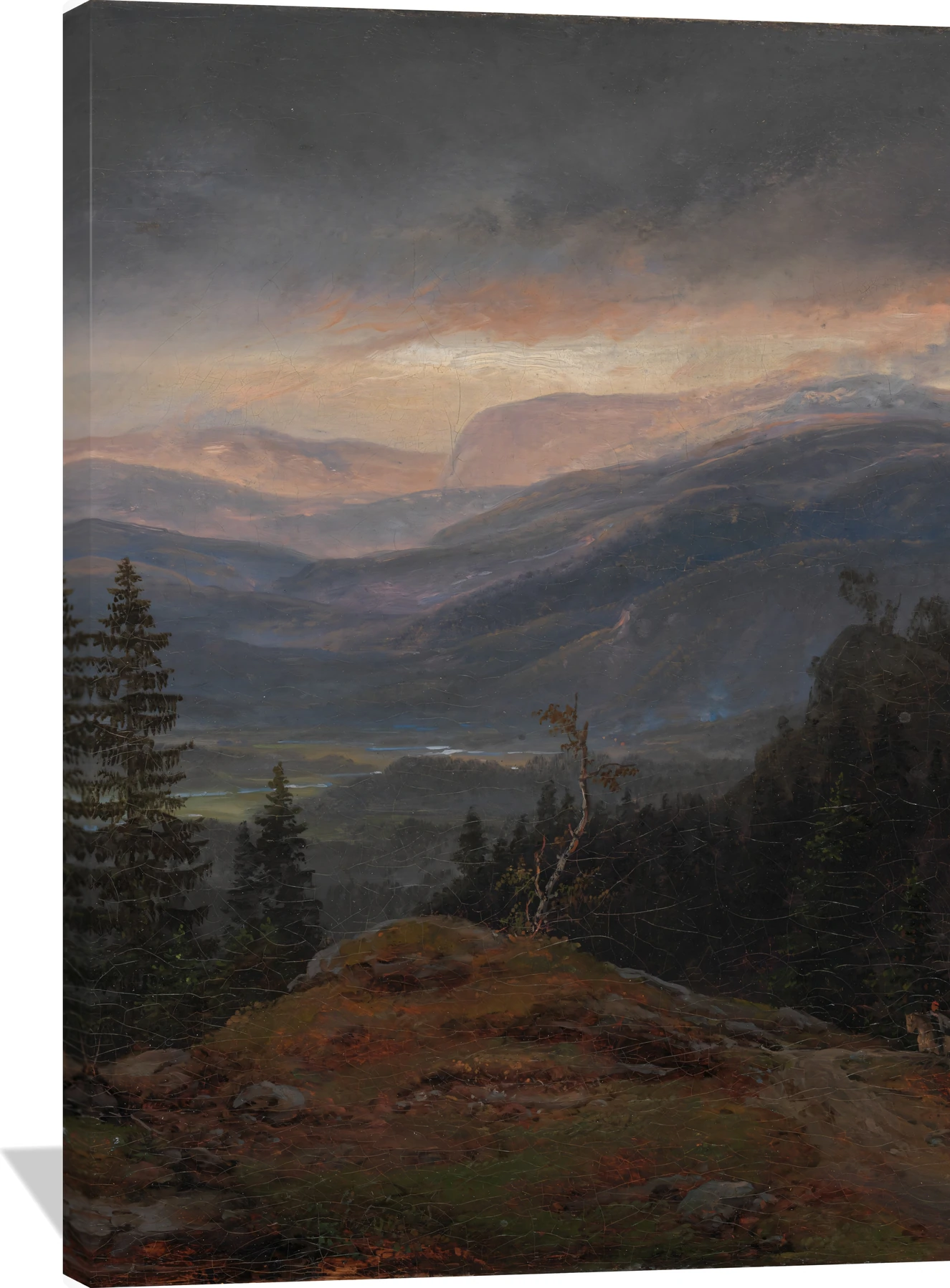
The Johan Christian Dahl View over Hallingdal canvas captures the majesty of Norway’s mountain landscape under a dramatic sky. Deep forest greens, slate blues, and warm amber tones blend seamlessly into a luminous horizon, evoking the quiet awe of nature’s vastness. Dahl’s Romantic vision draws the eye through layers of mist and light, offering a timeless sense of depth and serenity.
This museum-quality wall art brings a refined, contemplative mood to any interior. Perfect for a living room, study, or entryway, this canvas print invites the grandeur of the Nordic wilderness into your home with enduring elegance.
Johan Christian Dahl (1788–1857), born in Bergen and later established in Dresden, is widely regarded as the founding figure of Norwegian landscape painting and a central voice in the Romantic movement. His work reflects a deep reverence for nature’s expressive power, shaped by both his Scandinavian roots and the vibrant artistic circles of early nineteenth‑century Germany.
Artistic Style
Dahl’s style is defined by a harmonious blend of naturalistic detail and Romantic emotion. He approached the landscape with scholarly observation, yet infused each composition with atmospheric drama. His nuanced handling of light, shifting weather, and topographical accuracy distinguishes his paintings from more idealized Romantic visions, giving his work a unique balance between realism and poetic intensity.
Subjects and Themes
He is best known for majestic mountain vistas, fjords, rugged coastlines, and moonlit settings, along with carefully rendered studies of trees, waterfalls, and historic ruins. Whether depicting the Norwegian wilderness or scenes from his adopted home in Saxony, Dahl consistently sought to capture nature as a living, dynamic force. Works such as View from Stalheim and The Eruption of Vesuvius exemplify his ability to translate the sublime into richly atmospheric compositions.
Contributions and Significance
A pioneer of national landscape identity, Dahl played a crucial role in shaping how Norway visualized its natural heritage. His dedication to painting directly from nature, combined with his influential position within the Dresden art community, helped steer European landscape painting toward greater authenticity. He became a mentor to younger artists and collaborated closely with contemporaries such as Caspar David Friedrich, further elevating his impact.
Dahl’s legacy endures through his profound sensitivity to the natural world and his commitment to portraying it with both accuracy and emotional depth. His work continues to resonate for its evocative landscapes and its role in defining the visual language of Northern Romanticism.