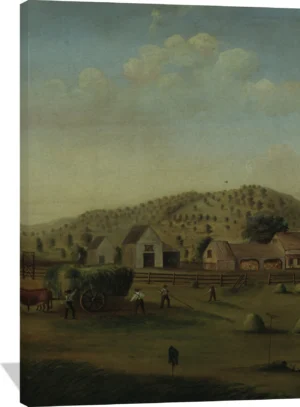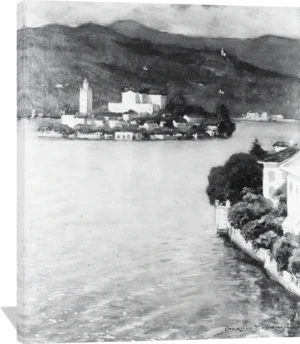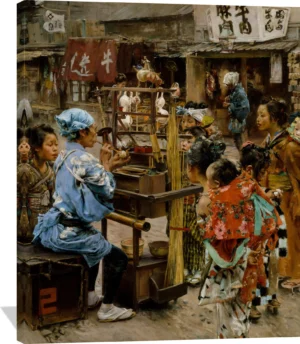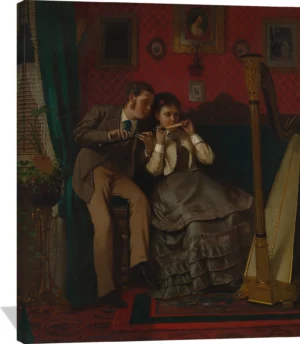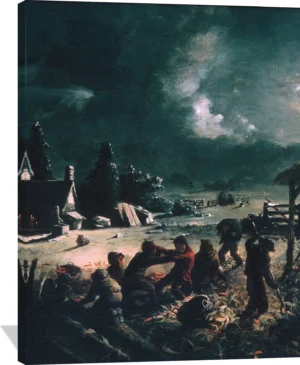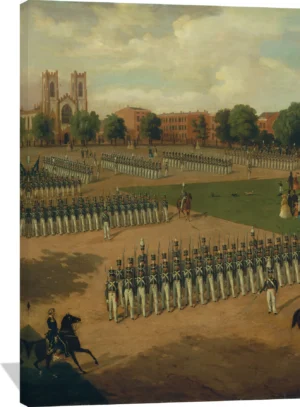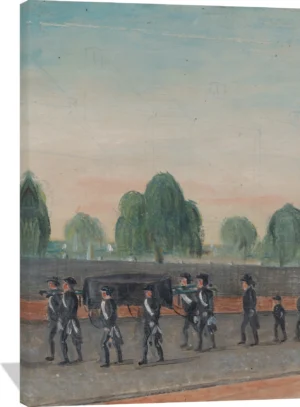
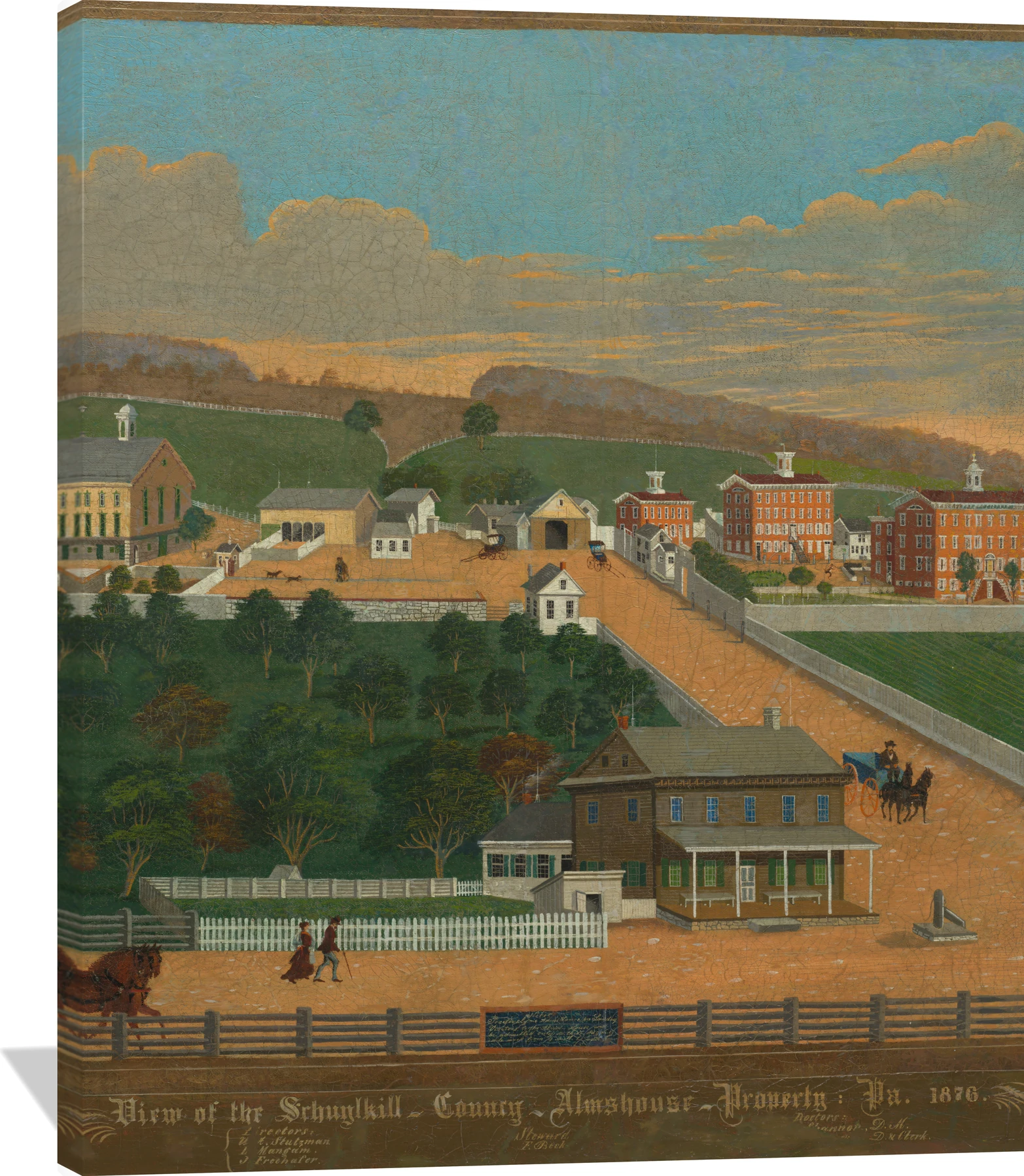
The Charles C. Hofmann View of the Schuylkill County Almshouse Property canvas captures a serene 19th-century landscape with meticulous architectural detail and pastoral charm. Warm earth tones, deep greens, and soft sky blues evoke a sense of calm and order, while the balanced composition reflects Hofmann’s precise, folk-inspired style.
This premium canvas print brings timeless Americana to your space, ideal for a study, living room, or entryway. The harmonious blend of rural scenery and historic architecture makes this wall art a refined statement piece that celebrates both craftsmanship and heritage.
Charles C. Hofmann (1820–1882) was a German-born American painter whose career reflects the rich visual culture of the nineteenth century. Working during a period of rapid expansion and shifting artistic ideals, he developed a distinctive approach that blended European training with the emerging aesthetic sensibilities of his adopted country.
Artistic Style
Hofmann’s work is recognized for its clear, deliberate compositions and a refined naturalism that captures atmosphere and detail without excessive ornamentation. His paintings often exhibit a warm palette and an attentive rendering of light, contributing to a quietly expressive mood. Though active in an era shaped by Romanticism, he favored balanced, observational scenes that conveyed a sense of grounded beauty.
Typical Subjects
Landscape views were central to Hofmann’s practice, and he frequently depicted rural settings, wooded terrain, and the gentle drama of seasonal change. He also produced genre scenes that highlighted everyday life, presenting figures within their environments in a way that felt intimate yet restrained. His subjects emphasized the harmony between people and place, allowing viewers to sense both the physical world and the cultural character of the time.
Notable Contributions
Hofmann contributed to the broader development of nineteenth-century American painting by helping bridge European artistic traditions with the growing appetite for regionally inspired works. His paintings offered nuanced portrayals of the American landscape while maintaining the technical steadiness associated with formal European training. This blend of influences made his work accessible and appealing to collectors seeking authenticity alongside craftsmanship.
Cultural and Historical Significance
As an immigrant artist, Hofmann played a meaningful role in shaping how American scenery and daily life were represented during a formative period in the nation’s cultural identity. His paintings serve as visual records of environments that were rapidly changing, and they remain valued for their quiet clarity and enduring sense of place. Today, Hofmann’s work is appreciated for its sincerity, compositional poise, and its contribution to the evolving narrative of nineteenth‑century American art.