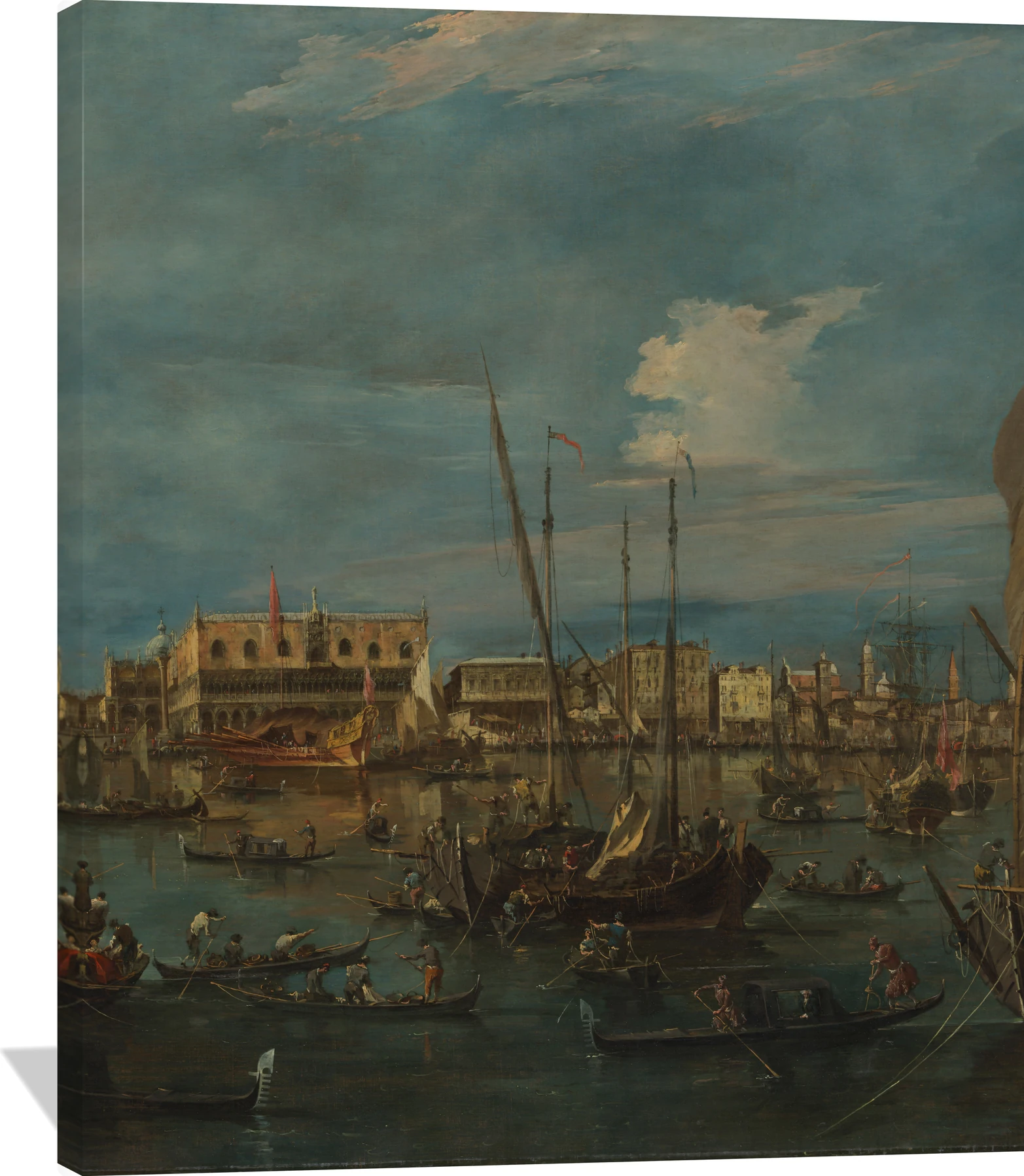
The Francesco Guardi Venice from the Bacino di San Marco canvas captures the luminous grandeur of 18th-century Venice with masterful depth and movement. Bathed in serene blues, warm ochres, and soft golden tones, Guardi’s brushwork brings to life the bustling gondolas and iconic architecture under a sweeping sky. This timeless scene evokes both elegance and vitality, making it a captivating centerpiece for any refined space.
Printed on premium canvas, this exquisite wall art infuses your living room, study, or entryway with the poetic charm of Venetian light and history. A classic choice for collectors and admirers of Italian artistry, this canvas print embodies the romance and sophistication of Guardi’s Venice.
Francesco Guardi (Italian, Venice 1712–1793 Venice) stands among the last great masters of the Venetian view, celebrated for his poetic evocations of the city’s luminous atmosphere and lively urban rhythms.
Artistic Style
Guardi is renowned for his expressive, shimmering brushwork and the distinctive vibrancy that permeates his vedute. Unlike the precise topographical detailing of earlier Venetian view painters, his approach favored a looser, more atmospheric manner. This gave his scenes a sense of immediacy, combining architectural grandeur with the fleeting qualities of light, water, and sky.
Subjects and Approach
His work often portrays Venice’s iconic canals, palaces, and public festivities, capturing both daily life and ceremonial splendor. Guardi’s paintings of regattas, processions, and monumental squares transform familiar settings into lively, almost theatrical visions. He also produced capricci imaginative architectural scenes showcasing his ability to balance observation with inventive composition.
Significance
A central figure in the final flowering of the Venetian Republic’s artistic tradition, Guardi bridged the precision of earlier vedutisti with a more emotive, atmospheric sensibility. His mature works, characterized by flickering strokes and radiant tonal contrasts, anticipate later artistic movements that valued impression and mood over strict representation. Today, he is celebrated for his enduring ability to distill Venice’s essence into images of timeless elegance and luminous charm.