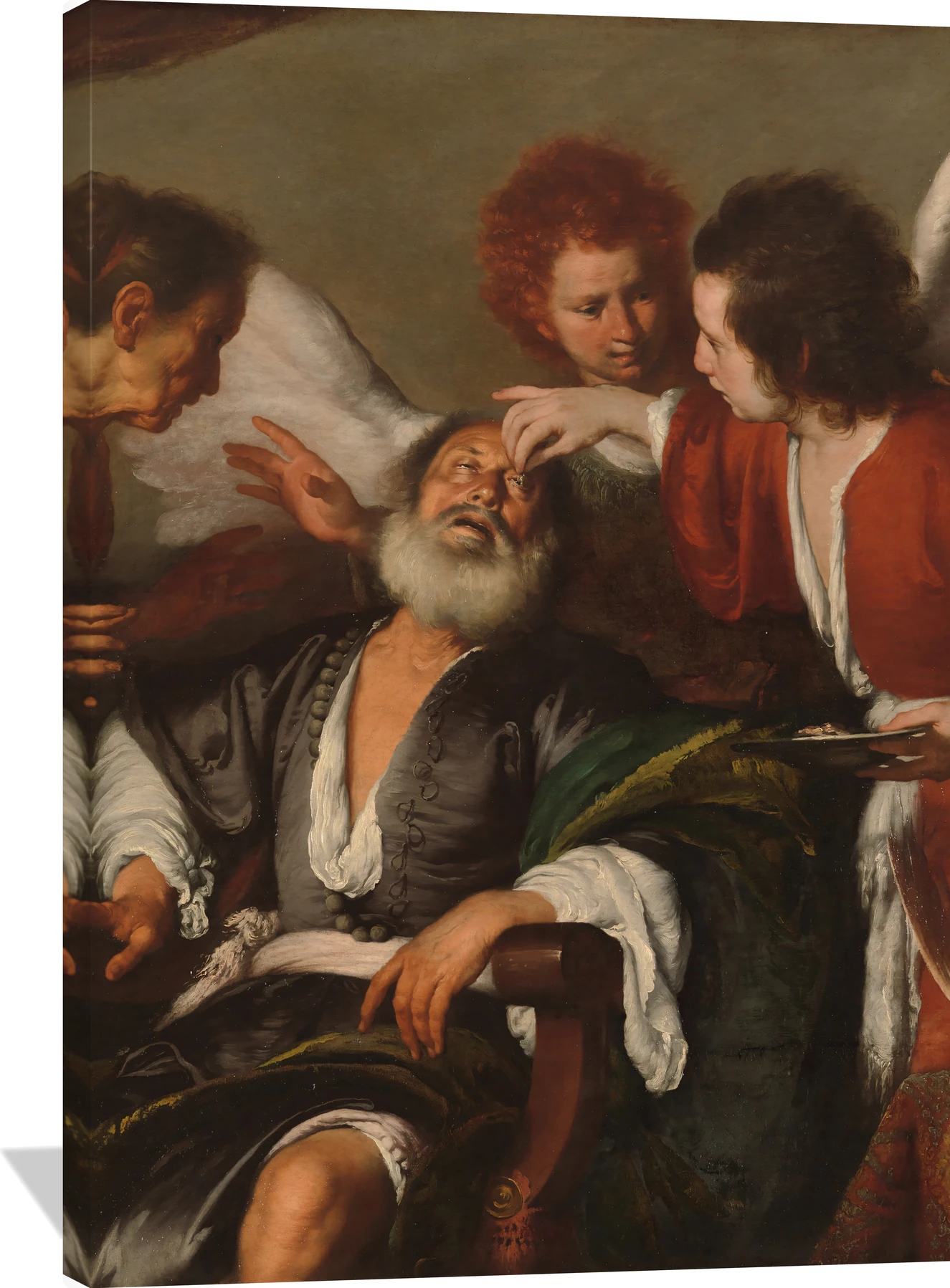
The Bernardo Strozzi Tobias Curing His Father’s Blindness canvas captures a moment of divine compassion and human tenderness through the artist’s masterful use of light and color. Deep earth tones, warm reds, and soft golds illuminate the intimate scene, creating a dramatic yet serene atmosphere that draws the viewer into its spiritual depth.
This Baroque masterpiece brings timeless emotion and graceful movement to any space. A stunning choice for a living room, study, or entryway, this museum-quality canvas print evokes both reverence and warmth—an exquisite statement of faith, healing, and artistry from one of Italy’s great painters, Bernardo Strozzi (Genoa 1581–1644 Venice).
Bernardo Strozzi (1581–1644), an Italian painter active in Genoa and later Venice, emerged as one of the most dynamic and influential figures of the early Baroque. Known for his vibrant palette, expressive brushwork, and theatrical use of light, he helped shape the artistic character of both cities during a period of profound cultural flourishing.
Artistic Style
Strozzi’s style is distinguished by its luminous color, bold contrasts, and energetic handling of paint. His compositions reveal a rich synthesis of Genoese tradition, Venetian chromatic splendor, and the dramatic intensity associated with the broader Baroque movement. He often infused his scenes with warmth and immediacy, giving even familiar themes a fresh, emotionally resonant presence.
Subjects and Themes
Throughout his career, Strozzi explored religious narratives, portraits, allegories, and scenes of everyday life. His saints and biblical figures appear with a humanizing vitality, while his portraits capture character with remarkable psychological depth. Genre scenes, including musicians, cooks, and scholars, demonstrate his gift for transforming ordinary subjects into compelling visual stories.
Legacy and Significance
Celebrated for his expressive freedom and inventive use of color, Strozzi played a pivotal role in transmitting Venetian pictorial brilliance to a new generation of artists. His works stand out for their immediacy and emotional richness, qualities that reflect his position as a leading voice of the early Baroque and a key contributor to its evolving visual language.