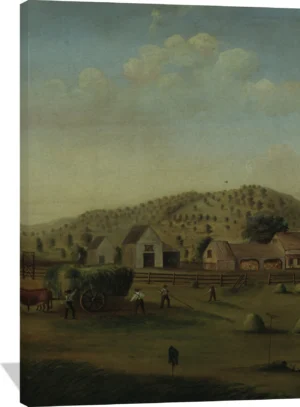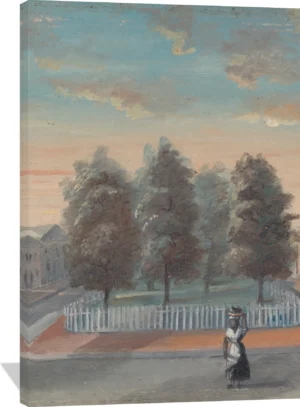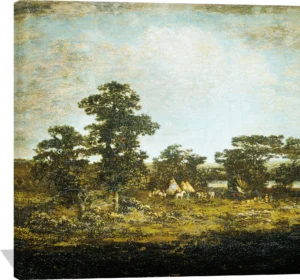

The John Quidor The Vigilant Stuyvesant’s Wall Street Gate canvas captures a lively colonial scene bathed in warm golden and earthy tones. Quidor’s masterful brushwork and storytelling bring to life a moment of bustling energy beneath towering trees and historic gates, creating a rich tableau of early American life. The interplay of light and shadow evokes both nostalgia and drama, making this piece a timeless conversation starter.
This premium wall art adds depth and character to any interior. Ideal for a study, living room, or entryway, this canvas print celebrates 19th-century artistry while complementing modern and traditional décor alike.
John Quidor (1801–1881) was an American painter celebrated for his imaginative interpretations of early American literature. Best known for his lively and atmospheric scenes inspired by Washington Irving, Quidor occupies a distinctive place in 19th‑century art for blending narrative drama with a uniquely whimsical sensibility.
Artistic Style
Quidor’s work is characterized by expressive compositions, elongated figures, and a theatrical sense of motion. His palette often incorporates warm earth tones and moody contrasts, creating a visual world where folklore and reality intertwine. This approach gives his paintings a highly recognizable, almost dreamlike rhythm that resonates with the storytelling traditions he drew from.
Notable Subjects
Many of Quidor’s most celebrated works draw directly from Irving’s tales, including scenes from Rip Van Winkle and The Legend of Sleepy Hollow. These narratives allowed him to explore themes of superstition, humor, and the supernatural while capturing the emerging cultural identity of the young United States. His depictions of eccentric villagers, spectral riders, and mysterious wooded landscapes highlight his gift for dramatizing American myth.
Contribution and Legacy
Though underappreciated in his lifetime, Quidor is now recognized as a significant early voice in American genre painting. His interpretations of literary subjects helped establish a bridge between written storytelling and visual art, enriching the nation’s artistic heritage. Today, his paintings stand out for their inventive spirit and for the way they encapsulate the early republic’s blend of folklore, frontier imagination, and evolving national character.
Quidor’s art remains valued for its narrative power and its distinctive fusion of literature and visual drama, offering a vivid window into the cultural landscape of 19th‑century America.