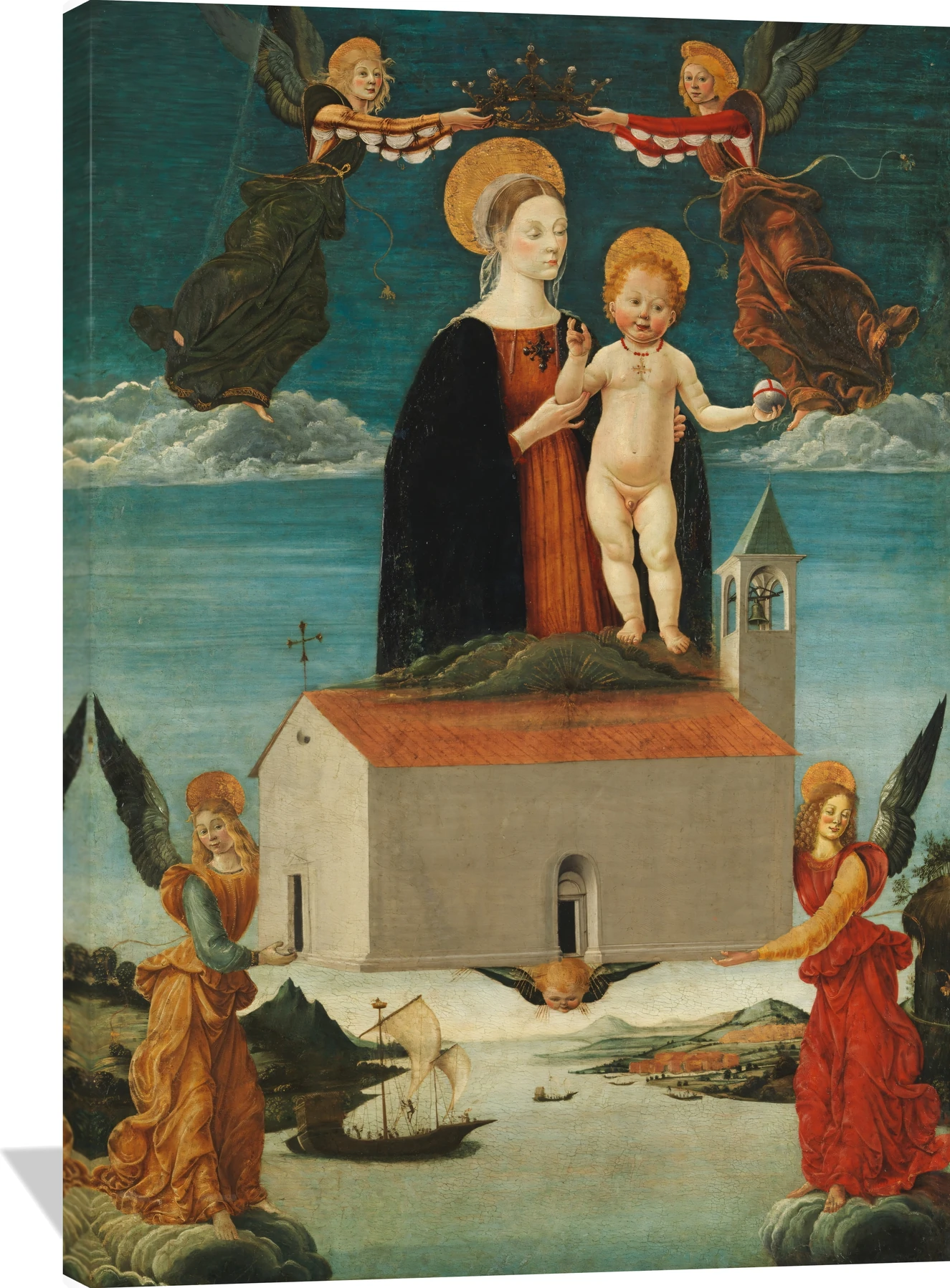
The Saturnino Gatti The Translation of the Holy House of Loreto canvas captures a luminous Renaissance vision of divine grace and celestial harmony. With rich tones of deep teal, gold, crimson, and ivory, this vertical composition depicts angels in flight, the Madonna and Child, and the miraculous transport of the Holy House, all rendered with exquisite serenity and balance.
This museum-quality canvas print brings timeless spirituality and refined artistry to your space. Ideal for a living room, study, or entryway, it evokes both devotion and wonder—an elegant statement piece for collectors of sacred and Renaissance wall art.
Saturnino Gatti (1463–1518), an Italian painter and sculptor from L’Aquila, is celebrated for his refined interpretation of late Gothic and early Renaissance aesthetics. Active primarily in the Abruzzo region, he developed a distinctive visual language marked by graceful figures, luminous color harmonies, and a gentle emotional clarity that set his work apart from his contemporaries.
Artistic Style
Gatti’s style blends the lingering elegance of Gothic linearity with the emerging Renaissance interest in naturalism. His compositions often feature soft modeling, tender expressiveness, and a balanced use of light that enhances the spiritual atmosphere of his subjects. His mastery in both painting and sculpture allowed him to infuse his works with a sculptural sense of volume and a refined attention to detail.
Notable Contributions
Gatti is best known for his fresco cycles and altarpieces created for churches and religious institutions in and around L’Aquila. These works frequently depict biblical narratives, saints, and devotional scenes, rendered with serene beauty and a poetic sensitivity that made him a leading artistic figure of his region. His contributions strengthened Abruzzo’s cultural identity during a transformative period in Italian art, and his workshop influenced generations of local artists.
Subjects and Significance
Religious themes dominate Gatti’s oeuvre, with Madonnas, angels, and episodes from the life of Christ portrayed with warmth and humanity. His art reflects a deep spiritual resonance, capturing both the devotional needs of his patrons and the broader artistic shifts of the Italian Renaissance. Today, he is recognized for his ability to merge regional tradition with the broader artistic innovations of his time, creating works that remain valued for their graceful emotional depth and timeless aesthetic appeal.