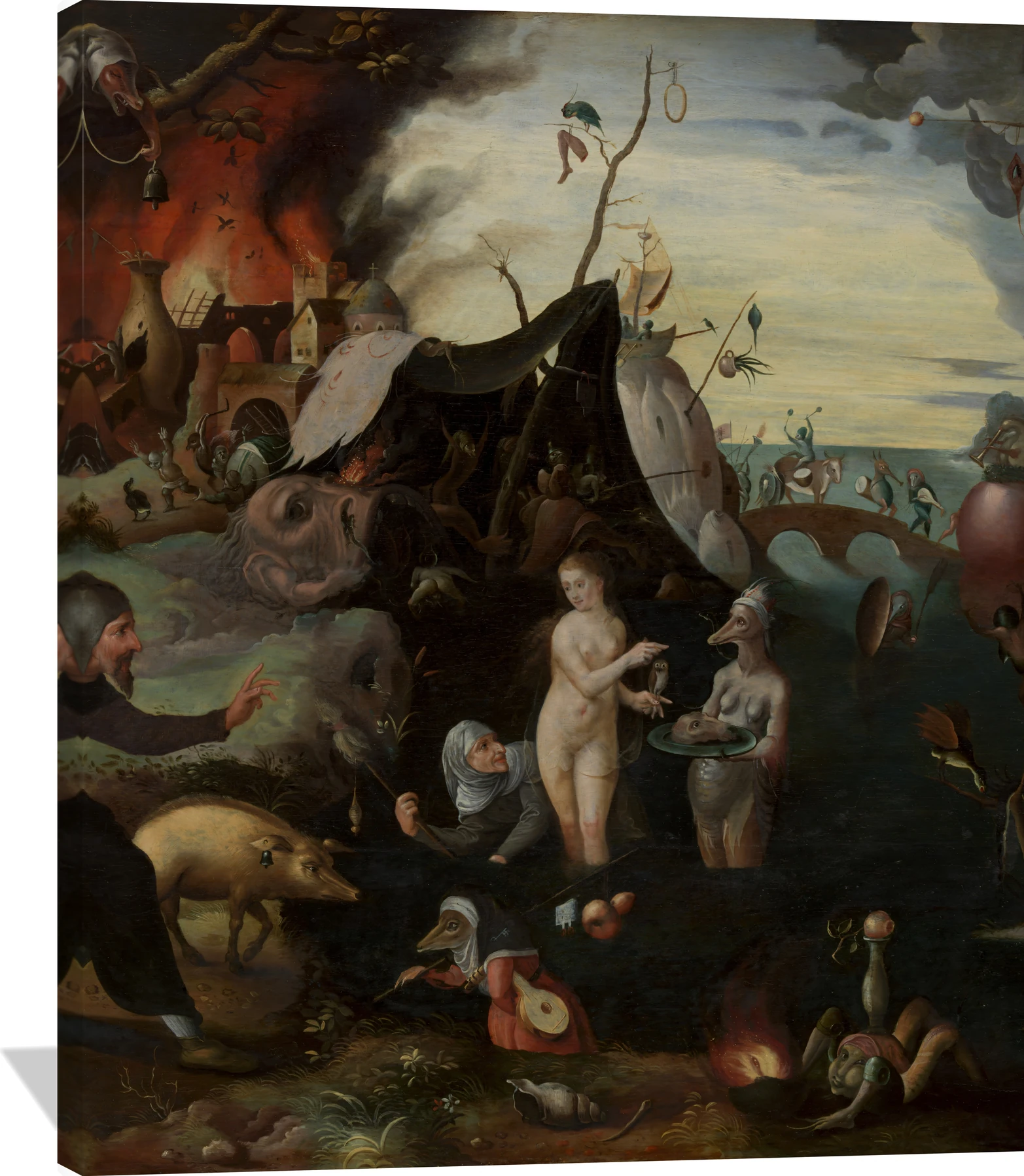
The Pieter Huys The Temptation of Saint Anthony canvas captures a mesmerizing vision of chaos and faith, rendered in rich earth tones, smoky reds, and muted greens. Huys’ intricate composition teems with surreal figures and fantastical creatures, evoking both wonder and unease in a masterful display of Netherlandish imagination. The horizontal layout draws the eye across a landscape of temptation and redemption, alive with symbolic detail.
This premium canvas print brings Renaissance mystery and drama into any space. Ideal for a study, library, or sophisticated living room, this striking wall art invites deep reflection and conversation, embodying the timeless tension between the spiritual and the earthly.
Pieter Huys (active by 1545–1584) was a Netherlandish painter based in Antwerp, renowned for his richly imaginative and often fantastical contributions to Northern Renaissance art.
Artistic Style
Huys worked in the vibrant tradition of the Antwerp Mannerists, blending refined draftsmanship with intricate detail and vivid color. His style is marked by expressive figures, atmospheric landscapes, and complex narrative scenes that reveal both technical mastery and a compelling sense of drama.
Subjects and Themes
Best known for his allegorical and moralizing compositions, Huys frequently explored themes of temptation, folly, and the human condition. His work shows the influence of Hieronymus Bosch, particularly in the use of fantastical creatures, dreamlike settings, and symbolic imagery. Even within his most elaborate scenes, Huys maintained a disciplined clarity that allowed his storytelling to unfold with precision.
Historical Significance
As part of Antwerp’s thriving artistic community, Huys contributed to the development of Northern Renaissance visual culture during a period of flourishing international trade and intellectual exchange. His paintings offer insight into the era’s religious and cultural tensions while showcasing the inventive spirit that defined sixteenth-century Netherlandish art. Today, he is remembered for his remarkably imaginative vision and his ability to weave narrative complexity into exquisitely crafted compositions.