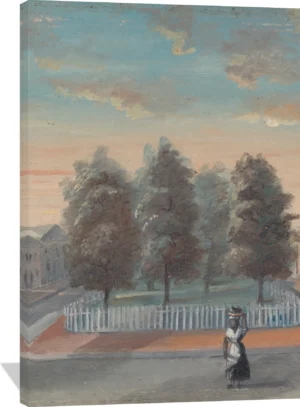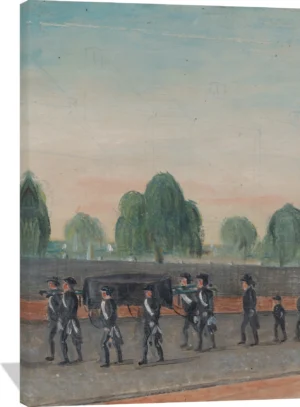
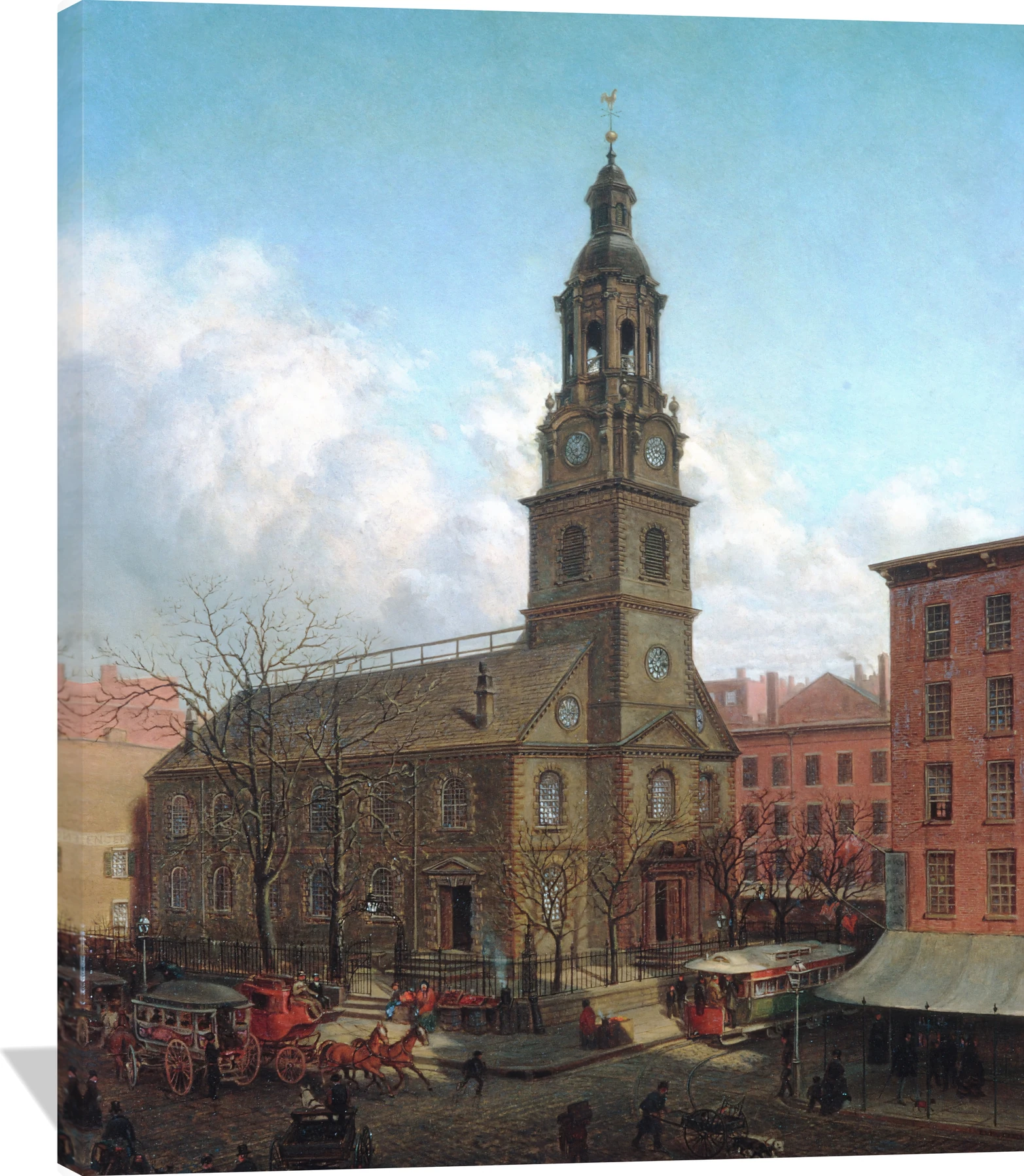
The Edward Lamson Henry The North Dutch Church, Fulton and William Streets, New York canvas captures a timeless view of 19th-century Manhattan with remarkable precision and warmth. Bathed in soft daylight tones of brick red, slate gray, and sky blue, Henry’s scene evokes the quiet dignity of urban life amid horse-drawn carriages and stately architecture.
This finely detailed wall art brings a sense of historical charm and sophistication to any space. Ideal for a living room, study, or entryway, this canvas print celebrates the craftsmanship and atmosphere of a bygone New York with enduring elegance.
Edward Lamson Henry (1841–1919) was an American painter celebrated for his meticulous depictions of 19th‑century life. Born in Charleston, South Carolina, and later active in New York, he became one of the era’s most respected genre painters, admired for scenes that merge historical accuracy with a warm sense of nostalgia.
Artistic Style
Henry’s work is distinguished by its precise draftsmanship and devotion to authentic detail. His style blends realism with a gentle, inviting atmosphere, capturing everyday moments with clarity and charm. Through careful observation and a refined technique, he crafted scenes that feel both intimate and historically resonant.
Subjects and Themes
He is best known for portraying American life in the decades surrounding the Civil War, often revisiting early transportation, small‑town settings, and domestic interiors. Henry’s images of horse‑drawn carriages, railway stations, rural crossroads, and period architecture evoke the texture of everyday experience. His interest in the past led him to recreate historic environments with an almost documentary precision, making his paintings valued visual records of a rapidly changing nation.
Notable Contributions
Henry’s dedication to accuracy stemmed from extensive research, including the collection of antique objects and architectural studies. This commitment gave his work an authority that distinguished him from many contemporaries. His paintings not only provided aesthetic pleasure but also contributed to public understanding of early American culture, offering viewers a vivid sense of place and time.
Legacy
Today, Edward Lamson Henry is remembered as a key figure in American genre painting and a master of historically themed scenes. His ability to blend narrative charm with meticulous historical detail ensures his work remains both culturally significant and deeply engaging. Collectors and admirers continue to value his art for its authenticity, craftsmanship, and enduring capacity to bring the American past to life.