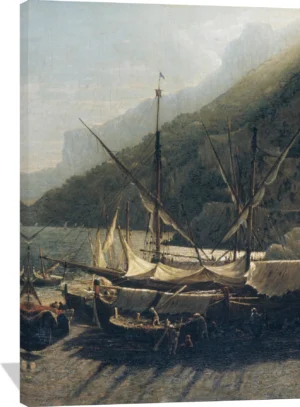
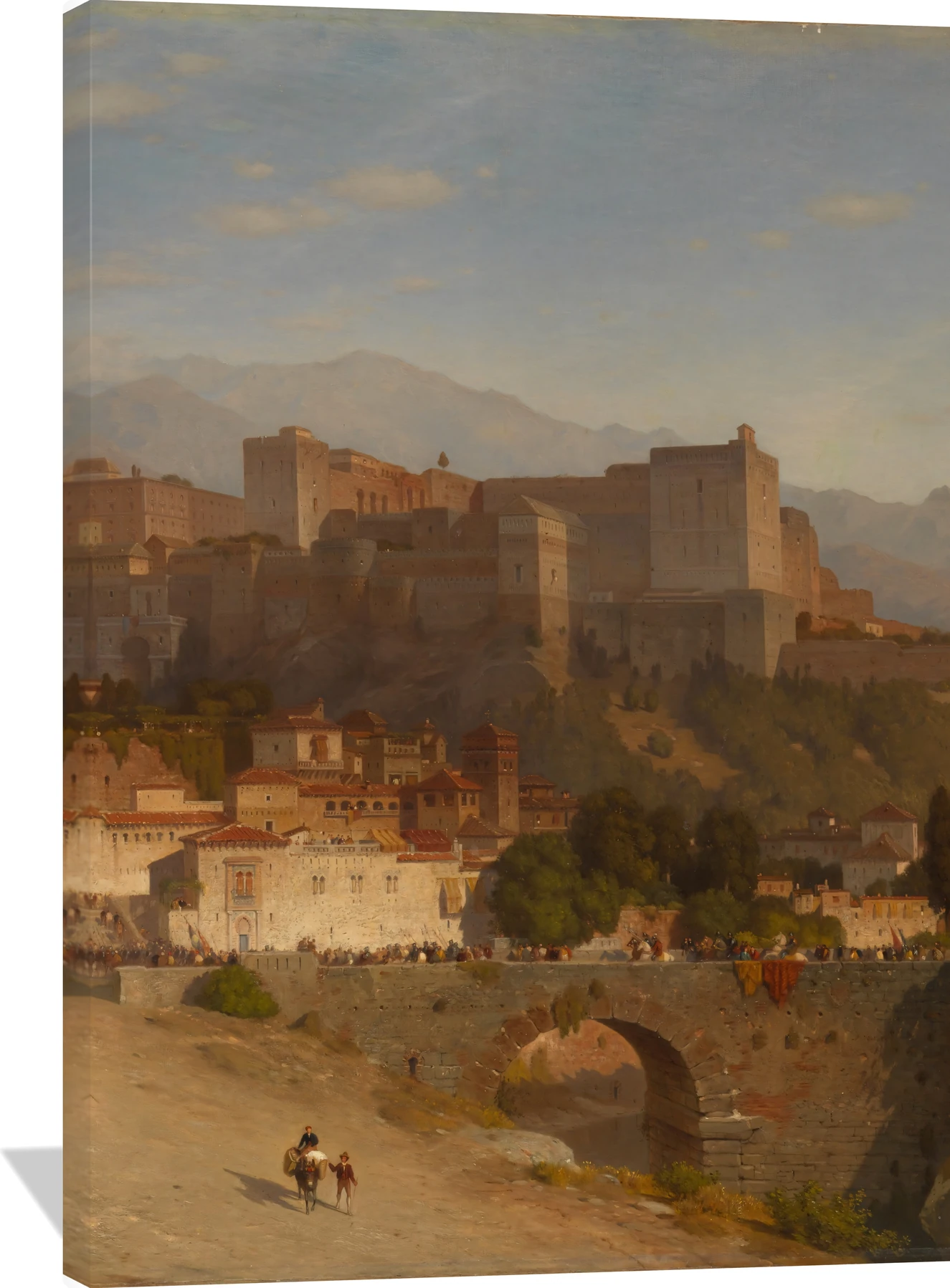
The Samuel Colman The Hill of the Alhambra, Granada canvas captures the grandeur of Spain’s iconic fortress bathed in warm, golden light. Colman’s masterful use of earthy ochres, soft blues, and sunlit browns evokes the romance of Andalusian hillsides and the timeless majesty of Moorish architecture. The composition’s sweeping perspective and tranquil atmosphere invite quiet reflection and admiration.
This fine art canvas print brings an air of cultured elegance to any space—ideal for a living room, study, or entryway. A distinguished choice for collectors and design enthusiasts alike, this wall art celebrates both history and artistry in a single, luminous view of Granada’s legendary skyline.
Samuel Colman (1832–1920) was an American painter, designer, and printmaker whose career helped shape the visual identity of the 19th‑century American landscape tradition. Born in Portland, Maine and later based in New York, he became closely associated with the Hudson River School and the wider movement of American luminism.
Artistic Style and Approach
Colman is celebrated for his refined handling of light, atmosphere, and spatial balance. His landscapes often reveal sweeping vistas, crystalline clarity, and a meditative sense of scale. While grounded in realism, his work evokes a poetic tranquility that places him among the era’s most sensitive interpreters of the natural world. His mastery of watercolor, in particular, shows an exceptional command of tonal harmony and composition.
Subjects and Inspirations
Although known for scenes of the Hudson River Valley and New England, Colman traveled widely, creating luminous views of Europe, North Africa, and the American West. He frequently painted rivers, mountain ranges, coastal horizons, and architectural settings, capturing both the grandeur of nature and the quiet rhythm of daily life. Works such as Storm King on the Hudson exemplify his ability to merge topographical precision with atmospheric depth.
Legacy and Significance
Beyond painting, Colman contributed to the Arts and Crafts movement and collaborated on interior design projects that broadened his artistic influence. His role as a founding figure of the American Watercolor Society highlights his commitment to advancing the medium and supporting fellow artists. Today, his work is admired for its blend of technical skill, contemplative tone, and its reflection of a period when American art sought to define its own voice. His landscapes continue to resonate for their clarity of vision and their expression of a distinctively American aesthetic.