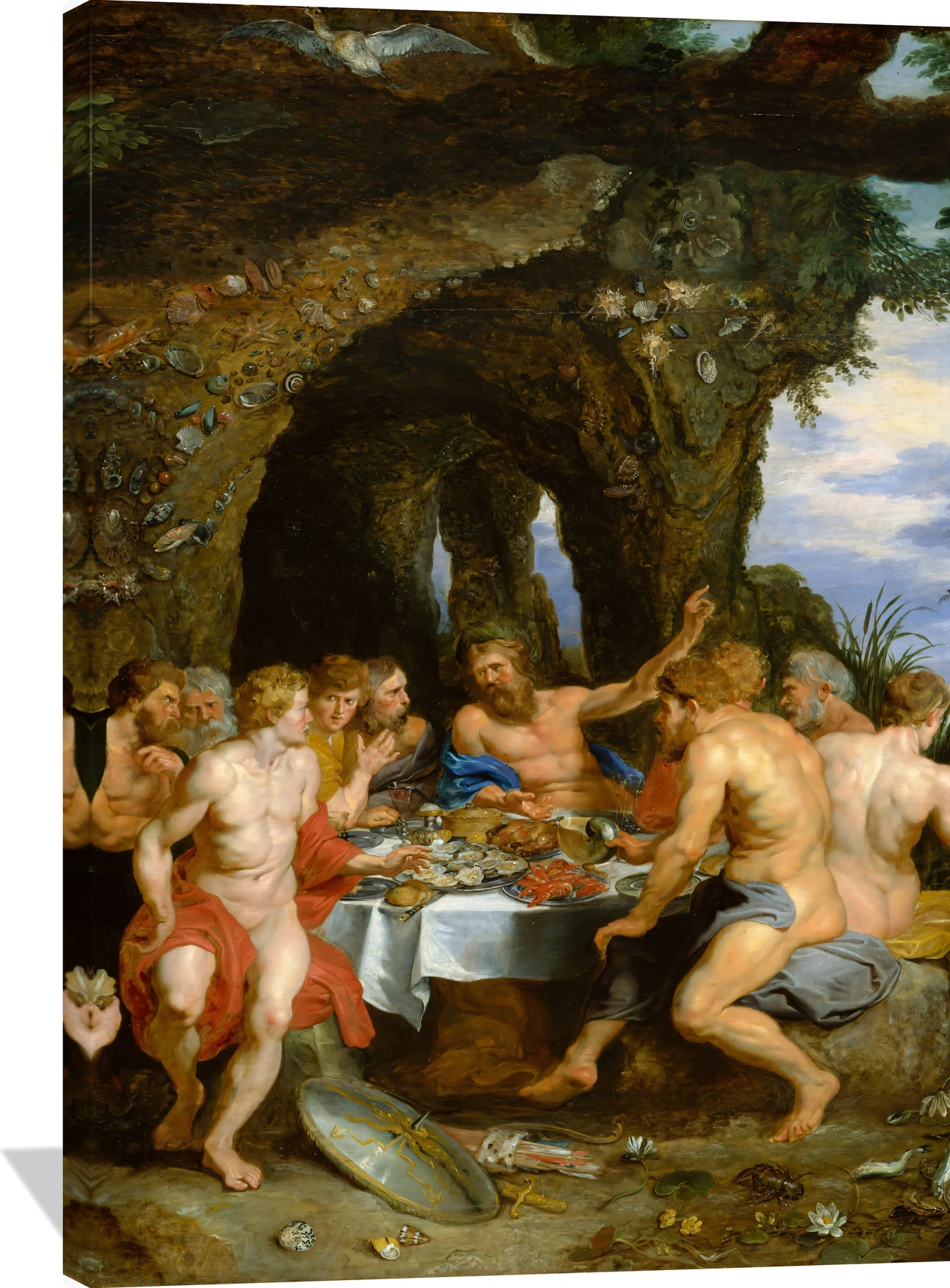
The Peter Paul Rubens The Feast of Acheloüs canvas captures a vivid mythological banquet alive with motion, color, and sensuality. Bathed in warm golds, deep blues, and earthy greens, Rubens’ masterful brushwork brings divine figures to life beneath a grotto’s dappled light, blending grandeur with intimacy in every detail.
This museum-quality canvas print radiates Baroque opulence and storytelling energy, making it a captivating centerpiece for a living room, study, or entryway. A celebration of abundance and artistry, The Feast of Acheloüs transforms any wall into a timeless scene of myth and majesty.
Peter Paul Rubens (Flemish, Siegen 1577–1640 Antwerp) stands as one of the most influential painters of the Baroque era, celebrated for his dynamic compositions, luminous color, and expressive, energetic brushwork. His workshop in Antwerp became a center of artistic innovation, attracting patrons from across Europe and shaping the visual culture of the seventeenth century.
Artistic Style
Rubens is renowned for his distinctive blend of dramatic movement, sensuality, and emotional intensity. His mastery of color and form resulted in sweeping, theatrical scenes that feel vibrantly alive. Characterized by robust figures, rich textures, and a powerful sense of motion, his style helped define the visual language of the Baroque and influenced generations of artists.
Subjects and Themes
His work spans an impressive range, including mythological narratives, religious altarpieces, portraits, and courtly allegories. Rubens frequently portrayed classical heroes, divine beings, and complex historical episodes with a compelling human presence. Whether depicting the grandeur of a mythic drama or the intimacy of a devotional scene, he infused each composition with depth and immediacy.
Legacy and Significance
As both an accomplished painter and a diplomat, Rubens played a significant role in the cultural and political landscape of his time. His prolific output, international prestige, and innovative workshop practices established him as a central figure in European art. Today, he is revered for his ability to merge intellectual sophistication with visual exuberance, securing his place as a master of the Baroque and a defining force in Western art history.