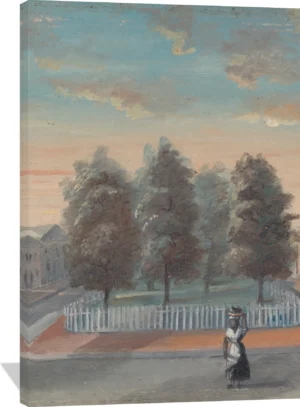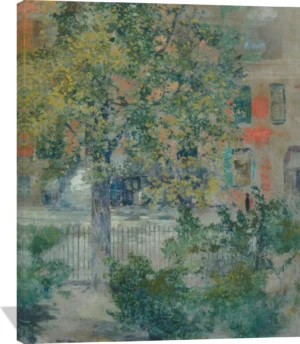
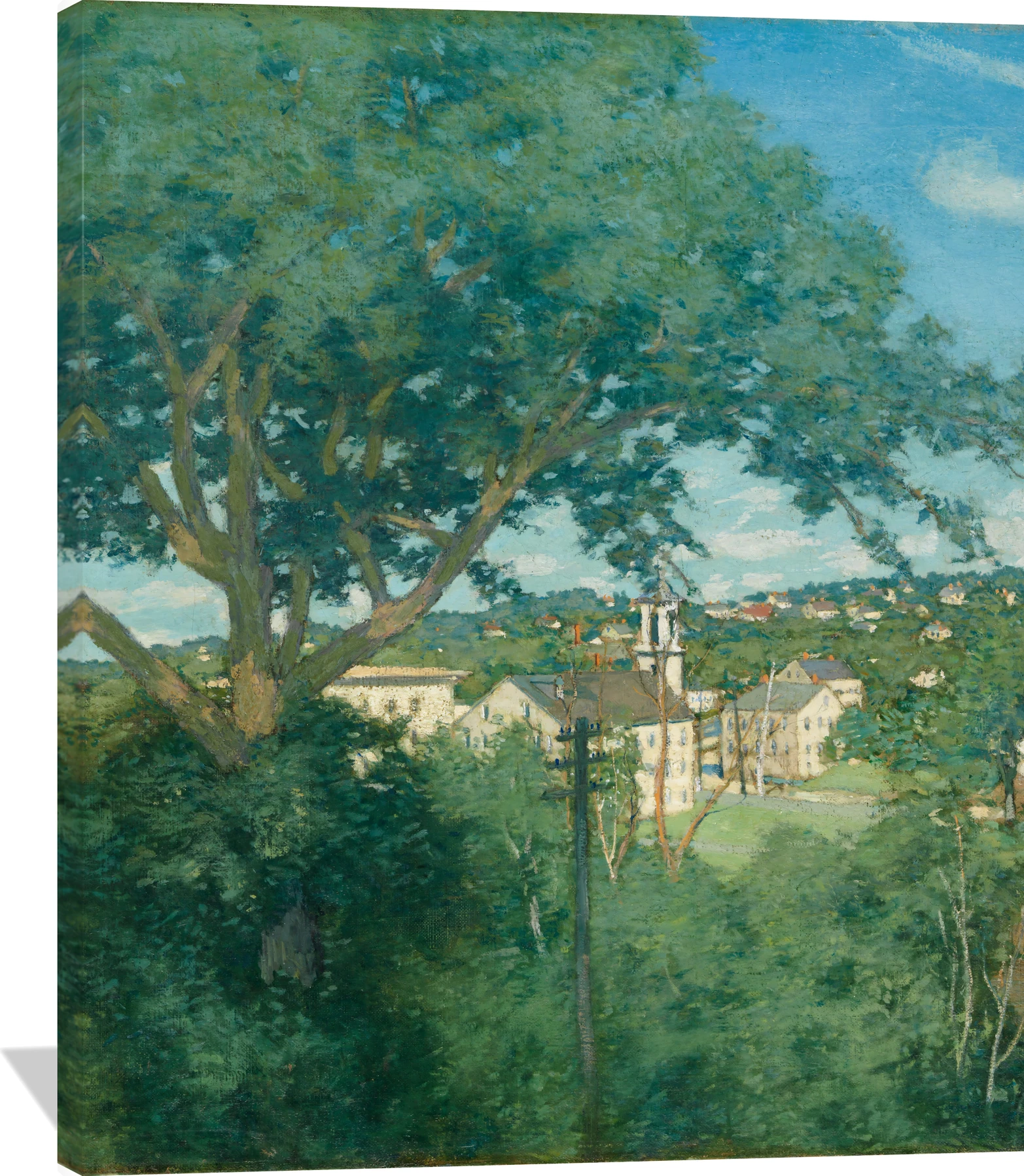
The Julian Alden Weir The Factory Village canvas captures a serene balance between nature and industry, where lush green foliage frames a tranquil mill town beneath a bright blue sky. Rendered in soft, impressionistic brushwork, this piece evokes a sense of quiet observation and timeless charm. Dominated by greens, blues, and warm earth tones, it offers a harmonious palette that soothes and inspires.
This elegant wall art brings a touch of American Impressionism to any space. Ideal for a living room, study, or entryway, this canvas print invites reflection on the beauty of everyday landscapes and the artistry of light and shadow.
Julian Alden Weir (1852–1919) was an American painter born in West Point, New York, and a leading figure in the development of American Impressionism. Trained in both the United States and Paris, he fused academic discipline with a softly atmospheric approach that became a hallmark of his mature work.
Artistic Style and Approach
Weir’s style is celebrated for its gentle luminosity, subtle color harmonies, and quiet emotional resonance. While initially skeptical of Impressionism, he eventually embraced its focus on light and mood, developing a personal interpretation marked by restrained brushwork and a contemplative sense of place. His compositions often balance structured forms with diffused, poetic light, creating scenes that feel both intimate and timeless.
Subjects and Themes
Weir frequently painted the rural landscapes of Connecticut, where his family estates provided a wealth of inspiration. Orchards, gardens, winding roads, and domestic interiors all appear in his works, rendered with sensitivity and a deep connection to nature. He also produced compelling portraits and still lifes, including his well‑known floral studies, each characterized by a refined, introspective atmosphere.
Legacy and Cultural Significance
A founding member of The Ten American Painters, Weir played a crucial role in shaping the identity of American Impressionism. His work helped bridge European influence and American sensibilities, contributing to a broader acceptance of modern artistic ideas in the United States. Today, he is recognized for his lyrical interpretation of light and his central position within the evolution of American modern art.