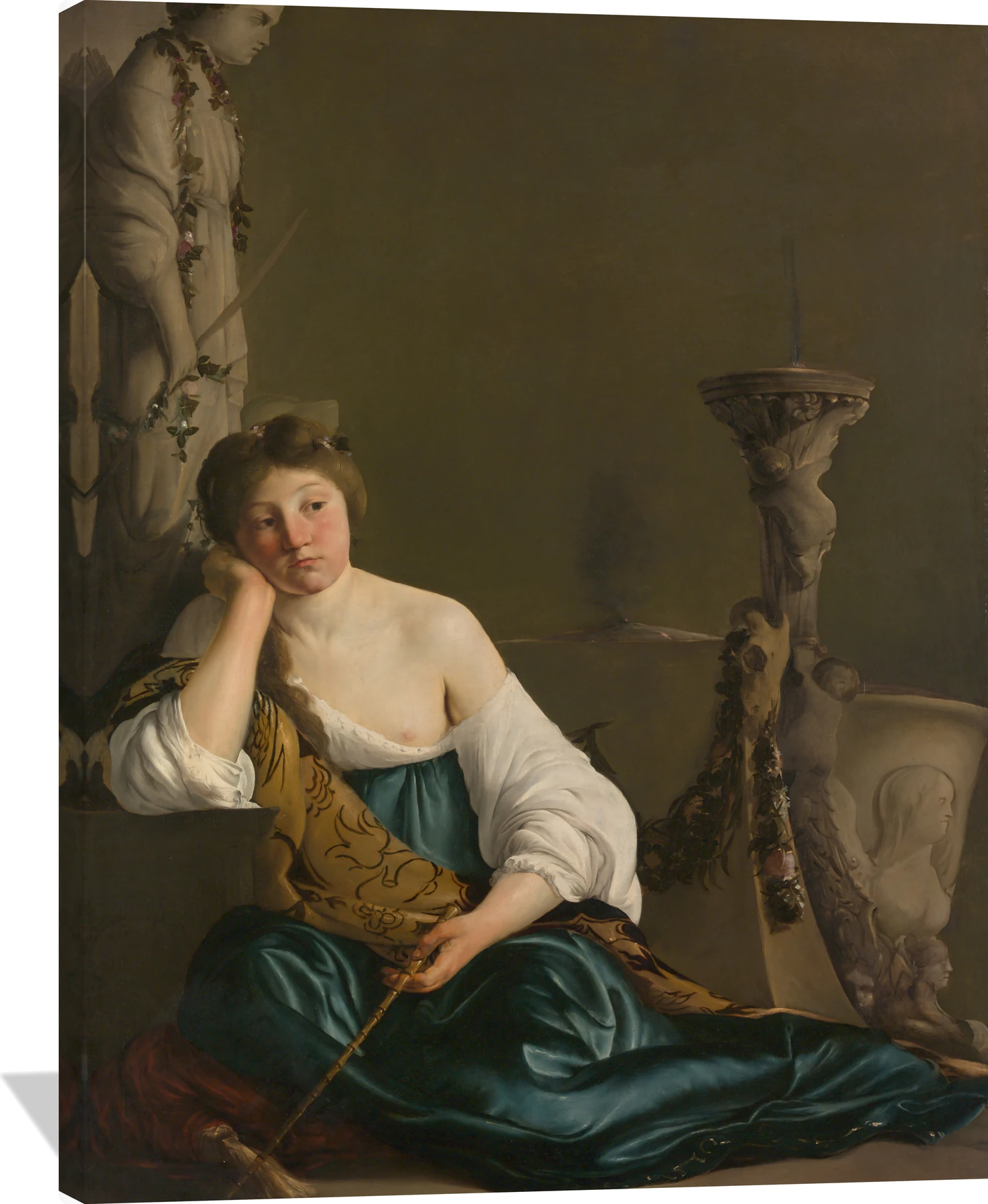
The Paulus Bor The Disillusioned Medea canvas captures a moment of quiet melancholy and introspection. Rendered in rich tones of deep teal, warm gold, ivory, and muted brown, Bor’s masterful use of light and shadow evokes a sense of stillness and emotional depth. The classical composition and soft realism make this artwork a timeless statement piece.
This elegant wall art brings a contemplative beauty to any interior—perfect for a refined living room, intimate study, or sophisticated entryway. A canvas print of The Disillusioned Medea invites viewers to pause, reflect, and appreciate the enduring grace of Dutch Golden Age artistry.
Paulus Bor (Amersfoort, ca. 1601–1669) was a Dutch painter known for his enigmatic, atmospheric compositions that stand apart within the Dutch Golden Age. His work blends Caravaggesque illumination with a distinctive sense of stillness, resulting in scenes that feel both intimate and otherworldly.
Artistic Approach
Bor’s paintings are characterized by dramatic chiaroscuro, serene yet haunting figures, and carefully choreographed gestures. While influenced by the Utrecht Caravaggisti, he transformed their bold realism into something more introspective, often emphasizing mood over narrative clarity.
Subjects and Themes
He favored biblical narratives, mythological stories, and allegorical scenes, rendering them with a mysterious restraint. Bor’s figures frequently appear contemplative, suspended in quiet moments that heighten the emotional depth of his compositions. Works such as The Annunciation and Cimon and Pero exemplify his ability to infuse familiar subjects with a profound, meditative quality.
Legacy and Significance
Bor was a founding member of the Eglantier artists’ society and an important contributor to the cultural life of Amersfoort. His paintings remain admired for their refined simplicity and their ability to evoke a sense of quiet psychological intensity. Today, Paulus Bor is recognized as a singular voice within seventeenth-century Dutch art, celebrated for his poetic restraint and his uniquely evocative interpretation of dramatic themes.