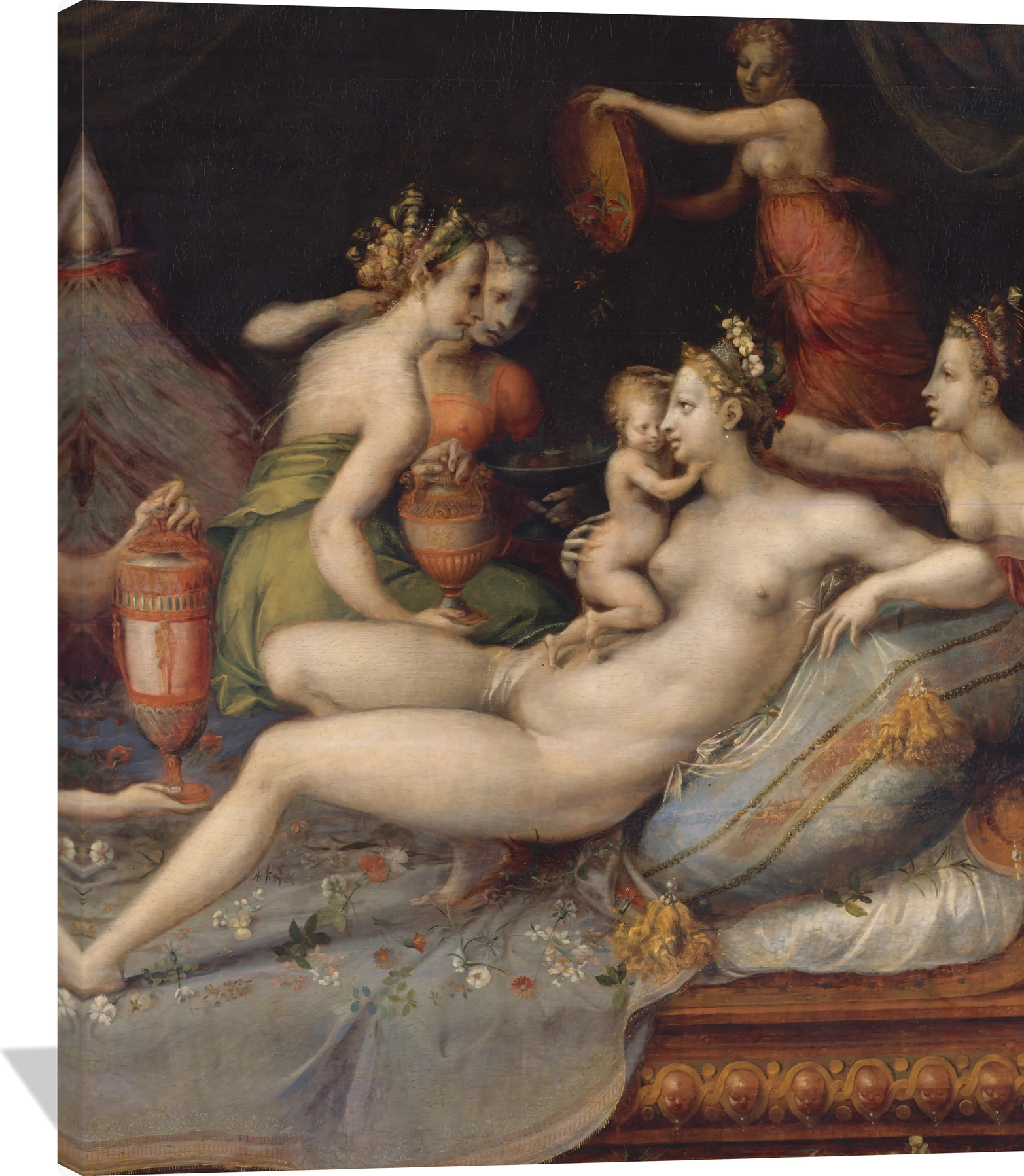
The Master of Flora The Birth of Cupid canvas captures the elegance and sensuality of late Renaissance art. Bathed in warm golds, deep greens, and soft flesh tones, this exquisite composition portrays mythological beauty and divine intimacy with graceful, elongated figures and rich drapery. The harmonious balance of light and shadow evokes serenity and opulence, making it a timeless centerpiece for refined interiors.
This premium The Birth of Cupid wall art brings the allure of Fontainebleau’s 16th-century sophistication into your home. Ideal for a living room, study, or entryway, this canvas print invites contemplation and adds a touch of classical grandeur to any space.
The Master of Flora was an Italian painter active in the Fontainebleau school during the second half of the sixteenth century, celebrated for an elegant blend of Italian Mannerism and French courtly refinement. Though his identity remains anonymous, his distinct visual language has earned him a lasting place among the influential artists who shaped the decorative programs of the Château de Fontainebleau and its artistic circle.
Artistic Style and Approach
The Master of Flora is known for highly stylized figures, elongated proportions, and a graceful, fluid sense of movement. His work often displays the intricate ornamentation and refined sensuality characteristic of the second School of Fontainebleau. Through delicate modeling and sophisticated linework, he helped solidify the court’s taste for Mannerist elegance that blended Italian virtuosity with French artistic ambitions.
Subjects and Iconography
His name derives from his association with compositions centered on Flora, the Roman goddess of flowers, fertility, and springtime. These scenes typically revel in allegory, mythological narrative, and luxuriant natural motifs. Figures are framed by swirling draperies, botanical embellishments, and architectural fantasies, creating a dreamlike atmosphere that appealed to aristocratic patrons of the period.
Cultural and Historical Significance
As a contributor to the decorative culture of late Renaissance France, the Master of Flora played a role in shaping the visual identity of the French royal court. His work reflects a moment when Italian artistic vocabulary profoundly influenced French tastes, leading to a hybrid style that would reverberate throughout European art. His compositions remain valued for their refinement, poetic sensibility, and distinctive interpretation of mythological themes.