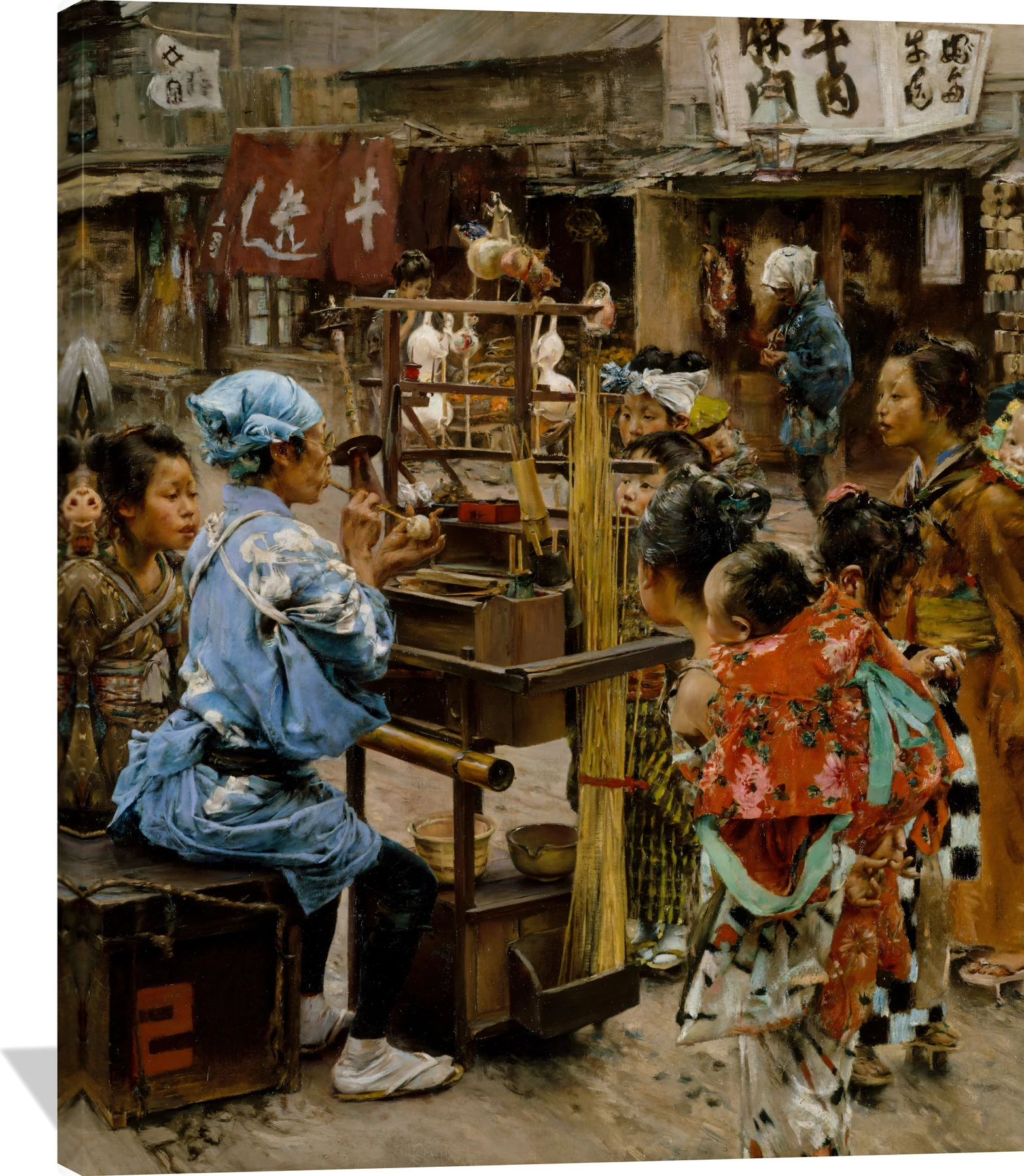
Robert Frederick Blum’s The Ameya canvas captures a lively street scene bathed in warm, natural light, where a Japanese candy maker delights a crowd of curious children. Rich tones of ochre, indigo, and crimson blend with soft neutrals to create a harmonious balance of energy and intimacy. Blum’s painterly realism and delicate brushwork bring every gesture and texture to life, evoking the charm of everyday artistry.
This exquisite wall art infuses cultural depth and timeless elegance into any space. Perfect for a living room, study, or entryway, this The Ameya canvas print invites conversation and reflection through its vivid storytelling and masterful composition.
Robert Frederick Blum (1857–1903) was an American artist born in Cincinnati, Ohio, whose career flourished in New York. Renowned for his refined draftsmanship and luminous handling of color, Blum played a vital role in introducing audiences to the elegance of international artistic traditions, particularly those of Japan.
Artistic Style
Blum’s work is distinguished by its vibrant palette, fluid compositions, and exceptional sensitivity to atmosphere. His style reflects a synthesis of American Impressionism and the cosmopolitan aesthetics he absorbed during extensive travels. Whether working in oil, pastel, or watercolor, he demonstrated a remarkable ability to capture fleeting light and subtle gesture, giving his scenes a sense of immediacy and vitality.
Notable Contributions
A gifted illustrator and muralist, Blum gained recognition for his masterful drawings and for large-scale projects such as his celebrated Venetian murals. His time in Japan in the early 1890s left a lasting imprint on his artistic vision, deepening his interest in pattern, color harmony, and everyday moments rendered with poetic clarity. His depictions of Japanese life introduced many American viewers to the aesthetics of a culture then relatively unfamiliar to them.
Subjects and Significance
Blum frequently portrayed urban scenes, intimate interiors, and richly observed moments of daily life. His works often feature figures engaged in quiet activity, rendered with an almost cinematic attention to mood. His Japanese-inspired paintings, including works such as A Japanese Beauty, exemplify his ability to blend observational detail with a refined, atmospheric sensibility.
Celebrated in his lifetime and influential beyond it, Blum helped shape the American artistic embrace of international styles. His legacy endures in the exceptional elegance and cosmopolitan sophistication that characterize his body of work.