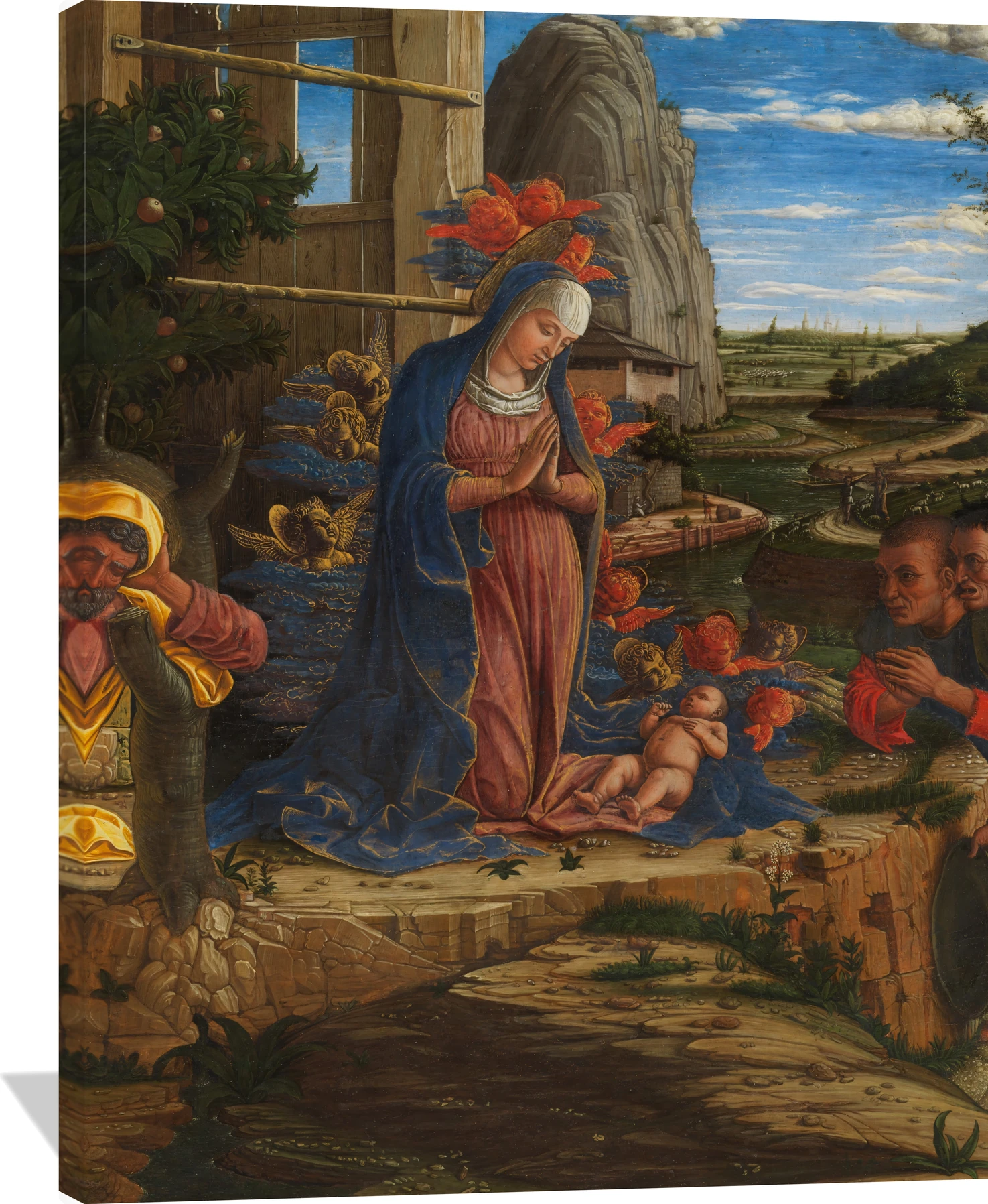
The Andrea Mantegna The Adoration of the Shepherds canvas captures a moment of serene devotion bathed in rich Renaissance color. Deep blues, warm golds, and earthy greens draw the eye toward the tender scene of the Virgin and Child, surrounded by humble figures and a luminous landscape beneath a radiant sky. Mantegna’s masterful use of perspective and detail imbues the composition with both intimacy and grandeur.
This exquisite wall art brings timeless reverence and harmony to any living room, study, or entryway. A premium The Adoration of the Shepherds canvas print transforms your space with the depth, light, and spiritual grace of one of Italy’s most celebrated masters.
Andrea Mantegna (Italian, Isola di Carturo 1430/31–1506 Mantua) was a pioneering figure of the early Italian Renaissance, celebrated for his sculptural approach to painting and his groundbreaking command of perspective. His work reflects a profound engagement with classical antiquity, creating compositions that feel both archaeological and emotionally charged.
Artistic Style and Techniques
Mantegna’s style is defined by his meticulous linear precision, marble‑like figures, and dramatic use of foreshortening. His mastery of perspective allowed him to construct convincingly architectural spaces, giving his paintings a sense of grand, sculptural solidity. This distinctive clarity and rigor helped shape Northern Italian Renaissance aesthetics and influenced generations of artists.
Subjects and Themes
Drawing deeply from classical Roman art, Mantegna incorporated ancient motifs, inscriptions, and relief-like arrangements into his compositions. Religious narratives dominated his work, yet he portrayed them with a rare combination of archaeological detail and psychological gravity. Works such as the Ovetari Chapel frescoes and the innovative Camera degli Sposi exemplify his ability to merge sacred storytelling with courtly sophistication.
Historical and Cultural Significance
Mantegna served as court painter to the Gonzaga family in Mantua, where he developed a body of work that shaped the cultural identity of the Renaissance court. His contributions to illusionistic ceiling painting and his bold experimentation with viewpoint were transformative, leaving a lasting imprint on European art. Distinguished by a commitment to classical rigor and emotional intensity, Mantegna’s legacy endures as a cornerstone of the early Renaissance and a hallmark of perspectival innovation.