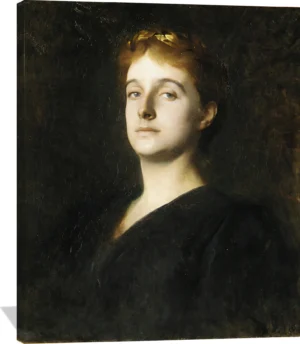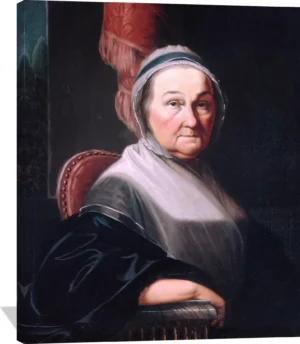
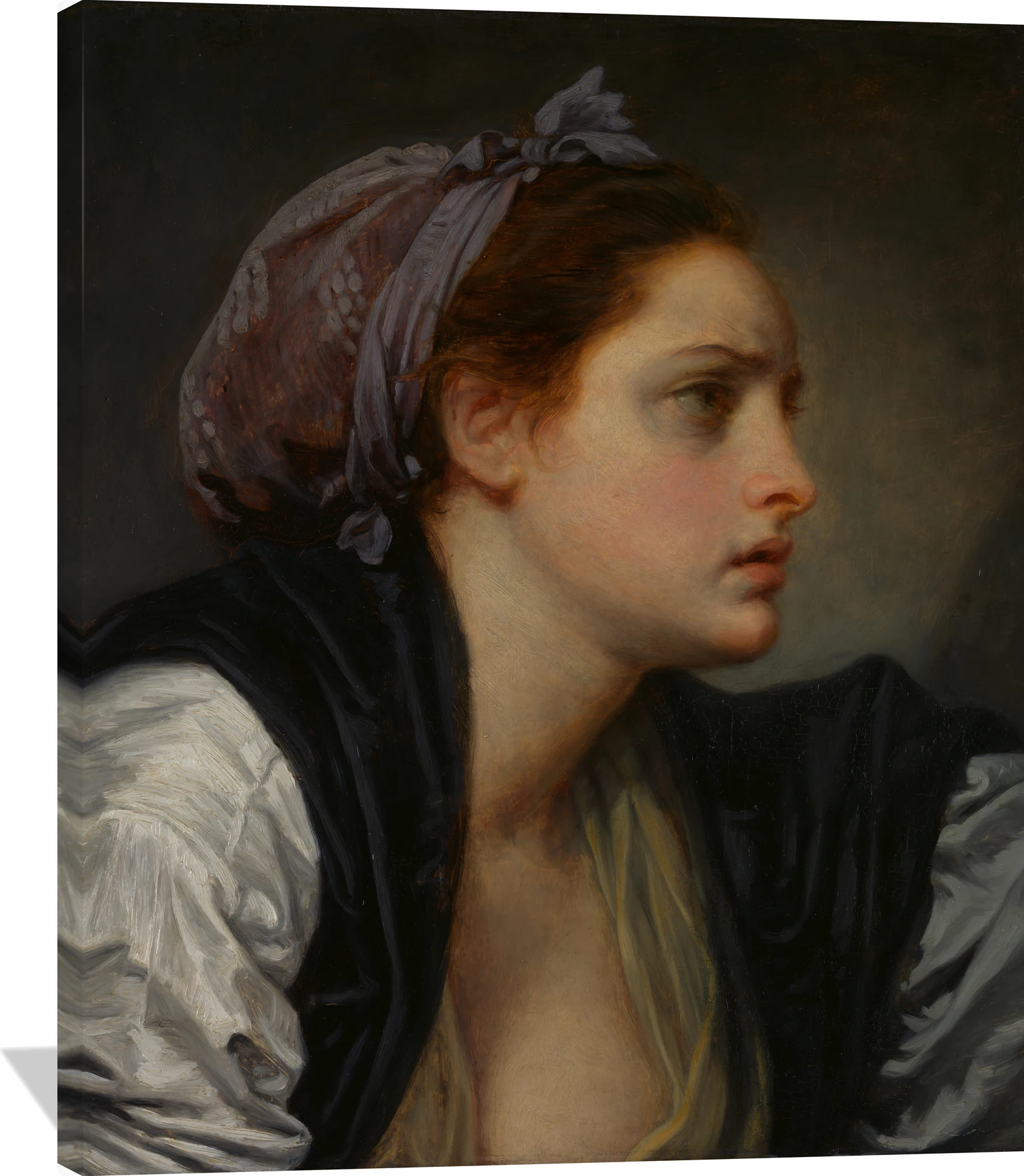
The Jean-Baptiste Greuze Study of a Woman’s Head canvas captures a moment of quiet intensity, rendered with masterful realism and soft, luminous tones. The subject’s side profile, bathed in warm light against a muted background, evokes both strength and vulnerability. Deep charcoal, ivory, and rose hues blend seamlessly, creating a timeless portrait that draws the eye and stirs emotion.
This elegant wall art brings classical refinement to any space—perfect for a living room, study, or entryway. A canvas print of Greuze’s artistry offers a sophisticated focal point that celebrates the grace and depth of 18th-century French painting.
Jean-Baptiste Greuze (French, Tournus 1725–1805 Paris) was a celebrated painter of the late eighteenth century, renowned for his emotionally charged domestic scenes and finely rendered portraits. His work resonated deeply with audiences of the Enlightenment era, capturing the moral ideals and sentiments of his time.
Artistic Style and Approach
Greuze’s style is distinguished by its blend of intimate realism and expressive drama. He favored carefully modeled figures, luminous skin tones, and meticulous attention to detail, creating compositions that feel both tender and theatrical. His mastery of gesture and facial expression allowed him to convey complex emotional states with remarkable clarity.
Subjects and Themes
Best known for his moralizing genre scenes, Greuze often depicted family life, filial devotion, and moments of virtue or transgression. Works such as The Village Bride exemplify his ability to stage narratives that are both visually refined and morally charged. In addition to genre paintings, he produced elegant portraiture that captured the individuality and psychological presence of his sitters.
Legacy and Significance
Greuze played an important role in shaping the transition between Rococo elegance and the emerging sensibilities of Neoclassicism. His emotionally resonant storytelling and commitment to naturalism influenced generations of artists and established him as a major figure in French art. Today, his paintings remain admired for their sensitivity, technical finesse, and enduring human appeal, reinforcing his reputation as a master of expressive narrative painting.