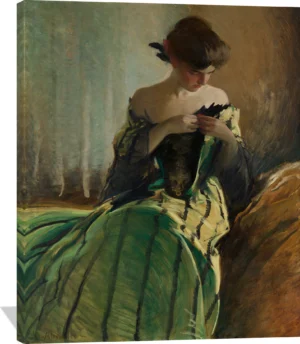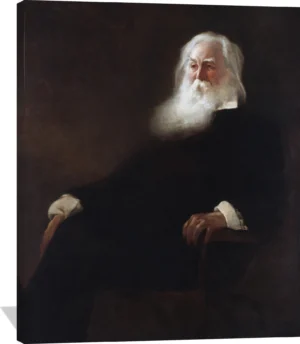
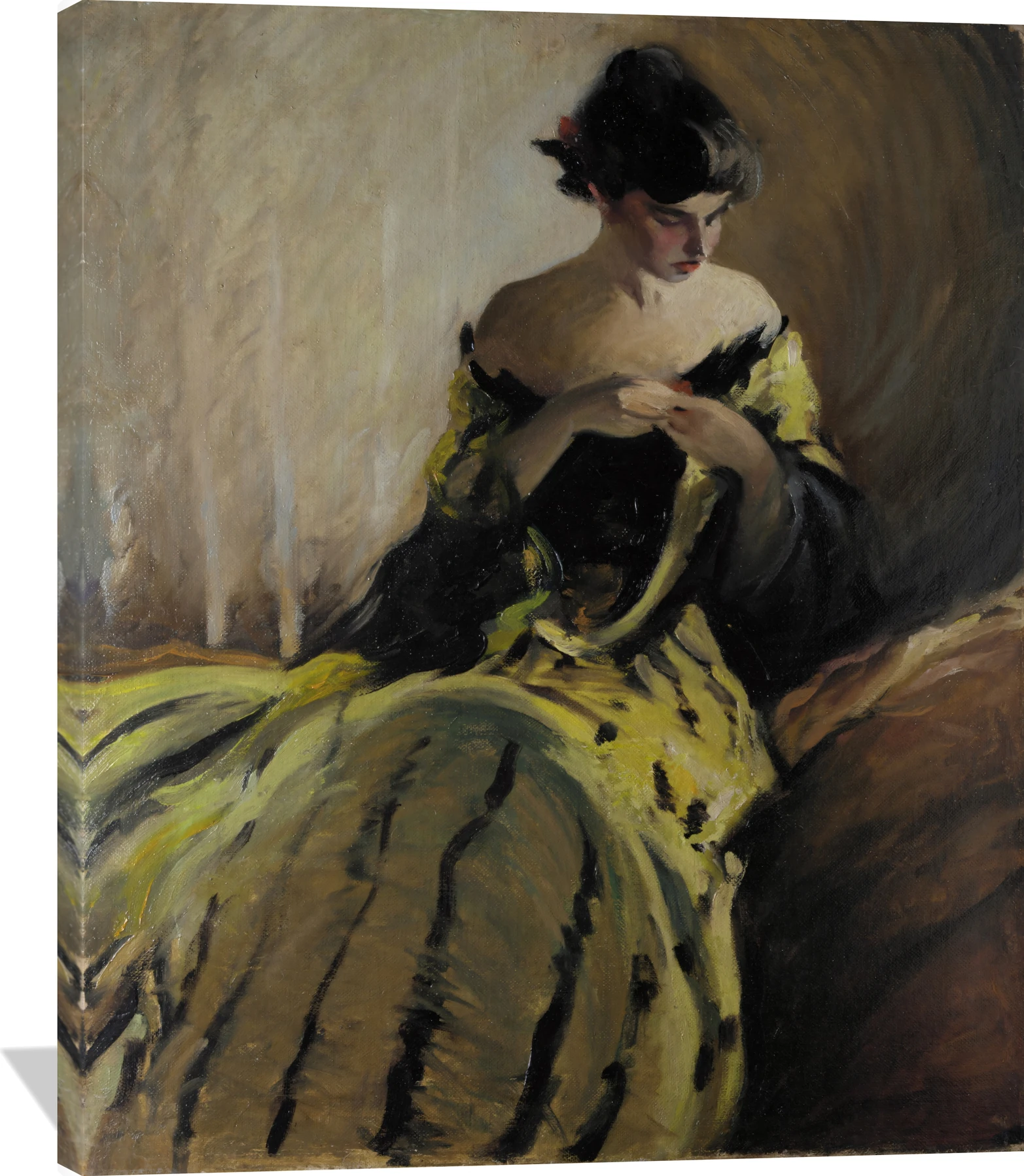
The John White Alexander Study in Black and Green (Oil Sketch) canvas captures a moment of quiet introspection through soft brushwork and luminous contrast. A seated woman, bathed in gentle light, emerges from a palette of olive green, golden yellow, and deep black, evoking elegance and modern grace. The painterly texture and subtle movement of the fabric create a timeless sense of intimacy and poise.
This refined wall art brings warmth and sophistication to any living room, study, or entryway. A premium canvas print of Alexander’s expressive sketch invites viewers to linger in its tranquil mood and painterly depth—an exquisite statement piece for collectors of classic American artistry.
John White Alexander (1856–1915) was an American painter celebrated for his refined draftsmanship, atmospheric elegance, and the poetic fluidity of his compositions. Born in Allegheny, Pennsylvania, and later active in New York, he emerged as a prominent figure of the American Gilded Age, admired for his ability to merge tonal harmony with expressive, modern sensibilities.
Artistic Style
Alexander developed a distinctive style characterized by sweeping curves, soft contours, and a subtle yet rich palette. His work often blended elements of Tonalism and Aestheticism, resulting in compositions that feel both serene and emotionally resonant. Figures seem to drift within their environments, shaped by rhythmic lines and atmospheric light. This lyrical approach became a hallmark of his mature period and contributed significantly to his enduring reputation.
Subjects and Themes
He is best known for his expressive portraits, elegant depictions of women, and symbolic interiors, many rendered with a sense of quiet introspection. His sitters, often poised in flowing garments, appear suspended in luminous environments that elevate mood over narrative. Alexander also created murals and allegorical works, expanding his visual language beyond portraiture while maintaining his signature grace.
Cultural Significance
A respected figure in American art circles, Alexander helped shape the nation’s transition toward more modern pictorial forms. His ability to merge American realism with European artistic influences reflects his international perspective and professional experience abroad. Today, his works stand as important examples of late 19th- and early 20th-century American painting, admired for their lyricism and refined sense of design.