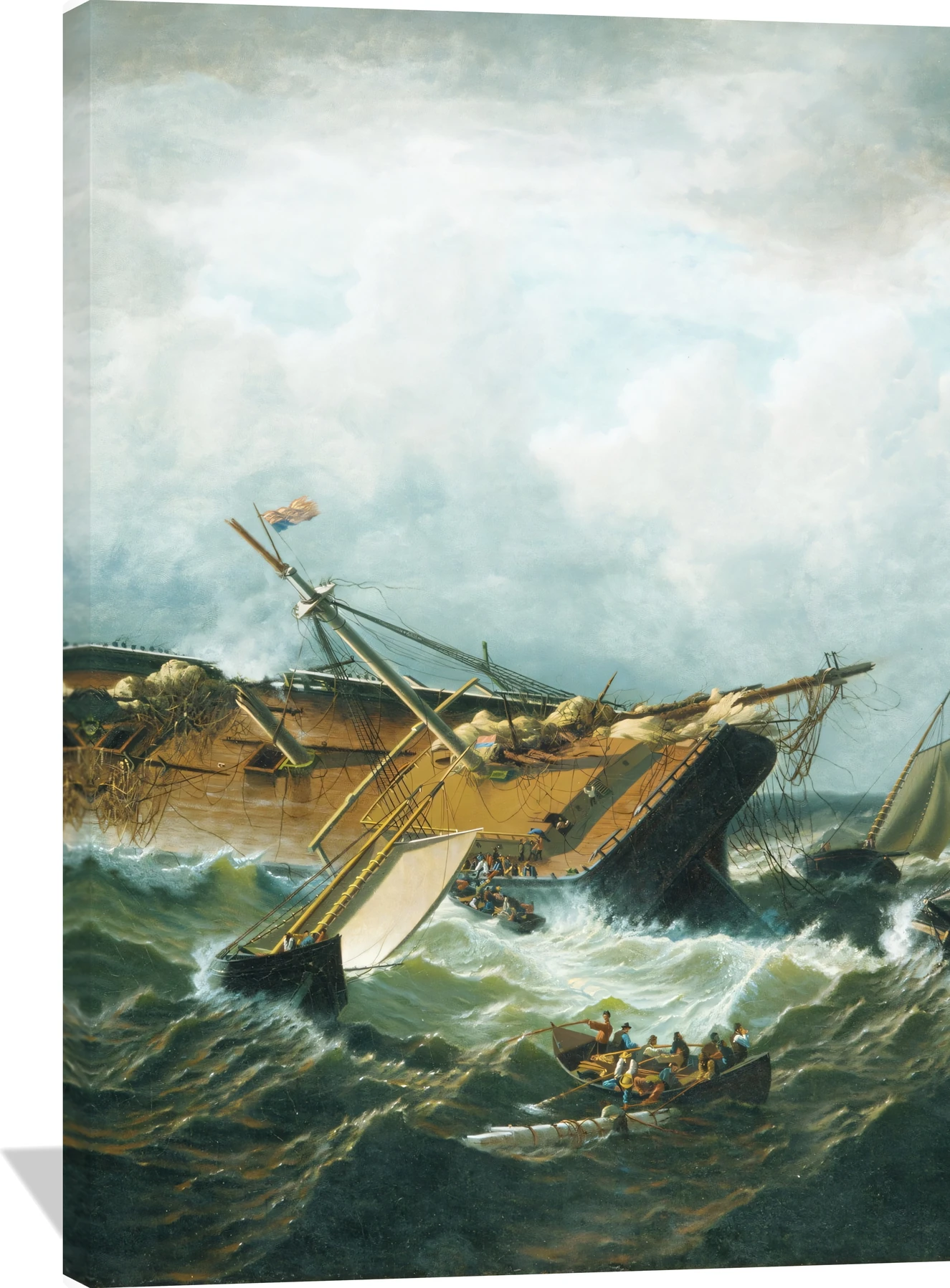
The William Bradford Shipwreck off Nantucket canvas captures the dramatic aftermath of a storm at sea with masterful realism. Deep ocean greens, muted golds, and silvery blues evoke the power of nature and the resilience of sailors battling the waves. Bradford’s luminous sky and meticulous detail bring a timeless sense of motion and atmosphere to this maritime scene.
This museum-quality wall art adds a bold, contemplative focal point to any living room, study, or entryway. A canvas print of Shipwreck off Nantucket (Wreck off Nantucket after a Storm) brings the grandeur of 19th-century seascape painting into your home with enduring elegance.
William Bradford (1823–1892) was an American painter celebrated for his evocative maritime and Arctic scenes. A self-taught artist from Massachusetts, he rose to prominence in the 19th century for his meticulous depictions of ships, icy landscapes, and the dramatic interplay of light on the northern seas.
Artistic Style and Approach
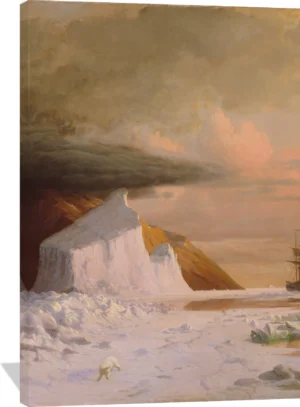
Bradford’s work is distinguished by its luminous realism and precise draftsmanship. His paintings often combine documentary clarity with a poetic sense of atmosphere, reflecting both his artistic skill and firsthand experiences at sea. He masterfully captured the serene yet formidable character of the Arctic, rendering frozen terrains, reflective waters, and expansive skies with meticulous attention to detail.
Signature Subjects
Best known for his images of whaling vessels, New England harbors, and the polar regions, Bradford frequently portrayed ships navigating ice fields or anchored against stark, crystalline backdrops. Works such as Among the Ice Floes and The Panther in Melville Bay demonstrate his ability to convey both the beauty and peril of maritime exploration.
Historical and Cultural Significance
Bradford played a notable role in documenting 19th-century Arctic expeditions, at times journeying with explorers to capture scenes inaccessible to most Americans of his era. His paintings served not only artistic purposes but also as visual records of a rapidly changing world, offering insights into early scientific and exploratory efforts in the far north. As a leading figure of American Arctic art, his work remains a cornerstone of maritime painting and a vivid testament to the era’s spirit of discovery.