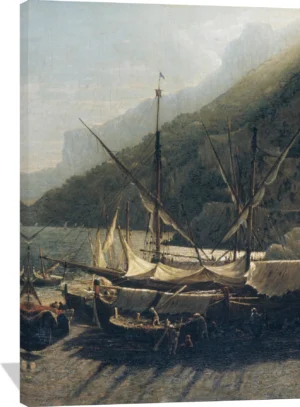
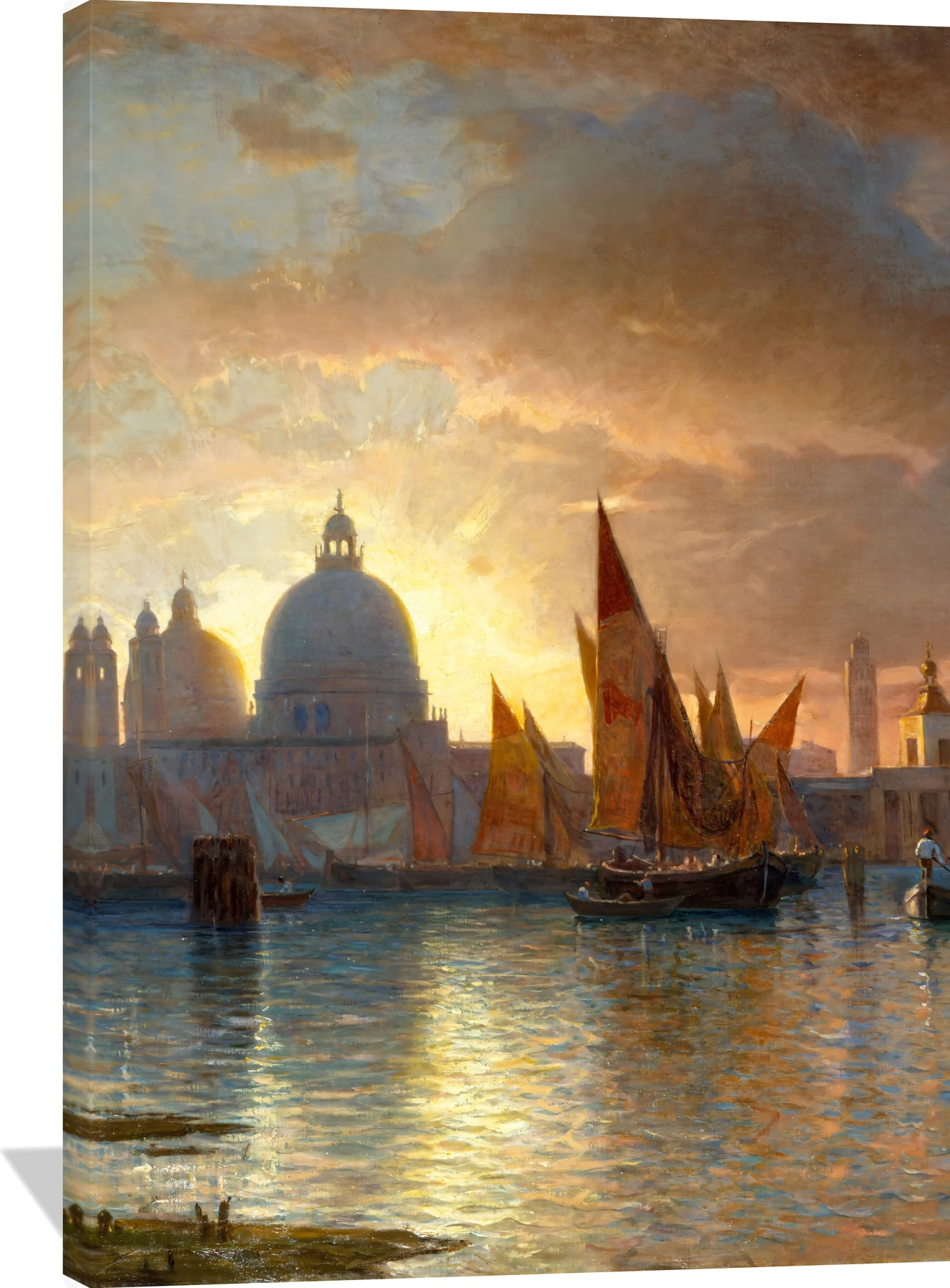
The William Stanley Haseltine Santa Maria della Salute, Sunset canvas captures the luminous beauty of Venice bathed in golden evening light. Warm amber, rose, and sapphire tones blend across the sky and shimmering water, while graceful sailboats frame the majestic domes of the basilica. Haseltine’s masterful brushwork evokes serenity and timeless grandeur, making this piece a captivating focal point for any refined interior.
This elegant wall art brings a sense of calm and sophistication to living rooms, studies, or entryways. A premium canvas print of this radiant seascape invites the romance of Venetian sunsets into your home with enduring style.
William Stanley Haseltine (1835–1900) was an American painter born in Philadelphia and later active in Rome, celebrated for his luminous landscapes and meticulous attention to geological detail. A leading figure associated with the later phase of the Hudson River School and the Luminist tradition, he is known for transforming natural vistas into serene, finely rendered compositions.
Artistic Style
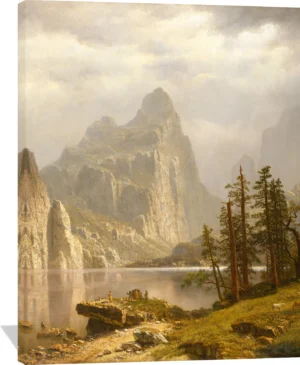
Haseltine’s work is distinguished by its clarity, precision, and meditative atmosphere. His landscapes often feature crisp light, tranquil water, and carefully articulated rock formations, reflecting a scientific interest in nature paired with a poetic sensibility. His restrained palette and calm, polished surfaces embody the qualities associated with American Luminism.
Subjects and Themes
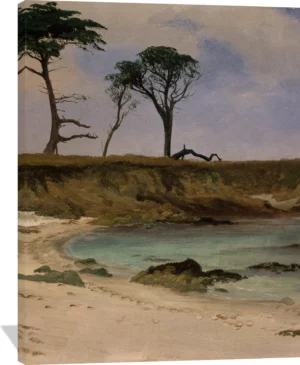
While he painted throughout the Northeastern United States, including New England’s rugged coastline, Haseltine is also celebrated for views of the Roman Campagna and the Mediterranean. His scenes frequently highlight dramatic cliffs, coastal inlets, and expansive skies, capturing both the structural beauty of the land and its quiet emotional resonance. Works such as View of Mount Desert Island exemplify his ability to render the natural world with both accuracy and atmosphere.
Cultural Significance
Haseltine’s paintings hold an important place in American art, bridging Romantic landscape traditions with a more measured, observational approach. As an expatriate artist living in Rome, he contributed to an international exchange of ideas while continuing to refine the American landscape aesthetic abroad. His legacy endures in the way he combined scientific curiosity with a refined, contemplative vision, producing works that remain admired for their precision, harmony, and enduring sense of place.