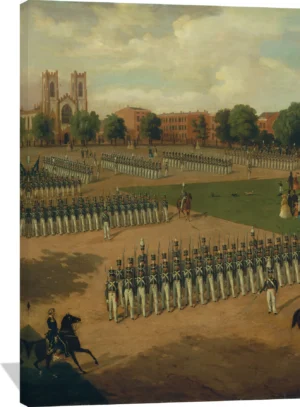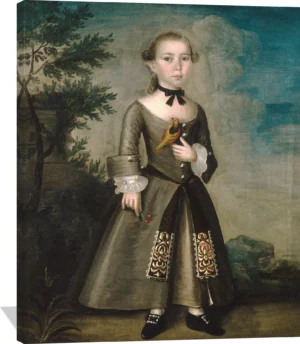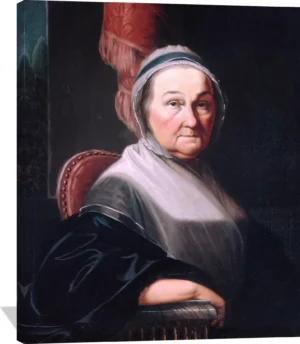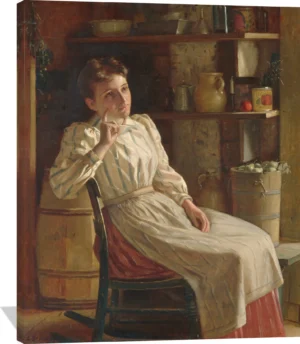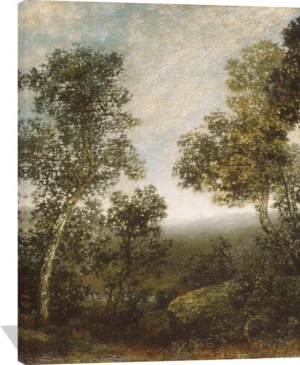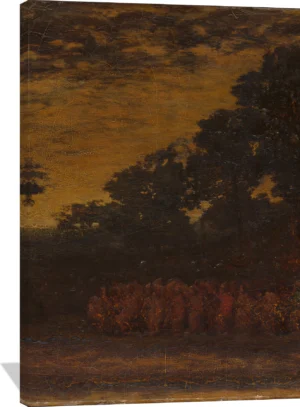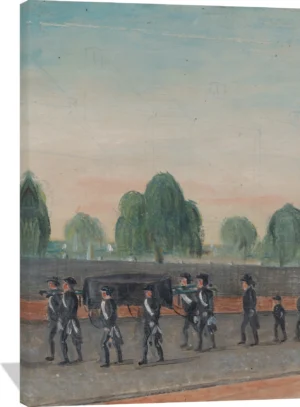
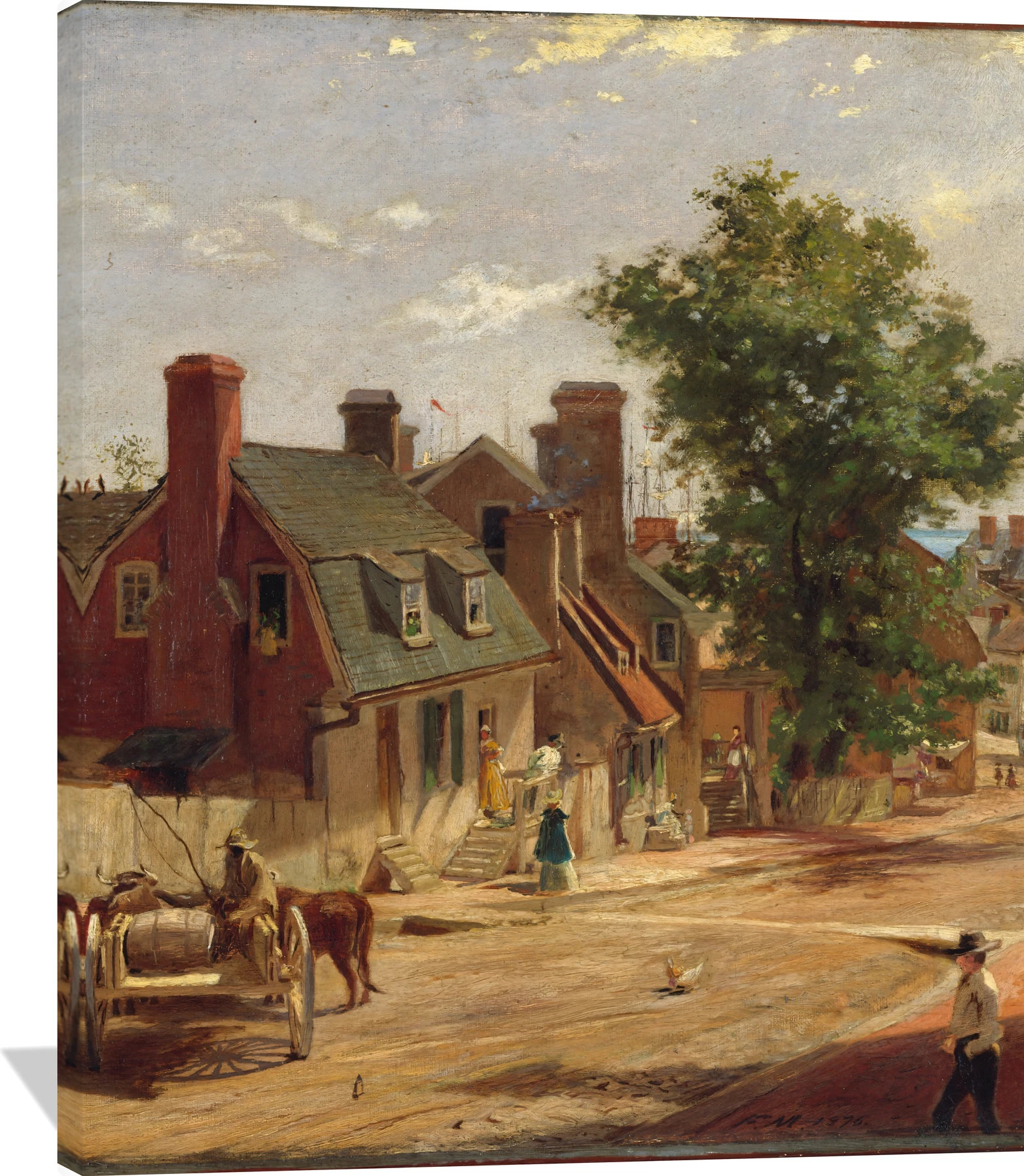
The Francis Blackwell Mayer Old Annapolis, Francis Street canvas captures the timeless charm of a 19th-century Maryland streetscape bathed in warm afternoon light. Earthy browns, muted reds, and soft greens blend with a golden sky, evoking a sense of quiet heritage and everyday life. Mayer’s painterly realism draws you into a moment of calm reflection amid the bustle of a historic town.
This elegant wall art brings a touch of American history and classic sophistication to your home. Perfect for a living room, study, or entryway, this canvas print invites warmth and nostalgia into any refined space.
Francis Blackwell Mayer (1827–1899) was an American painter whose career reflected the cultural and historical character of nineteenth‑century Maryland. Born in Baltimore and later working in Annapolis, he became known for his refined draftsmanship, sensitive use of color, and thoughtful depictions of early American life.
Artistic Style and Subjects
Mayer’s work combines elements of realism with a measured sense of romanticism. He is best recognized for detailed historical compositions, genre scenes, and portraits that illuminate the social and political atmosphere of the Mid‑Atlantic region. His drawings and paintings often display an attentive study of costume, landscape, and architecture, resulting in images that feel both narrative and observational.
Notable Contributions
Mayer’s historical paintings, including scenes related to Maryland’s early colonial and Revolutionary War past, helped shape the visual memory of the region’s heritage. Works such as The Burning of the Peggy Stewart exemplify his ability to transform documented events into compelling visual storytelling. His sketches produced during travels, particularly in Europe and the Caribbean, further expanded the breadth of his visual record.
Legacy and Significance
Regarded as a meticulous recorder of his time, Mayer made a lasting contribution to the preservation of American historical identity through art. His archival drawings and paintings remain valued for their clarity, documentary importance, and refined execution. Today, his work is appreciated for its combination of narrative depth and artistic precision, marking him as a significant figure in nineteenth‑century American art.