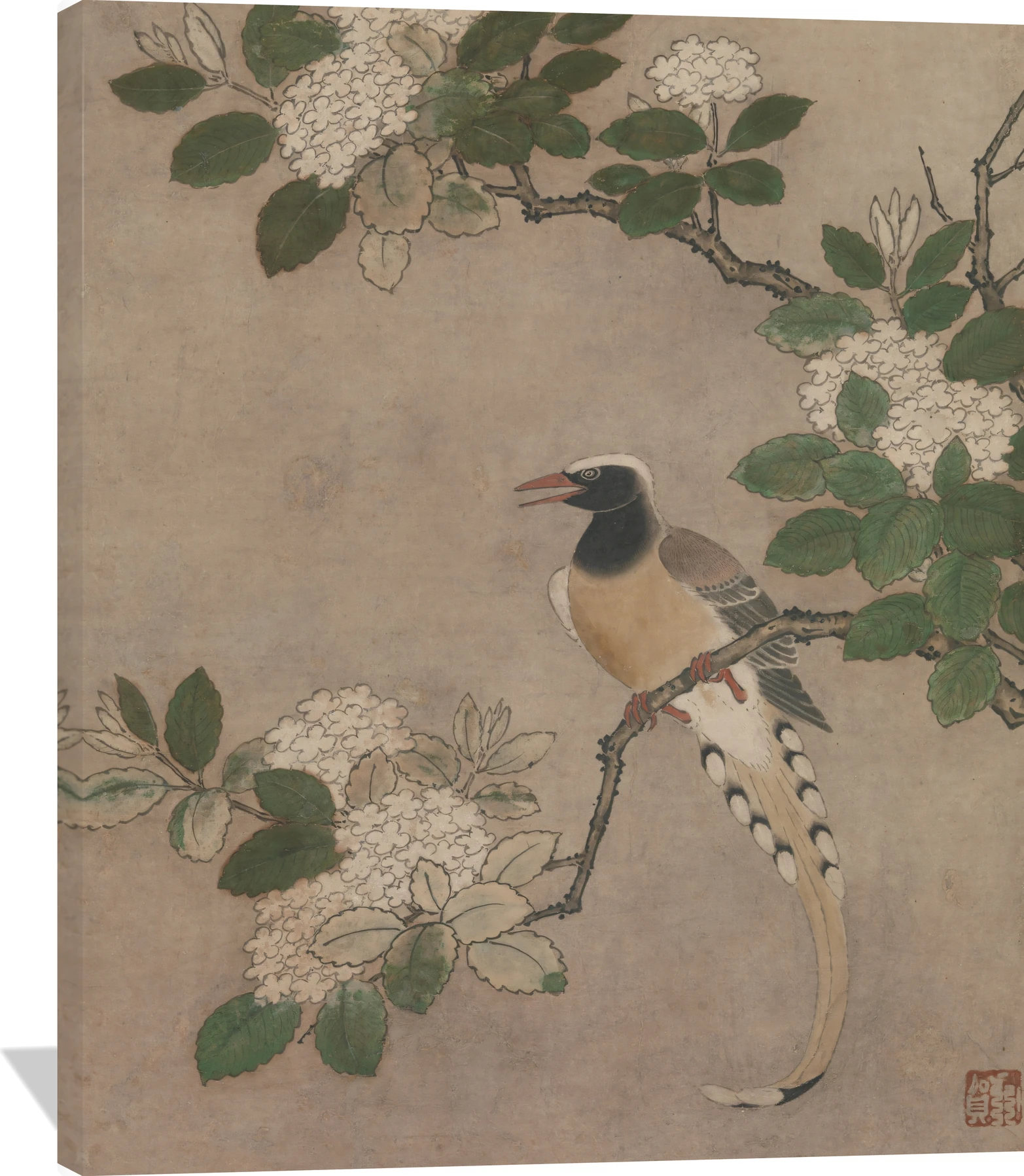
The Genga Magpie on Viburnum Branch canvas captures the quiet grace of nature through a delicate balance of form and color. A poised magpie perches among soft white viburnum blossoms and lush green leaves, set against a warm, parchment-toned background. The composition’s refined brushwork and subtle earth hues evoke harmony and stillness, hallmarks of early 16th-century Japanese artistry.
This elegant wall art brings timeless serenity to any space, from a tranquil study to a sophisticated living room. The Magpie on Viburnum Branch canvas print offers a refined focal point that celebrates both natural beauty and classical craftsmanship.
Genga, a Japanese painter active in the early sixteenth century, is associated with the influential Kanō school, a lineage that helped define the visual character of Japan’s medieval and early modern eras. Trained within a tradition that blended Chinese ink‑painting aesthetics with Japanese courtly refinement, Genga contributed to the evolution of a style that became central to the country’s cultural identity.
Artistic Style
Genga’s work reflects the Kanō school’s disciplined brushwork, characterized by confident ink lines, controlled tonal gradation, and a balanced interplay between bold forms and open space. His paintings often employ the monochrome or lightly colored palettes favored by Zen‑inspired artists, creating an atmosphere of quiet restraint. This approach supports the contemplative mood that became a hallmark of the school and later informed the visual language of screen and scroll painting across Japan.
Subjects and Themes
The artist’s subjects typically include landscapes, historical figures, and scenes drawn from classical Chinese literature, all rendered with a sensitivity that reveals both technical mastery and narrative subtlety. Genga’s landscapes, in particular, show an attentive study of natural rhythms mountain forms, winding rivers, and drifting mists evoking an idealized world where nature and human presence coexist in poetic balance.
Cultural Significance
As part of the Kanō tradition, Genga contributed to a movement that shaped the tastes of samurai elites and influenced Japanese visual culture for centuries. His work embodies the disciplined clarity and understated elegance that made the school a dominant force in official and private commissions. Through these achievements, Genga helped solidify the aesthetic foundation of early modern Japanese art.