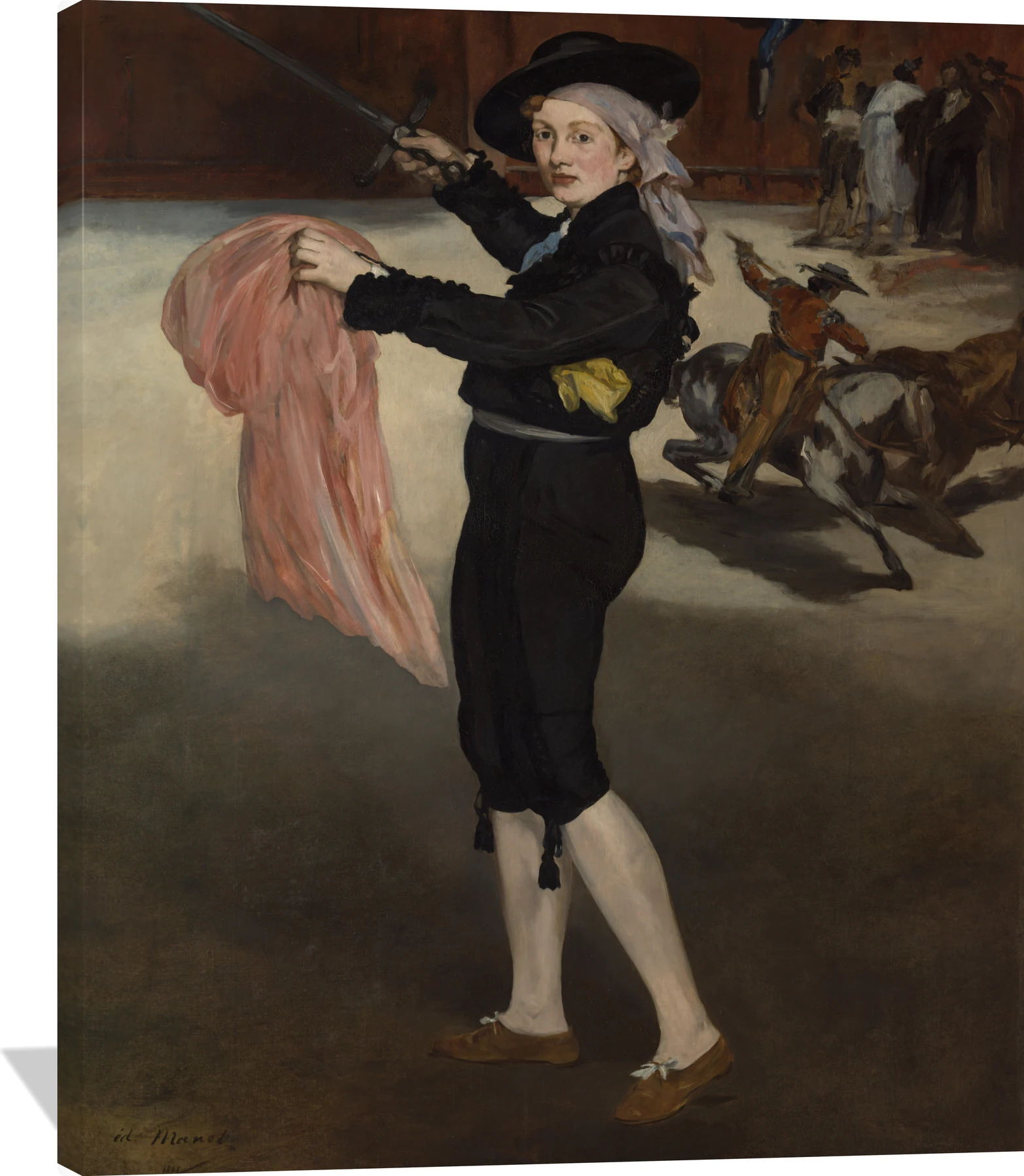
The Edouard Manet Mademoiselle V. . . in the Costume of an Espada canvas captures a striking fusion of elegance and daring. A poised female figure, dressed in a matador’s dark costume, stands against a warm arena backdrop of ochre, cream, and muted rose tones. Manet’s confident brushwork and subtle contrasts of black, pink, and gold evoke both theatrical flair and refined modernity.
This timeless wall art brings a touch of Parisian sophistication and bold character to any living room, study, or entryway. A premium canvas print of Manet’s celebrated work, it embodies the artist’s mastery of light and presence—perfect for collectors who value art that commands attention with quiet strength.
Édouard Manet (French, Paris 1832–1883 Paris) was a pivotal figure in the transition from academic tradition to the birth of modern art. His innovative approach reshaped the visual language of the 19th century and helped lay the groundwork for Impressionism.
Artistic Style
Manet’s style is defined by bold brushwork, direct compositions, and a refined yet striking use of light and contrast. He often merged the clarity of classical painting with a fresh, contemporary immediacy, creating works that felt both grounded in tradition and radically new.
Subjects and Themes
Renowned for portraying modern life, Manet depicted cafés, leisure scenes, portraits, and urban Paris with an unflinching eye. His figures command attention through their frank gazes and strong presence, as seen in landmark works such as Olympia and Le Déjeuner sur l’herbe. Even in his still lifes and floral studies, he brought a distinctive sharpness and vitality that set his paintings apart.
Artistic Significance
As a central catalyst of modernism, Manet challenged academic conventions and sparked critical debates that reshaped the art world of his era. His confident rejection of traditional narratives and emphasis on contemporary subjects made him a guiding force for younger artists, earning him a lasting reputation as a pioneer of modern painting. Today, his work remains celebrated for its elegance, innovation, and enduring cultural impact.