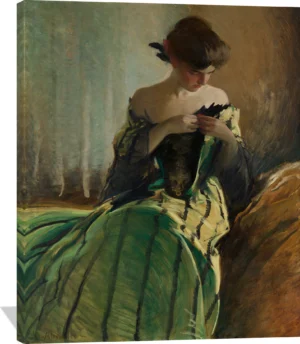
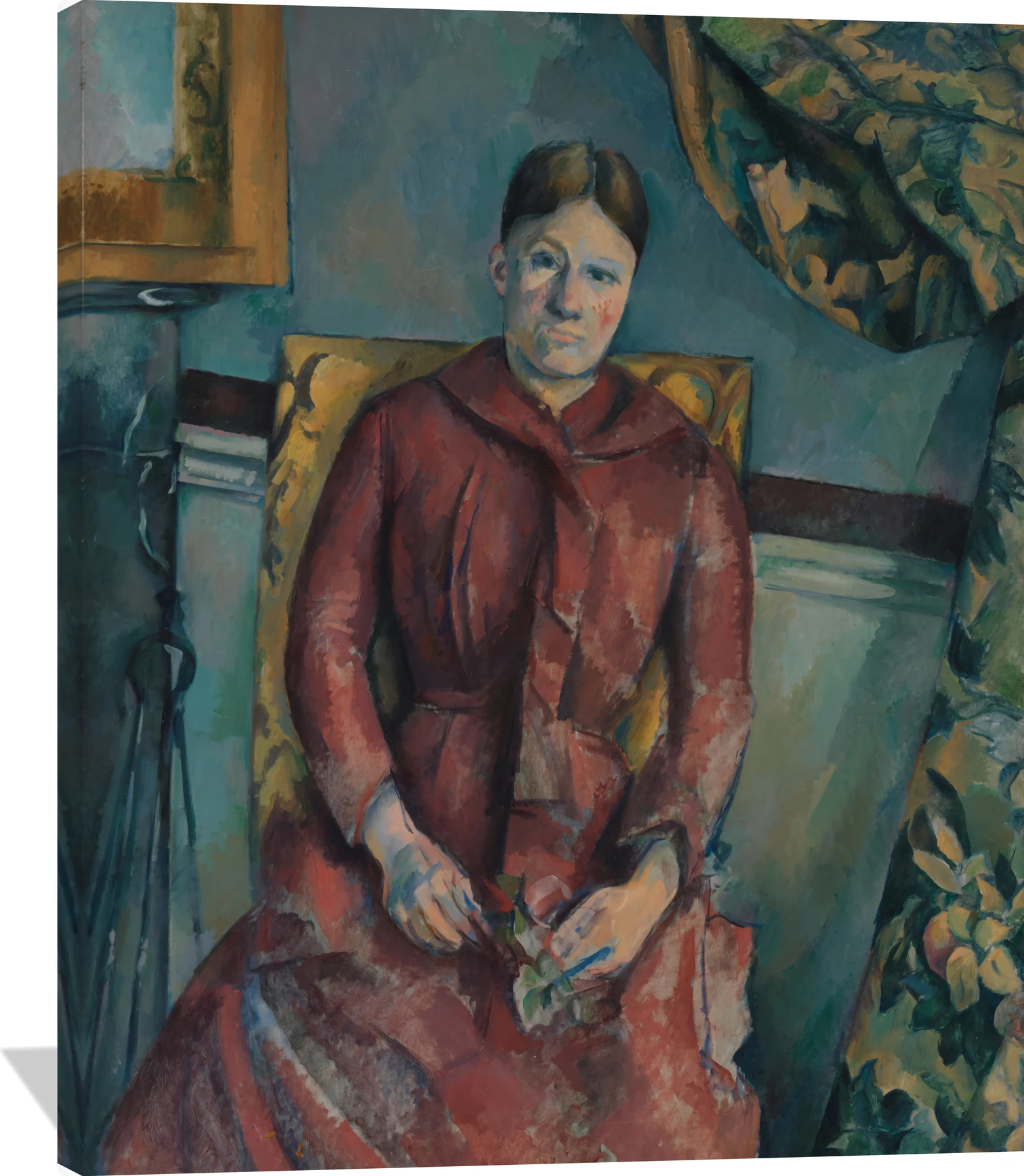
Paul Cézanne’s Madame Cézanne (Hortense Fiquet, 1850–1922) in a Red Dress canvas captures quiet introspection through bold geometry and rich, layered color. The sitter’s crimson dress contrasts beautifully with the muted blues and greens of the background, creating a balanced composition that feels both intimate and timeless. Cézanne’s masterful brushwork and subtle tonal shifts lend the portrait a modern depth that transcends its era.
This museum-quality wall art brings refined sophistication to any space—perfect for a living room, study, or entryway. A canvas print of this celebrated work invites the calm, contemplative spirit of Cézanne’s artistry into your home décor.
Paul Cézanne (1839–1906), born and based in Aix-en-Provence, was a pioneering French painter whose vision bridged nineteenth‑century Impressionism and the emergence of modern art. Revered for his deliberate, analytical approach to form and color, he transformed everyday subjects into enduring studies of structure and perception.
Artistic Style
Cézanne’s mature style is defined by sculptural brushwork, subtly shifting color planes, and a steadfast pursuit of order within nature. His methodical layering of color created a sense of weight and volume that departed from the spontaneity of the Impressionists. This rigorous approach laid essential groundwork for later movements, influencing artists from the Fauves to the Cubists.
Subjects and Themes
Whether depicting the sunlit hills of Provence, a humble arrangement of fruit, or the iconic silhouette of Mont Sainte‑Victoire, Cézanne emphasized stability and underlying geometry. His still lifes, including celebrated compositions such as Still Life with Apples, exemplify his ability to elevate familiar objects into complex meditations on space, balance, and perception.
Legacy
Widely regarded as the father of modern painting, Cézanne reshaped artistic thinking by insisting that visual reality could be reconstructed through form and color alone. His relentless pursuit of structure and his uniquely architectural vision of nature have secured his place as one of art history’s most influential innovators. Today, his work remains a touchstone for its quiet intensity, its intellectual rigor, and its profound impact on the evolution of modern art.