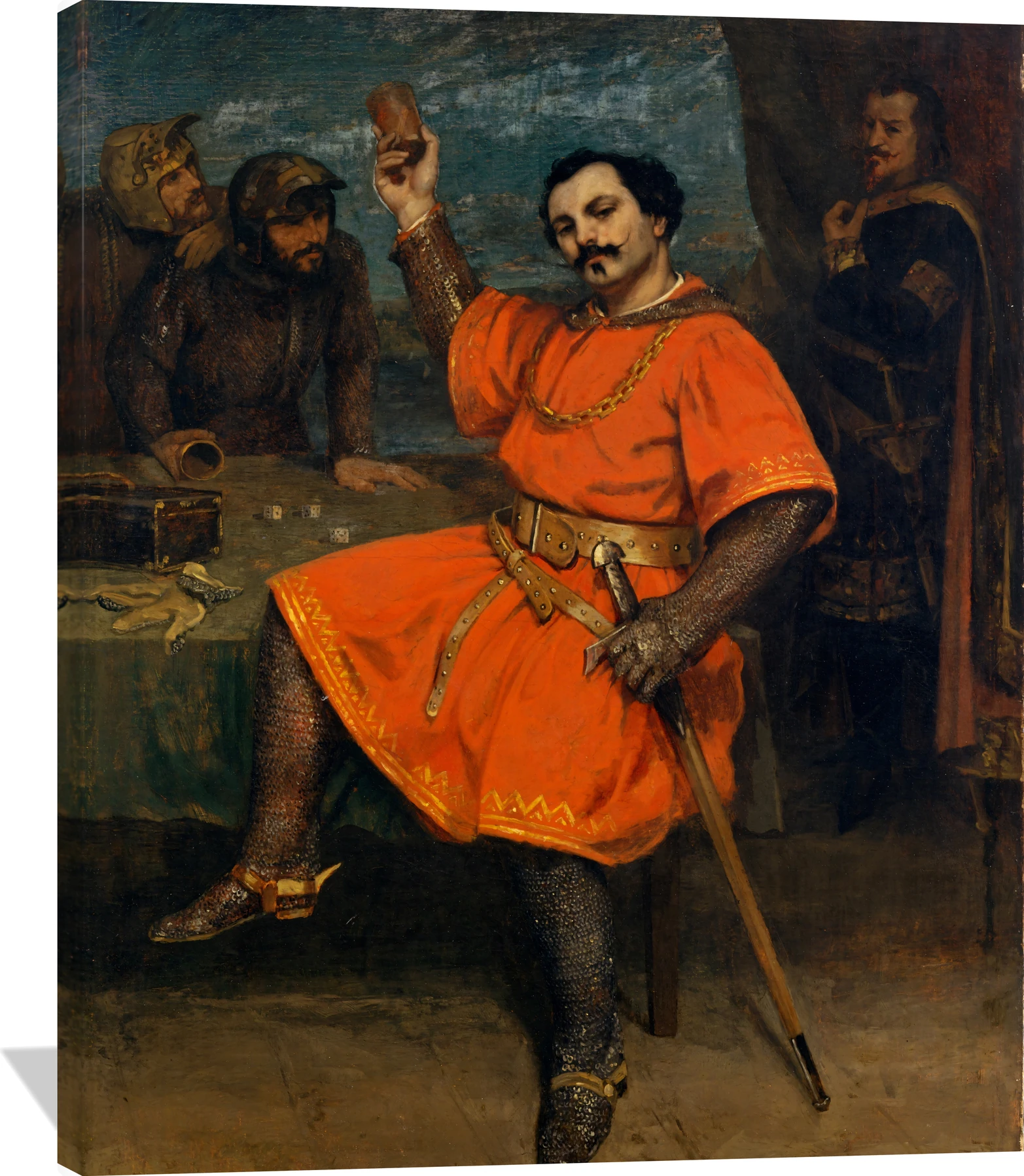
The Gustave Courbet Louis Gueymard (1822–1880) as Robert le Diable canvas captures theatrical bravado and rich character through Courbet’s masterful realism. Bathed in deep reds, warm browns, and muted golds, the composition exudes drama and vitality as the central figure raises a toast in defiant confidence. The textured brushwork and commanding pose evoke both power and playfulness, making this piece a striking focal point for any interior.
This museum-quality canvas print brings 19th-century French artistry into your home. Ideal for a study, living room, or entryway, it adds a touch of historical grandeur and expressive energy to contemporary spaces.
Gustave Courbet (1819–1877) was a pioneering French painter whose bold vision helped redefine the trajectory of modern art. Born in Ornans and later active across France and Switzerland, he became a central figure in the rise of the Realist movement, rejecting academic convention in favor of depicting everyday life with unflinching honesty.
Artistic Style and Vision
Courbet’s work is distinguished by its robust brushwork, earthy palette, and monumental treatment of ordinary subjects. He favored direct observation over idealization, presenting rural laborers, landscapes, and scenes from daily life with a gravity once reserved for historical and religious themes. His commitment to portraying the tangible world marked a decisive shift away from Romanticism and toward a more grounded, contemporary sensibility.
Notable Contributions
With landmark works such as The Stone Breakers and A Burial at Ornans, Courbet challenged artistic hierarchies and social conventions. By giving prominence to common people and authentic experiences, he opened the door for later avant‑garde movements, influencing Impressionists and generations of modern painters who embraced truth over tradition.
Subjects and Significance
Courbet’s subjects ranged from rural labor and intimate portraits to rugged landscapes and seascapes. His paintings are celebrated for their physicality, emotional presence, and unwavering commitment to reality. Through his art and outspoken beliefs, he became a transformative cultural figure whose work helped redefine the role of the artist as an independent, modern voice.