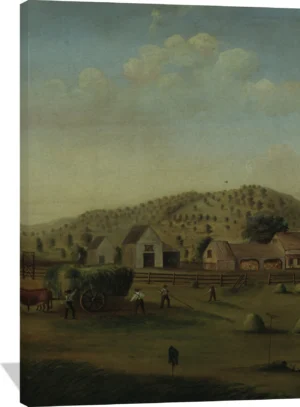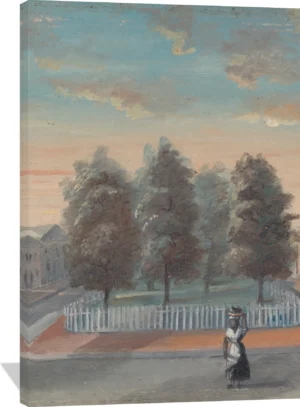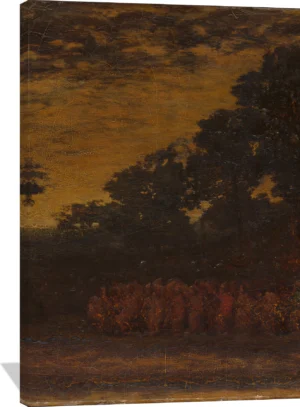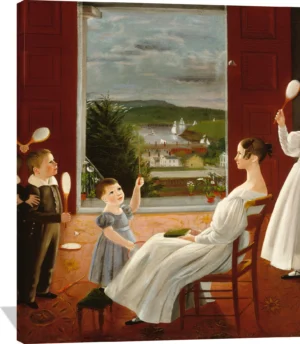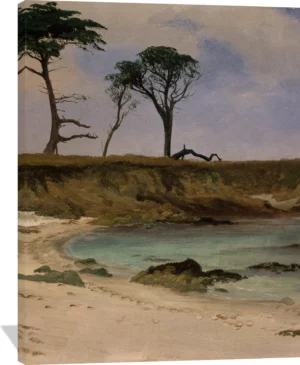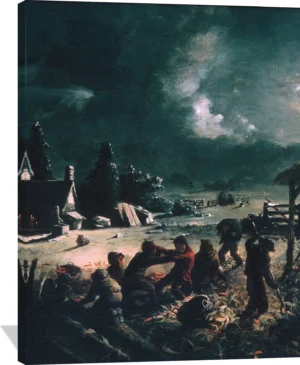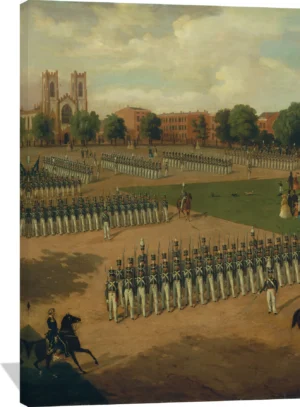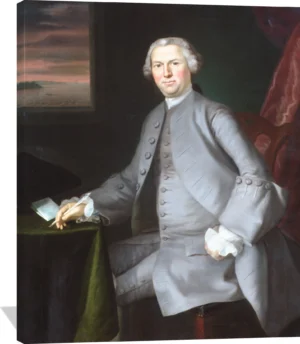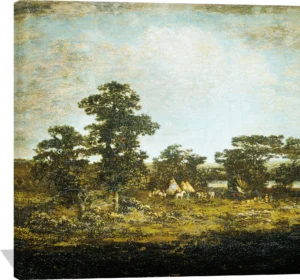
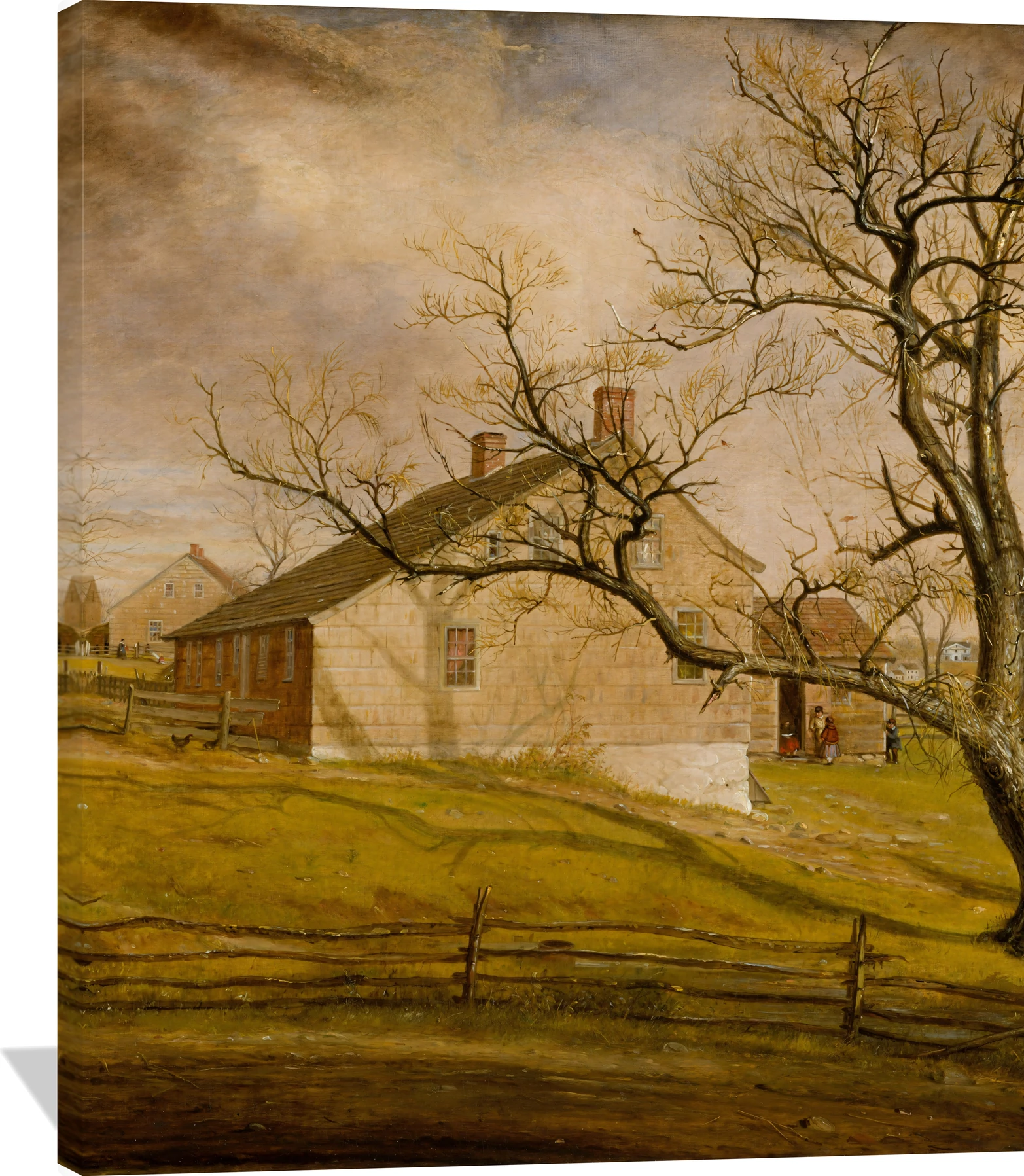
The William Sidney Mount Long Island Farmhouses canvas captures the quiet rhythm of rural life in 19th-century New York. With warm earth tones, soft golden light, and delicate brushwork, Mount evokes a timeless pastoral charm—weathered fences, leafless trees, and homesteads nestled under a tranquil sky. The horizontal composition and natural palette of ochre, brown, and muted blue create a harmonious sense of space and serenity.
This elegant wall art brings a touch of American heritage and countryside calm to any interior. Ideal for a living room, study, or entryway, this canvas print celebrates the enduring beauty of simple landscapes and the artistry of one of America’s early masters.
William Sidney Mount (1807–1868) was an American painter from Setauket, New York, celebrated for his vivid portrayals of everyday rural life. A pioneer of genre painting in the United States, Mount captured the spirit of 19th‑century American culture with a clarity and warmth that set his work apart.
Artistic Style
Mount’s style blends careful realism with a keen sense of narrative. His compositions are marked by natural light, precise detail, and an engaging immediacy that draws viewers into the scene. He mastered both portraiture and genre imagery, bringing a polished yet approachable quality to each canvas.
Typical Subjects
Mount is best known for scenes depicting rural musicians, farm laborers, and moments of community life. Works such as The Power of Music and Bargaining for a Horse highlight his talent for capturing gesture, expression, and social interaction, revealing the humor, tension, and humanity embedded in everyday moments.
Notable Contributions
As one of the earliest and most influential American genre painters, Mount helped shape a visual identity rooted in the realities of American experience rather than European tradition. His interest in music, particularly folk and fiddle traditions, also informed his art, allowing him to convey rhythm and atmosphere with remarkable sensitivity.
Cultural Significance
Mount’s work offers a richly observed window into 19th‑century rural life, reflecting social dynamics, labor, and leisure with authenticity and nuance. His paintings hold lasting importance not only for their technical excellence but also for their role in defining a distinctly American artistic voice. Today, he remains recognized for his evocative storytelling and his contributions to the development of American realism.