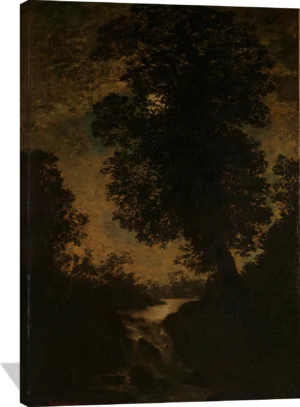
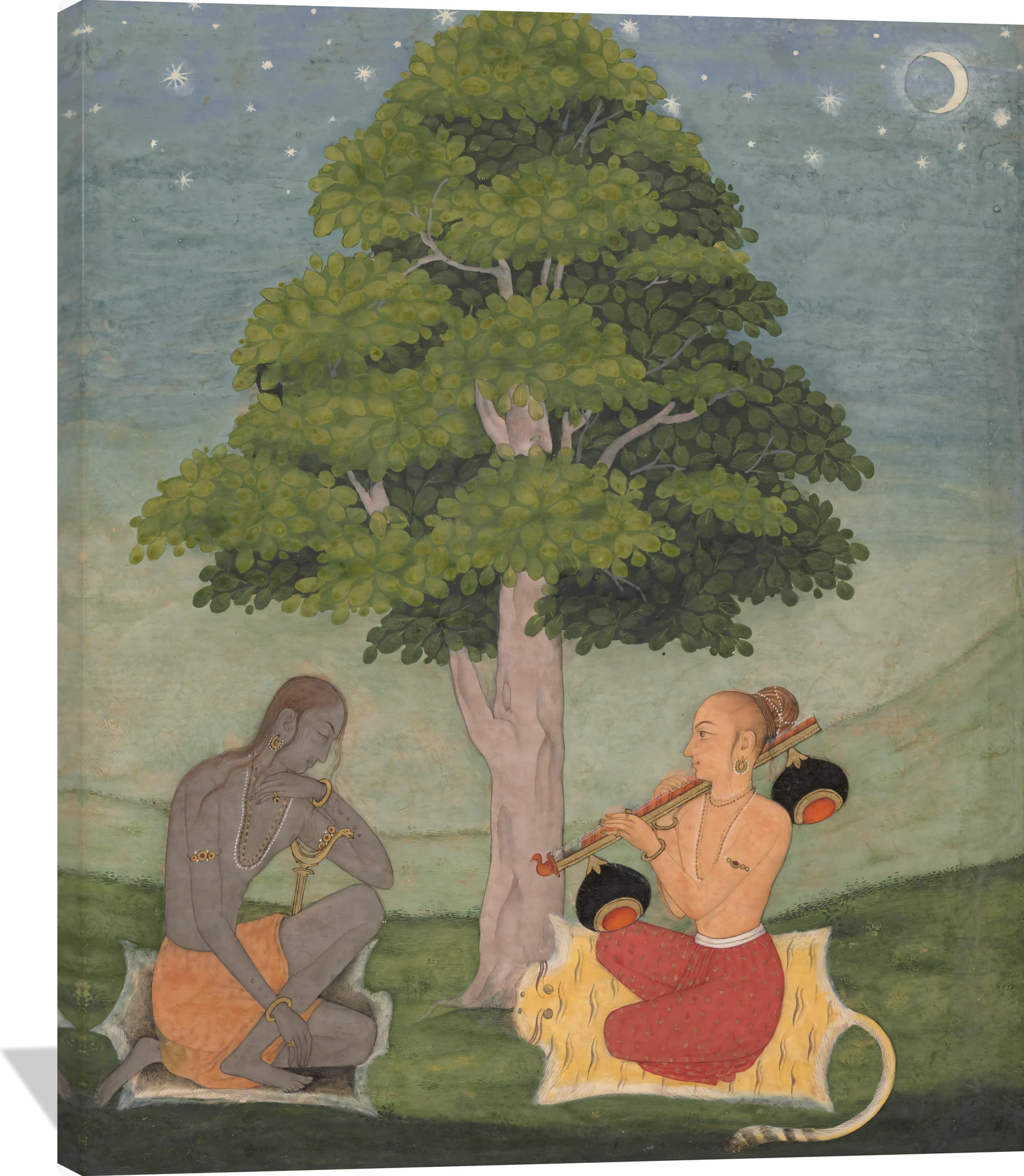
The Ruknuddin Kedar Ragini: Folio from a ragamala series (Garland of Musical Modes) canvas captures a serene nocturnal scene steeped in devotion and musical harmony. Rendered in delicate tones of sage green, muted gold, deep red, and soft gray, this exquisite composition reflects the refined elegance of late 17th-century Indian miniature painting. The tranquil figures beneath a starlit sky evoke a meditative calm, making it a timeless focal point for any space.
This museum-quality canvas print brings historical artistry into the modern home. Ideal for a living room, study, or entryway, it infuses your walls with a sense of rhythm, spirituality, and quiet sophistication.
Ruknuddin, active in the late seventeenth century, was a distinguished painter working within the refined traditions of the Mughal imperial ateliers. Celebrated for his elegant brushwork and masterful control of color, he contributed to the transition between the highly ornate style of the Shah Jahan period and the more restrained aesthetic that emerged under later Mughal rulers.
Artistic Style
Ruknuddin’s work is characterized by exquisitely detailed rendering, subtle shading, and a nuanced approach to naturalism. His compositions often balance delicate linear precision with atmospheric softness, producing images that feel both intimate and meticulously constructed. He excelled in capturing the texture of fabrics, the shimmer of jewelry, and the expressive individuality of faces, hallmarks of the period’s most accomplished painters.
Notable Themes and Subjects
His paintings typically focused on courtly portraits, noble figures, and scenes shaped by literary or historical narratives. Ruknuddin’s handling of human expression made his portraits particularly valued, while his careful observation of flora and ornamental architecture enriched his narrative compositions. Works attributed to him, such as studies of dignitaries or depictions of refined gatherings, exemplify the cultural sophistication of the Mughal court.
Cultural Significance
Ruknuddin’s contribution lies in his ability to uphold the grandeur of earlier Mughal styles while gently guiding the aesthetic toward the more contemplative sensibility of the late seventeenth century. His paintings reflect the intellectual and artistic vibrancy of the imperial workshop and continue to be admired for their technical finesse and enduring beauty. His legacy remains an important chapter in the evolution of South Asian miniature painting, celebrated for its elegance and exceptional craftsmanship.