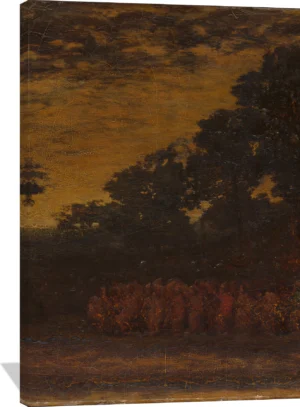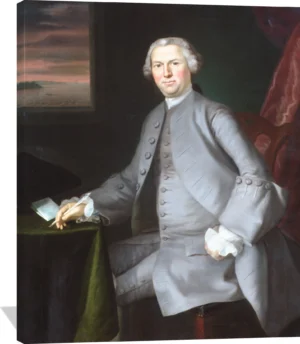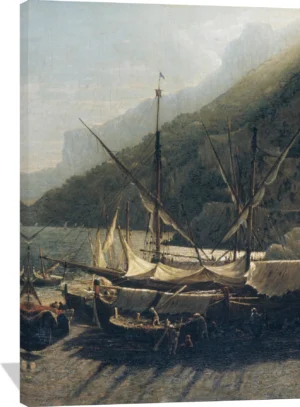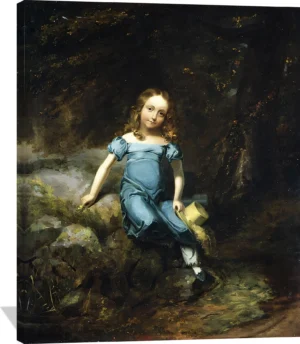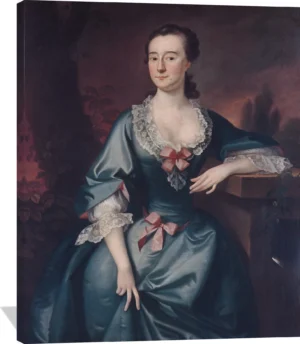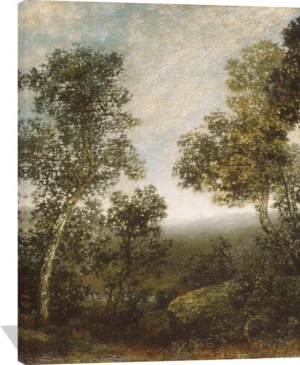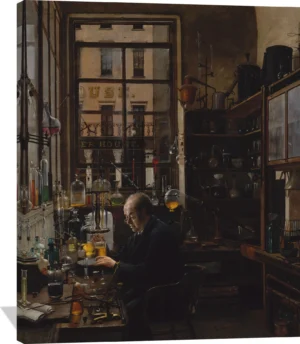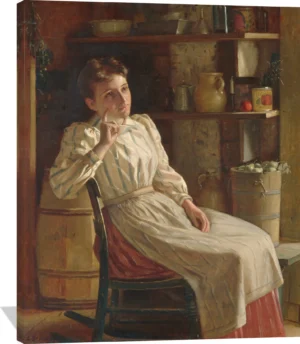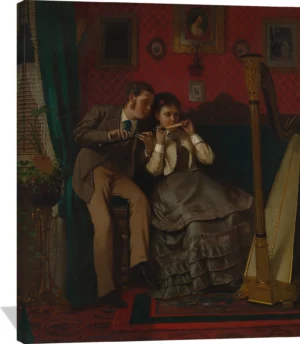
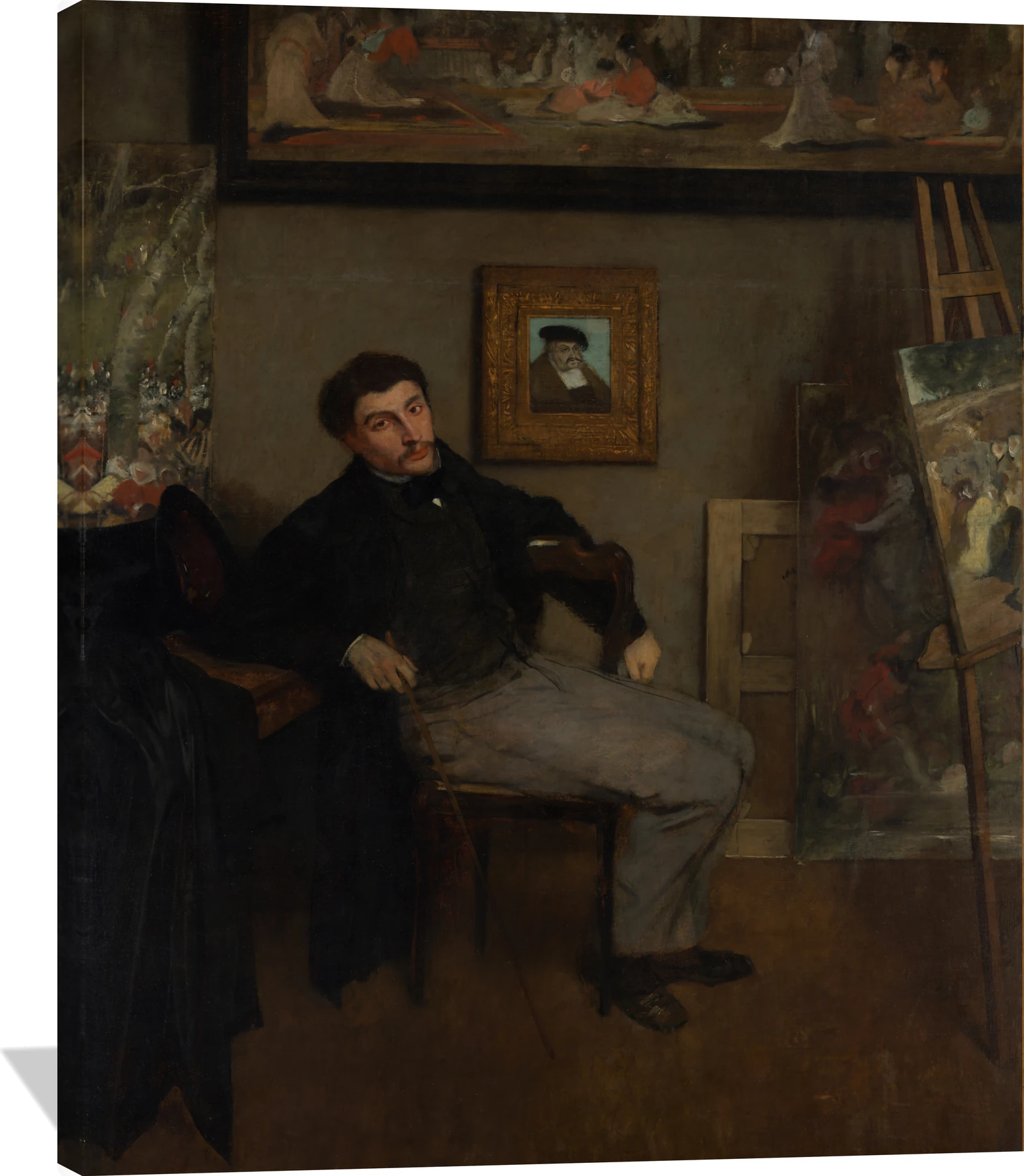
The Edgar Degas James-Jacques-Joseph Tissot (1836–1902) canvas captures a moment of quiet introspection within an artist’s studio. Rendered in deep browns, muted grays, and soft golden tones, this refined composition reflects Degas’s mastery of atmosphere and character. The seated figure, surrounded by canvases and framed works, evokes a mood of contemplation and creative intimacy.
This museum-quality wall art brings timeless sophistication to any living room, study, or entryway. A canvas print that celebrates the elegance of 19th-century artistry, it offers a subtle yet powerful focal point for interiors that value depth, culture, and quiet refinement.
Edgar Degas (1834–1917) was a Paris-born French artist whose innovative vision helped shape the course of modern art. Known for his mastery of drawing and his keen observation of contemporary life, Degas became one of the most influential figures associated with Impressionism, though he preferred to be seen as a realist.
Artistic Style
Degas developed a distinctive aesthetic defined by unconventional compositions, dramatic cropping, and a sophisticated understanding of light and movement. His work bridged traditional academic training with new, modern subjects, resulting in a style that was both disciplined and boldly experimental. His exploration of pastels, in particular, pushed the medium to new expressive possibilities and remains one of his most celebrated contributions.
Signature Subjects
Degas is best known for his depictions of ballet dancers, captured backstage, in rehearsal, or mid-performance, revealing intimate and often unguarded moments. He was equally drawn to everyday Parisian scenes, including milliners, laundresses, and café patrons. His works such as The Ballet Class and The Absinthe Drinker highlight his fascination with gesture, psychology, and the rhythms of modern urban life.
Cultural Significance
A central figure in the artistic circles of late nineteenth-century Paris, Degas contributed profoundly to the evolving language of modern art. His commitment to draftsmanship, his innovative use of perspective, and his focus on fleeting, candid moments helped redefine how contemporary life could be portrayed. Today, Degas is celebrated as a brilliant visual storyteller whose work balances technical mastery with a refined, deeply human sensitivity.
Legacy
Degas’s influence extends far beyond Impressionism. His exploration of movement, his devotion to observation, and his experimentation with materials established him as a foundational voice in modern visual culture. Collectors and art enthusiasts continue to value his work for its elegance, insight, and the quiet yet powerful sense of authenticity that characterizes his timeless vision.