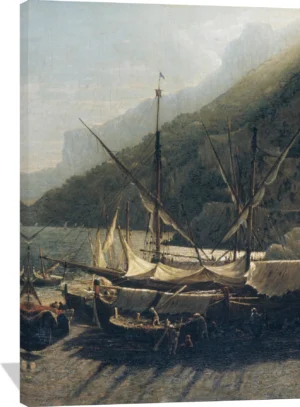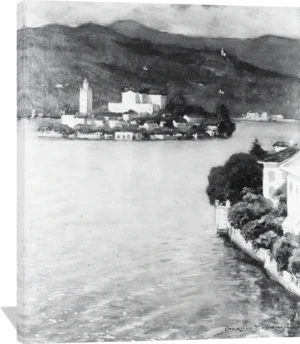
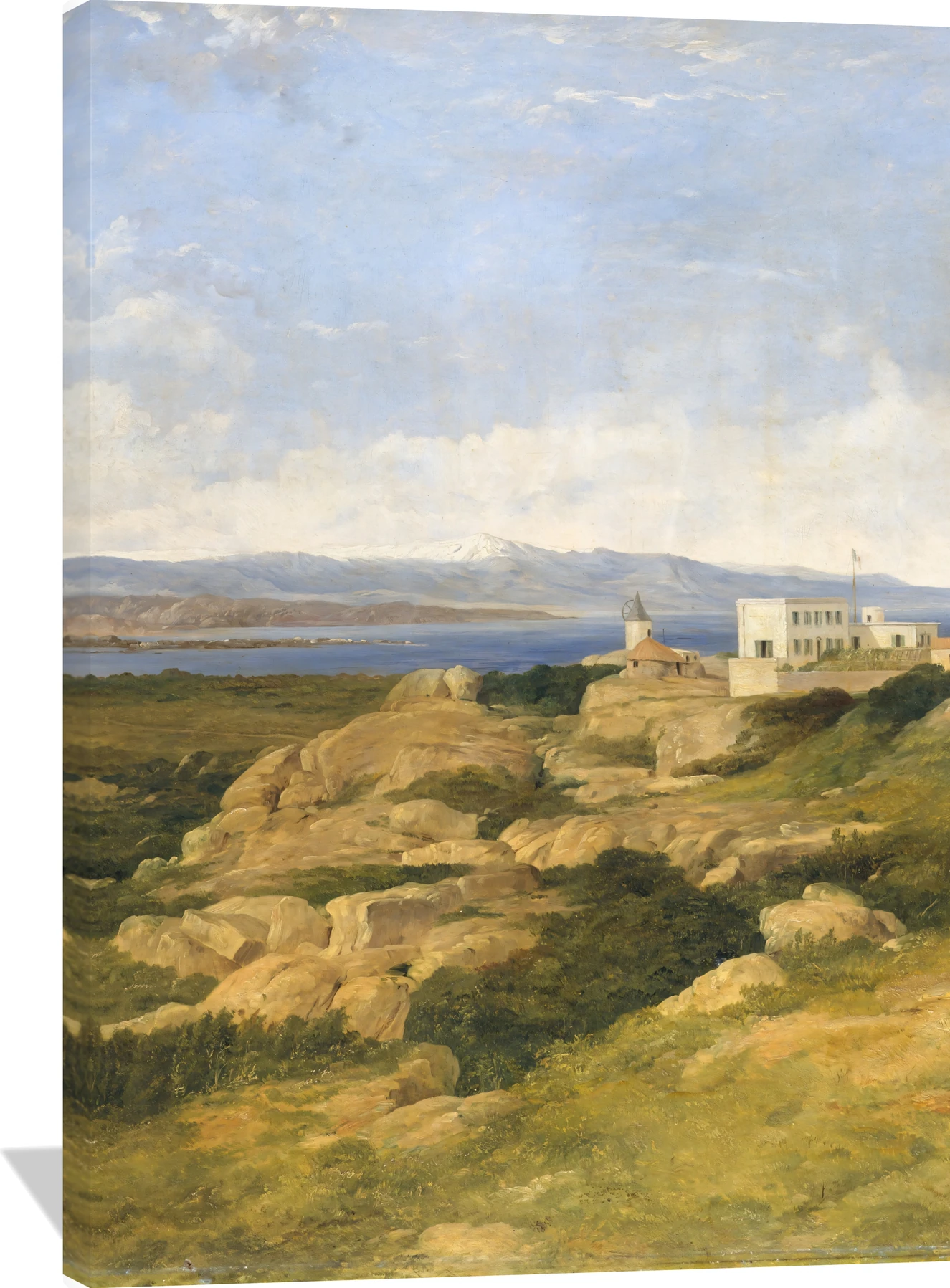
The Frederick Richard Lee General Garibaldi’s Residence at Caprera canvas captures a tranquil Mediterranean landscape bathed in warm light. Rolling green hills, sunlit rocks, and a serene blue sky frame the distant sea and stately residence, evoking calm and timeless grandeur. Lee’s masterful brushwork and natural palette of soft blues, earthy ochres, and olive greens create a balanced composition that draws the viewer into its peaceful expanse.
This premium canvas print brings refined elegance to any interior. Ideal for a living room, study, or entryway, this wall art adds a sense of history and quiet sophistication to your space while celebrating the serene beauty of 19th-century landscape painting.
Frederick Richard Lee (1798–1879) was a distinguished British landscape painter whose serene visions of the countryside made him one of the Victorian era’s most admired artists. Born in Barnstaple and later active across Britain and South Africa, Lee developed a reputation for composing tranquil, meticulously crafted scenes that celebrate the quiet majesty of nature.
Artistic Style
Lee’s paintings are marked by a harmonious balance of precise detail and atmospheric softness. His refined approach to light, shadow, and texture lends his landscapes a sense of gentle realism. Often collaborating with contemporaries such as Thomas Sidney Cooper, he contributed figures and animals to shared compositions, further enriching the pastoral character of his work.
Subjects and Themes
Renowned for his depictions of rolling meadows, woodland glades, riverbanks, and rural architecture, Lee portrayed the English countryside with a poetic calm that resonated strongly with Victorian audiences. His works frequently highlight the interplay between human presence and the natural world, offering scenic moments that feel both idyllic and grounded.
Legacy
A Royal Academician and a prolific exhibitor, Lee played a significant role in shaping nineteenth-century British landscape painting. His commitment to portraying the countryside with clarity and emotional warmth made his art highly sought after, and it continues to appeal to collectors who value the timeless beauty of traditional pastoral scenes. His legacy endures in the enduring appreciation for landscapes that capture the quiet splendor of nature through a masterfully balanced and distinctively serene vision.