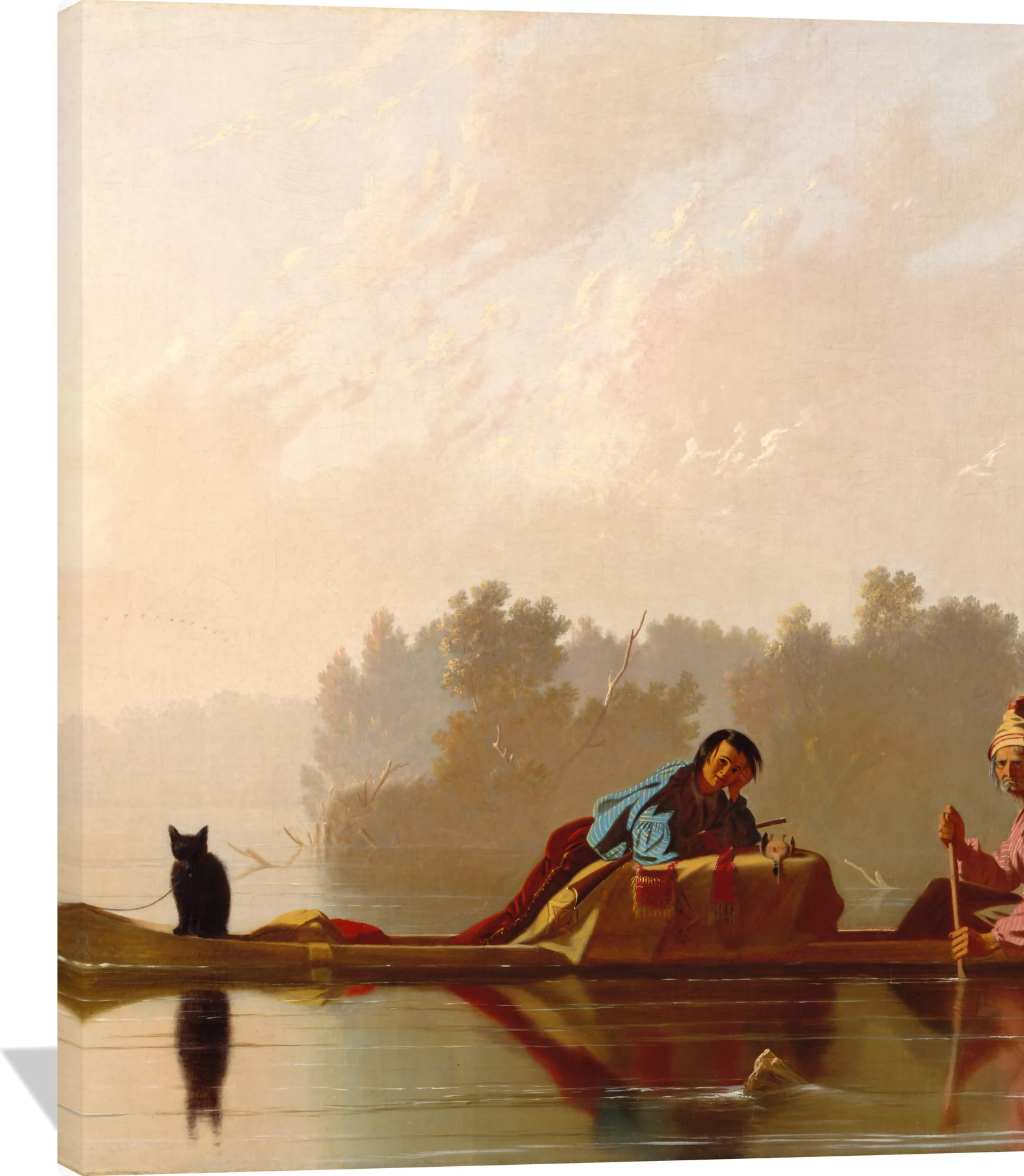
The George Caleb Bingham Fur Traders Descending the Missouri canvas captures a tranquil moment on the river, bathed in soft golden light. Two figures glide across the calm water in a canoe, their reflections mingling with the warm hues of dawn. Muted tones of amber, sky blue, and forest green evoke the quiet majesty of the American frontier.
This timeless wall art brings a sense of serenity and historic charm to any space. Ideal for a living room, study, or entryway, this fine canvas print celebrates Bingham’s mastery of light and composition—an elegant tribute to 19th-century American life and the enduring beauty of nature’s stillness.
George Caleb Bingham (1811–1879) was an American painter renowned for his vivid portrayals of frontier life along the Mississippi and Missouri Rivers. Born in Augusta County, Virginia, and later active in Missouri, he became one of the most influential visual chroniclers of the American West during the mid‑19th century.
Artistic Style and Approach
Bingham’s work blends the clarity of academic draftsmanship with a distinctly American sense of place. Known for his meticulously structured compositions and luminous treatment of light, he often depicted everyday scenes with a quiet sense of drama. His paintings balance realism with an almost poetic idealism, emphasizing human character and the rhythm of river life.
Signature Subjects and Themes
Best known for his riverboat imagery, political scenes, and portraits, Bingham captured the social currents of a rapidly expanding nation. Works such as Fur Traders Descending the Missouri and The Jolly Flatboatmen exemplify his fascination with frontier culture, portraying boatmen, traders, and travelers with warmth and clarity. His election-themed compositions reveal both his artistic talent and his commitment to civic life, offering insight into American democracy during a formative era.
Legacy and Cultural Significance
Bingham’s paintings remain vital documents of 19th‑century America. He preserved the character of the Missouri frontier with an observational precision that historians and art lovers continue to value. His ability to transform ordinary moments into scenes of enduring resonance has positioned him as a central figure in early American genre painting. Today, collectors and institutions appreciate his work for its historical depth, distinctive composition, and enduring cultural insight.