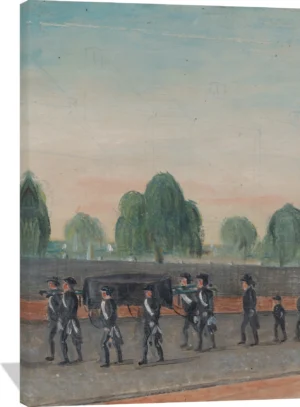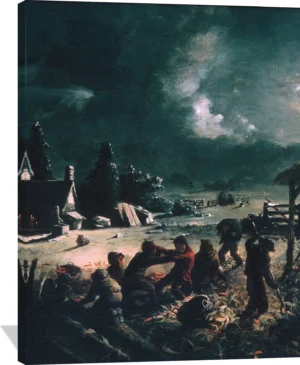
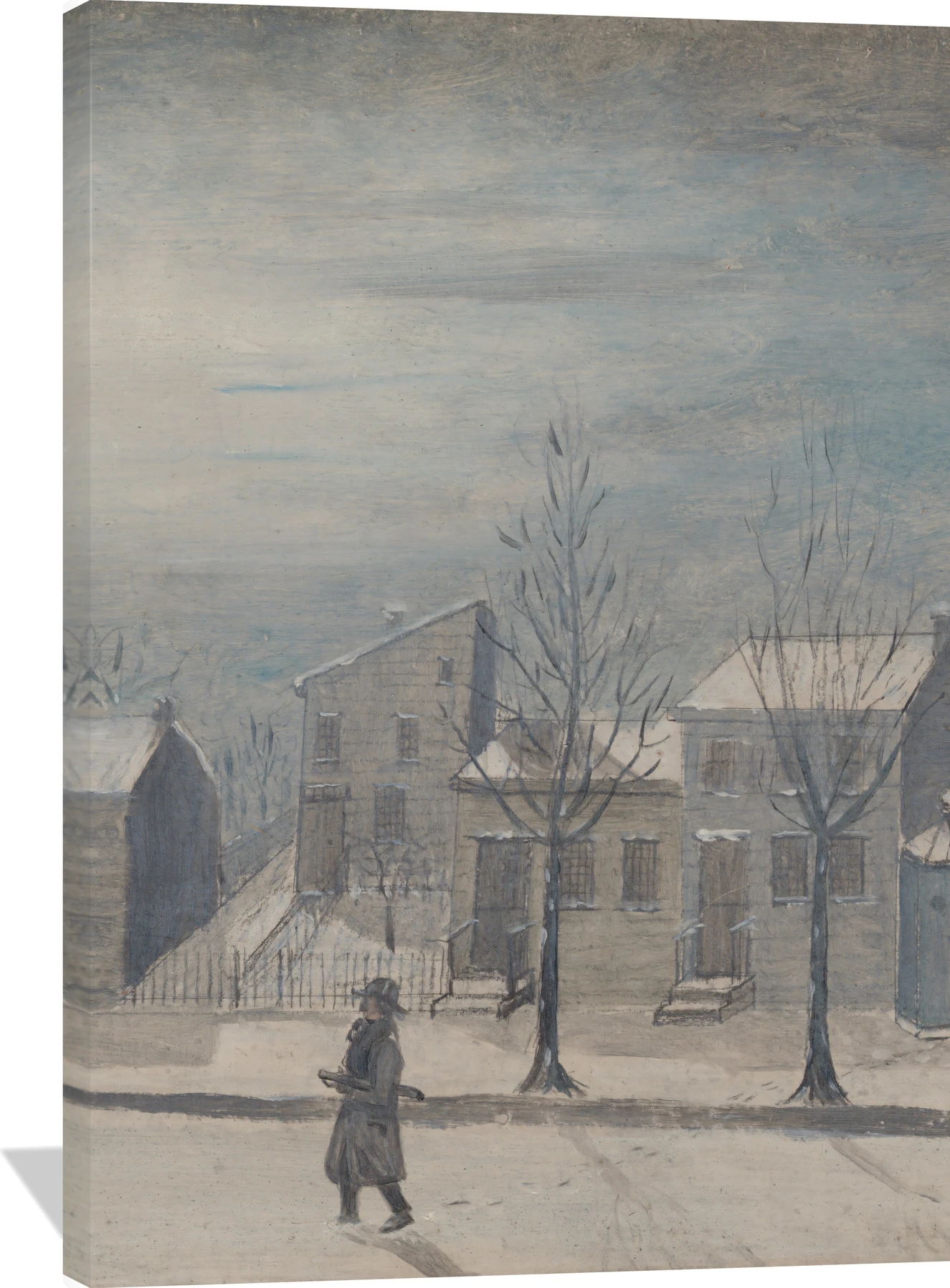
The William P. Chappel City Watchman canvas captures a quiet winter night in 19th-century America, where muted blues, soft grays, and gentle whites evoke a serene, moonlit calm. A solitary figure walks beneath bare trees and snow-dusted rooftops, inviting reflection on stillness and solitude. Chappel’s delicate brushwork and atmospheric tone lend timeless charm to this evocative street scene.
This elegant wall art brings a sense of history and quiet contemplation to any space. Ideal for a study, entryway, or living room, this canvas print adds depth and sophistication while honoring the artistry of William P. Chappel (American, 1801–1878).
William P. Chappel (1801–1878) was an American artist best known for his vivid, folk-inflected portrayals of everyday life in nineteenth‑century New York City. His works capture the character of the city’s streets, trades, and customs during a period of rapid transformation, offering a rare visual record of urban culture from a personal and observational perspective.
Artistic Style and Approach
Chappel’s paintings are distinguished by their intimate scale, meticulous detail, and narrative charm. Working in a style aligned with American folk art, he combined straightforward composition with keen observational accuracy. His palette favors warm, natural tones, emphasizing texture and atmosphere rather than dramatic contrast. This approach gives his scenes a distinctive authenticity and a quietly engaging presence.
Notable Subjects and Themes
Chappel is celebrated for his small panel paintings depicting daily life in New York, including street vendors, local festivities, waterfront activity, and artisan trades. These scenes are often documented with an almost archival precision, capturing occupations, clothing, and urban settings that might otherwise have been lost to time. His depictions provide insight into the rhythms of city life before modern industrial expansion reshaped the landscape.
Cultural and Historical Significance
Though not formally trained, Chappel produced a body of work that holds lasting historical value. His paintings serve as both artistic expressions and cultural documents, offering a window into the evolving identity of early American urban society. Today, his work is appreciated for its blend of storytelling, observational clarity, and the warmth of a personal viewpoint. Chappel’s legacy endures as a vital visual chronicle of nineteenth‑century New York, distinguished by his unique ability to transform ordinary moments into enduring works of art.