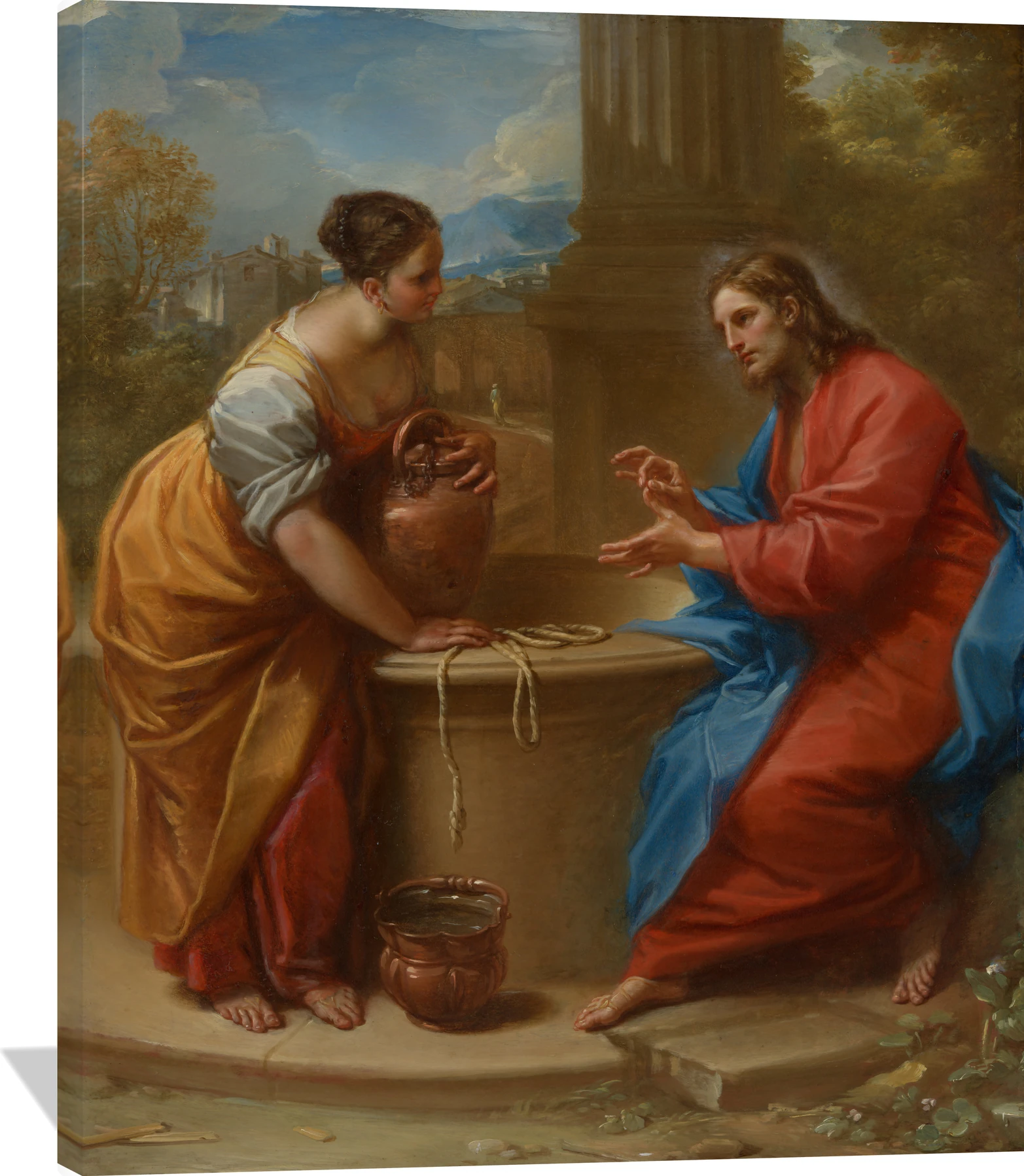
The Benedetto Luti Christ and the Woman of Samaria canvas captures a moment of divine dialogue with luminous warmth and grace. Rendered in rich tones of crimson, gold, and azure, this vertical composition draws the viewer into a serene exchange set against classical architecture and a tranquil sky. Luti’s masterful use of light and gesture evokes both intimacy and reverence.
This premium canvas print brings timeless Italian artistry into your space, ideal for a living room, study, or entryway. The Christ and the Woman of Samaria wall art adds depth, history, and quiet reflection to any refined interior.
Benedetto Luti (1666–1724) was an Italian painter and draftsman whose career bridged the refined traditions of Florentine training with the vibrant artistic culture of Rome. Celebrated for his mastery of chalks and pastels as well as oil painting, he developed a distinctive style marked by luminous color, elegant compositions, and a deeply expressive approach to the human figure.
Artistic Style and Technique
Luti became known for his delicate modeling of light and his ability to convey psychological depth through subtle facial expressions. His pastel portraits, in particular, were admired for their radiance and precision, elevating the medium to new artistic prestige. Whether working in pastel or oil, he favored graceful contours, soft transitions of tone, and a polished refinement characteristic of the late Baroque.
Typical Subjects and Themes
Although he produced portraits, Luti was especially valued for his religious and mythological scenes. His figures often embody an idealized beauty and gentle emotional intensity, bringing a sense of humanity to sacred narratives. Works such as his interpretations of The Annunciation and Madonna and Child reveal his sensitivity to devotional themes and his ability to infuse familiar subjects with fresh vitality.
Legacy and Significance
After relocating to Rome, Luti became a central figure in the city’s artistic circles. He served as an influential teacher and contributed to the evolving tastes of the Roman art world. His sophisticated use of pastel and his refined, expressive handling of form secured his reputation as one of the medium’s early champions. Today, he is remembered for his elegant draftsmanship and his role in shaping the transition between Florentine classicism and the more emotive Roman Baroque.