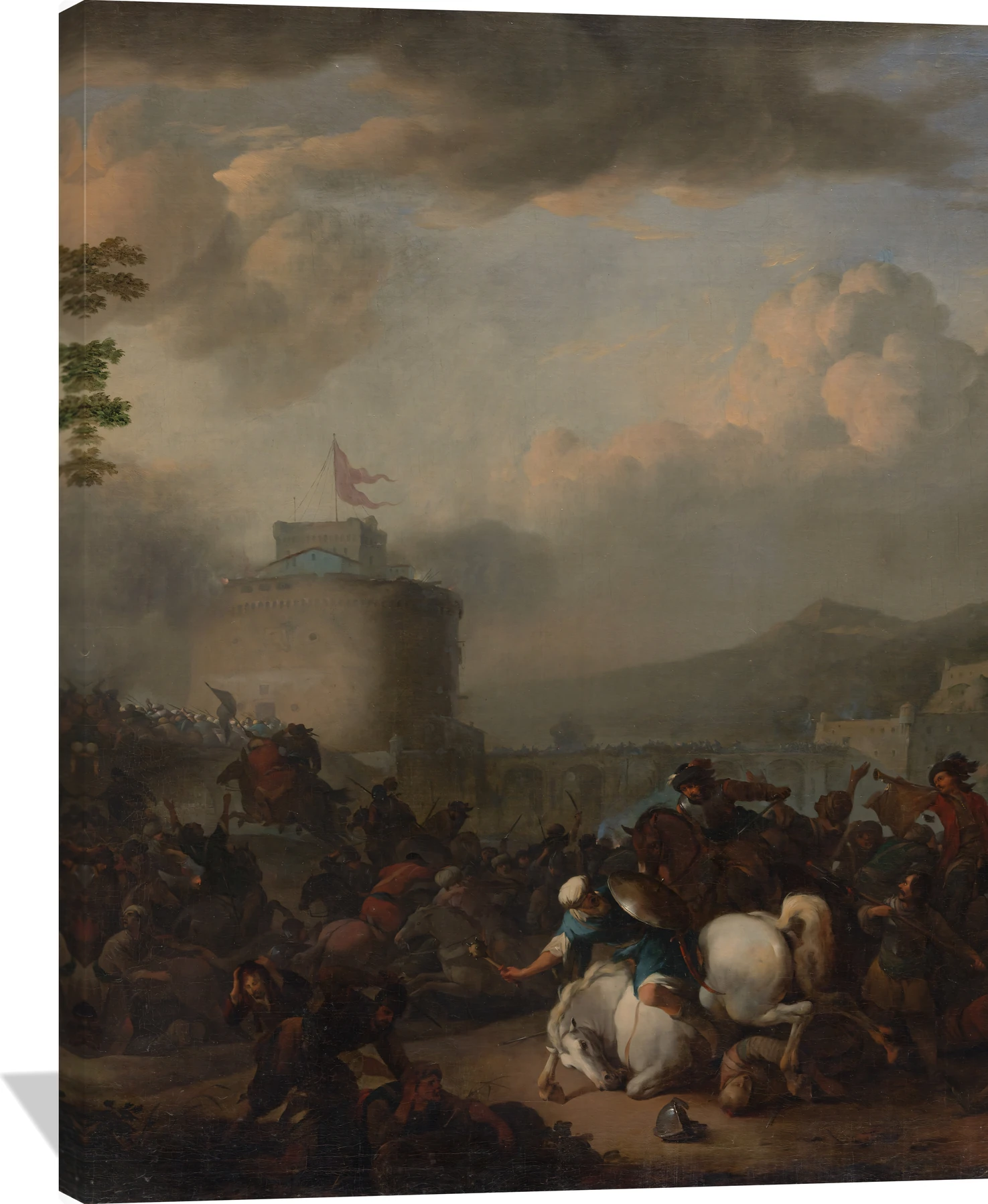
The Johannes Lingelbach Battle Scene canvas captures the intensity and grandeur of 17th-century warfare with masterful drama. Set beneath a turbulent sky of smoky grays, bronze, and muted blues, the composition brims with movement—armored riders, fallen soldiers, and a distant fortress under siege. Lingelbach’s painterly precision and atmospheric light evoke both chaos and heroism, making this piece a timeless statement of power and emotion.
This premium canvas print brings museum-quality artistry to your home. Ideal for a study, living room, or entryway, it adds depth and historical intrigue to any space while honoring the Dutch master’s dynamic vision.
Johannes Lingelbach (Dutch, Frankfurt 1622–1674 Amsterdam) was a masterful painter of the Dutch Golden Age, celebrated for his vivid depictions of bustling cityscapes, animated marketplaces, and atmospheric Italianate scenes. His work blends keen observational detail with a refined sense of narrative, placing him among the most compelling chroniclers of 17th‑century daily life.
Artistic Style
Lingelbach’s style is characterized by luminous color, crisp draftsmanship, and a balanced interplay between architecture, landscape, and human activity. Influenced by his formative years in Italy, he absorbed the warm light and spatial clarity associated with Roman vedute painters. His compositions often reveal a harmonious mix of Dutch precision and Mediterranean vibrancy, resulting in works that feel both meticulously rendered and richly alive.
Subjects and Themes
He is best known for lively urban views, guardroom scenes, and elegantly staged public gatherings, where figures converse, trade, and traverse open squares. These scenes frequently serve as subtle studies of human interaction, capturing gestures, clothing, and social dynamics with remarkable accuracy. Works such as View of a Dutch Town and Italian Market Scene exemplify his ability to choreograph large ensembles of figures without sacrificing clarity or atmosphere.
Notable Contributions
Lingelbach played a pivotal role in shaping the Northern interpretation of Italianate landscape and genre painting. His approach brought a sense of immersive storytelling to city views, integrating everyday life into structured architectural settings. His figures, often painted with exceptional finesse, were so admired that other artists occasionally commissioned him to add staffage to their own works, testifying to his reputation for expressive and engaging human portrayals.
Cultural Significance
As one of the leading Amsterdam painters of the mid‑17th century, Lingelbach contributed to the era’s broader fascination with travel, global trade, and cultural exchange. His art reflects a world expanding in scope and curiosity, documenting urban energy and cosmopolitan encounters at a time when Europe was rapidly changing. Today, his paintings remain valued for their historical insight and their ability to evoke the spirit of everyday life with *strong* narrative clarity and *strong* visual charm.