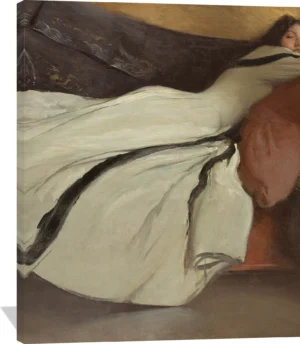
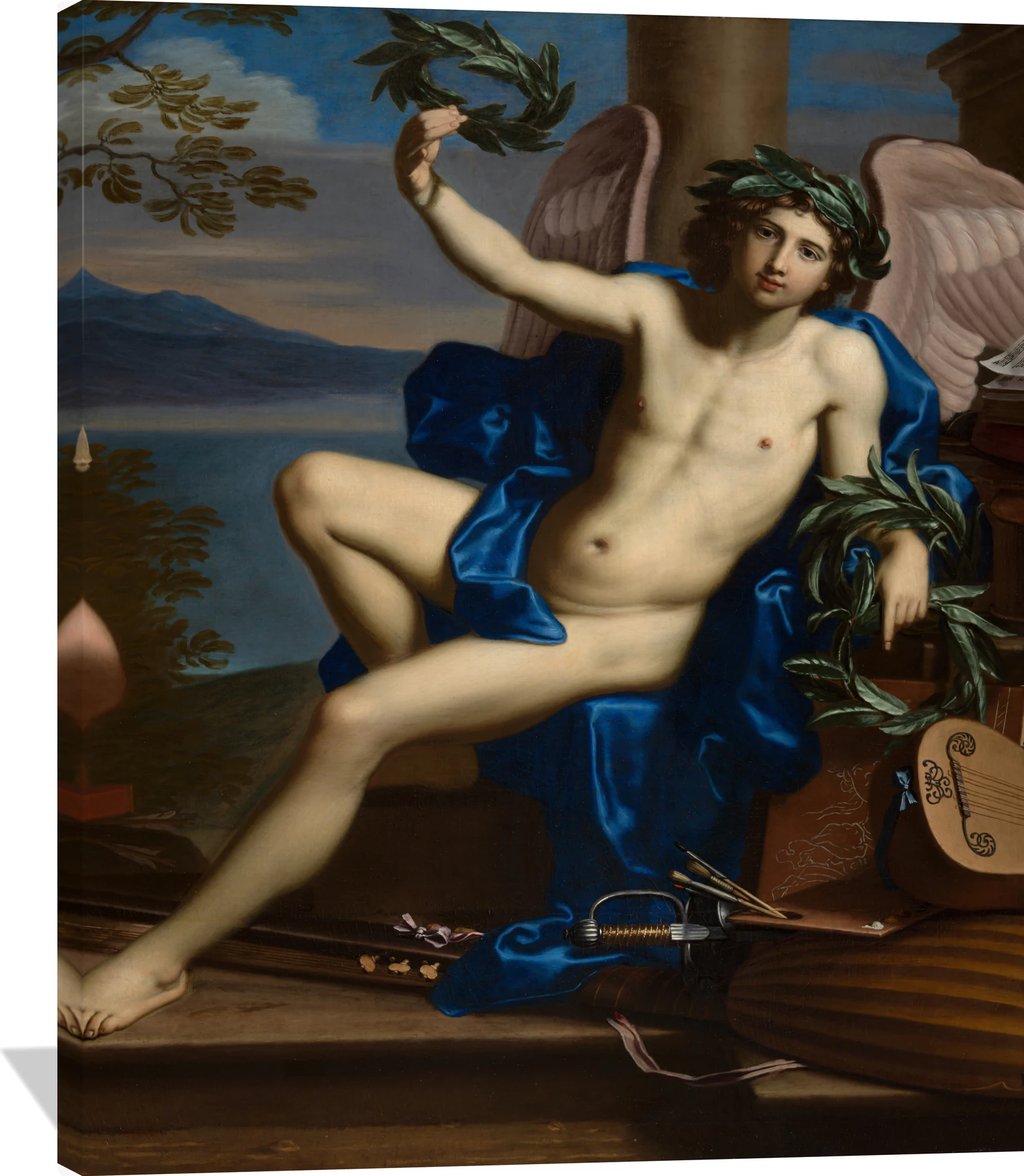
The Michele Desubleo Allegory of Sacred and Profane Love canvas captures the luminous elegance of Baroque art with a masterful balance of sensuality and intellect. Bathed in rich tones of deep blue, warm gold, and soft rose, the composition contrasts divine serenity with earthly desire, creating a timeless dialogue between purity and passion.
This exquisite canvas print brings sophistication and depth to any interior—ideal for a refined living room, study, or entryway. Desubleo’s Flemish precision and Italianate grace make this wall art a captivating focal point, inviting contemplation and admiration in equal measure.
Michele Desubleo (Maubeuge, 1602–Parma, 1676) was a Flemish-born painter whose career flourished in Italy, where he became known for his refined handling of light, color, and devotional intimacy. Active primarily in Parma and Bologna, he absorbed the influence of the Carracci school while maintaining a distinctly Northern clarity and precision.
Artistic Style
Desubleo’s work is marked by luminous surfaces, controlled contrasts, and a meticulous approach to detail rooted in his Flemish heritage. His compositions often combine soft chiaroscuro with elegantly arranged figures, resulting in images that feel both serene and theatrically poised. This blend of Italian Baroque sensibility and Northern refinement is a defining hallmark of his oeuvre.
Subjects and Themes
He specialized in religious scenes, allegories, and intimate devotional images. Subjects such as saints, the Virgin Mary, and moral personifications allowed him to explore expressive gestures and gentle emotional resonance. Many works attributed to him feature polished textures, idealized faces, and a graceful interplay between light and shadow, creating an atmosphere of contemplative stillness.
Legacy and Significance
Although less widely known today than some contemporaries, Desubleo’s paintings remain valued for their harmonious composition and subtle elegance. His ability to merge Flemish precision with Italian Baroque warmth gives his work a distinctive voice within seventeenth-century painting. Collectors and scholars appreciate his contributions for their technical finesse and their role in illustrating the cultural exchange between Northern and Southern European artistic traditions.