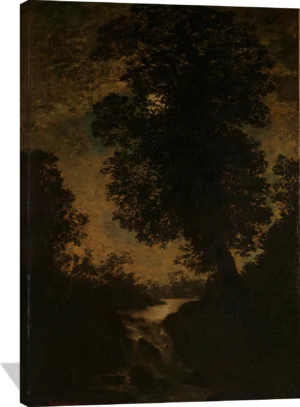
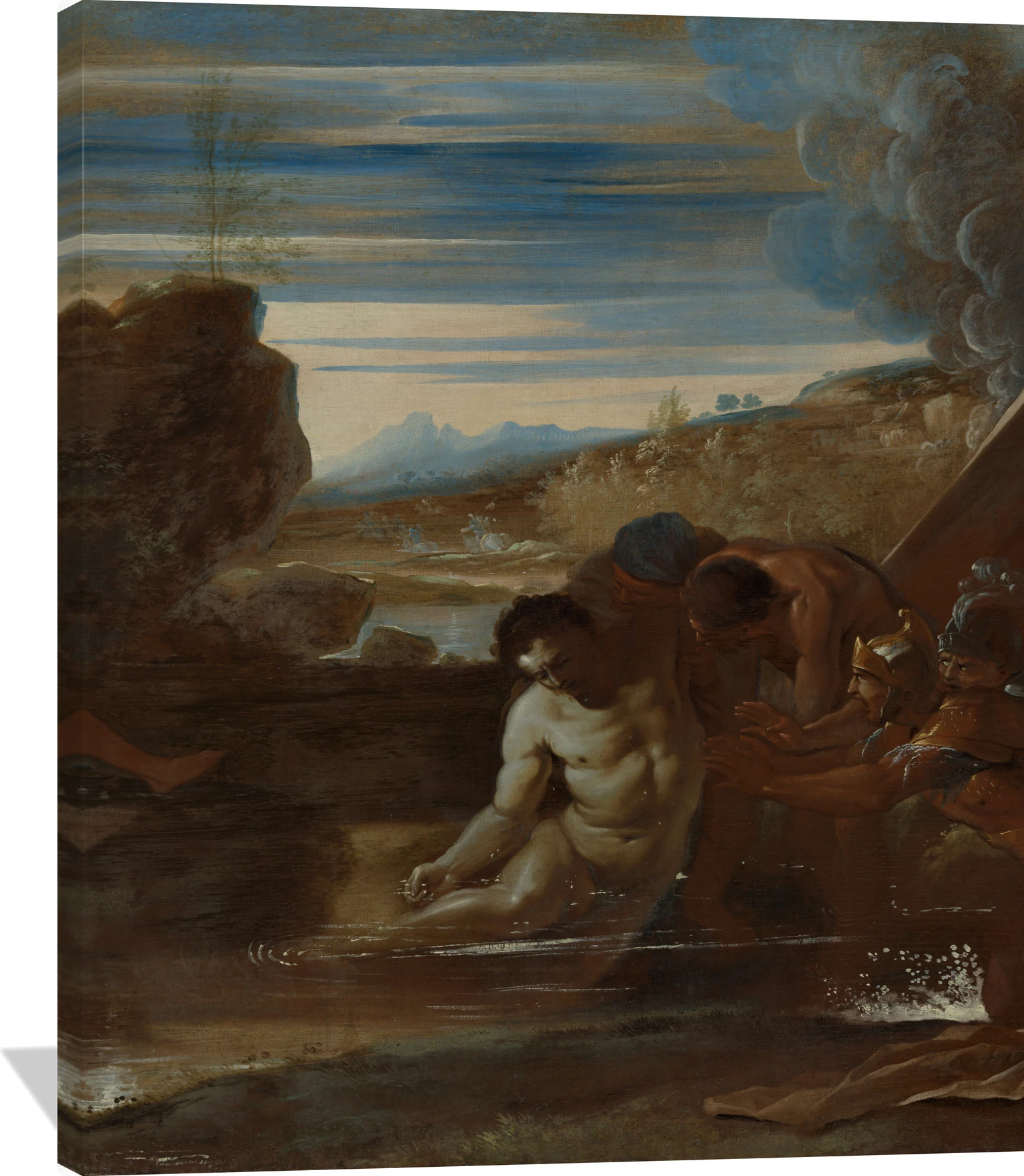
The Pietro Testa Alexander the Great Rescued from the River Cydnus canvas captures a moment of heroic vulnerability rendered in warm earth tones, deep blues, and soft golden light. Testa’s masterful use of chiaroscuro and fluid composition evokes both drama and serenity, drawing the viewer into the mythic landscape and its timeless human emotion.
This museum-quality canvas print brings classical grandeur to any setting—ideal for a sophisticated living room, study, or entryway. The Alexander the Great Rescued from the River Cydnus wall art embodies the elegance of Italian Baroque painting, offering a refined focal point that blends history, artistry, and enduring beauty.
Pietro Testa (1612–1650), born in Lucca and active primarily in Rome, was an Italian draftsman and printmaker celebrated for his intellectually charged compositions and meticulous line work. Deeply engaged with the artistic and philosophical circles of his time, he developed a highly refined graphic style that blended classical learning with an emotionally resonant visual language.
Artistic Style
Testa’s work is distinguished by its precise, elegant draftsmanship and a tendency toward complex, often allegorical narratives. His compositions reveal a deep study of antiquity and the High Renaissance, yet they maintain a distinctive expressive intensity. Through exquisitely controlled hatching and carefully balanced forms, he created images that feel both scholarly and sensorial.
Subjects and Themes
Known for mythological, biblical, and philosophical scenes, Testa explored themes of human virtue, destiny, and the pursuit of knowledge. Works such as The Death of Dido and The Destruction of the Temple of Jerusalem exemplify his ability to infuse classical subjects with dramatic clarity. His imagery often invites contemplation, mirroring the intellectual currents of seventeenth‑century Rome.
Legacy and Significance
Though his life was brief, Testa’s contribution to Italian Baroque printmaking remains enduring. His engravings circulated widely, shaping artistic discourse and influencing later generations of draftsmen. Today he is remembered as a singular voice whose blend of classical rigor and expressive detail forged a body of work that stands apart for its depth, refinement, and poetic intensity.