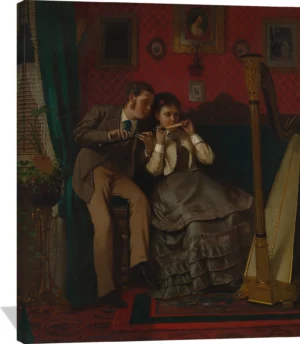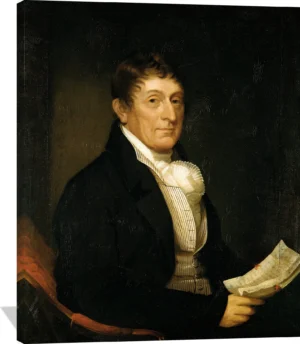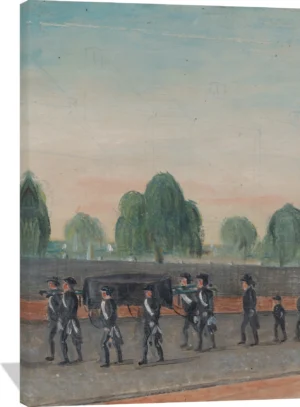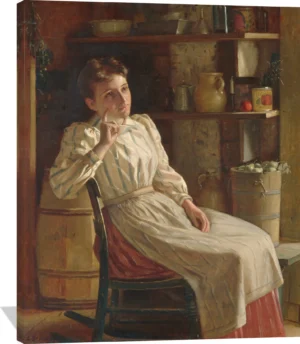
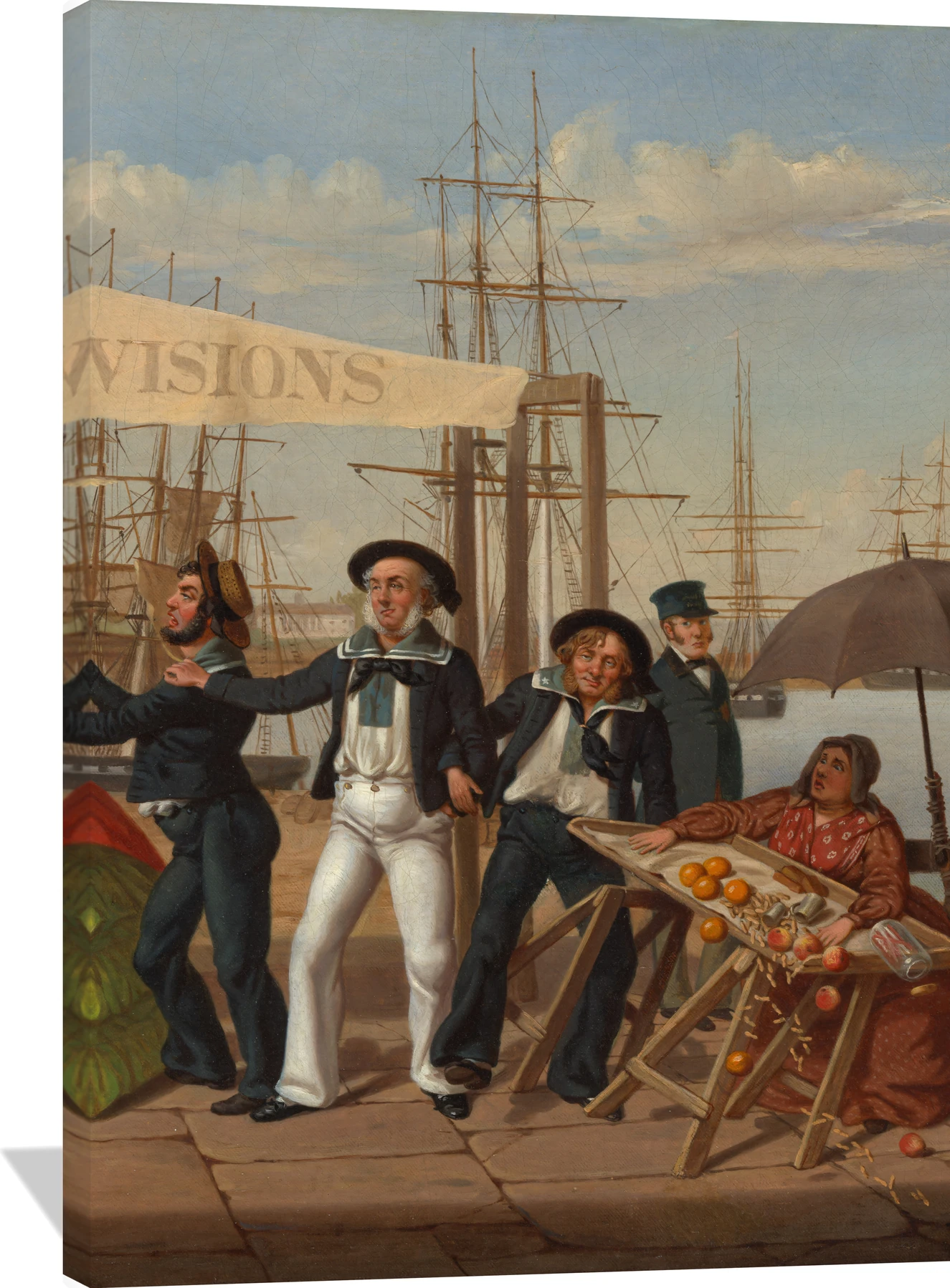
The John Carlin After a Long Cruise canvas captures a lively harbor scene filled with sailors, merchants, and the bustle of port life. Warm earth tones, deep navy blues, and touches of crimson and green bring vitality to the composition, while the golden light and calm sky evoke a sense of return and reunion. Carlin’s refined realism and storytelling detail make this piece a celebration of everyday moments in 19th-century America.
This premium canvas print adds character and conversation to any living room, study, or entryway. A masterful blend of maritime energy and human warmth, it’s an inspired choice for collectors who appreciate classic American artistry and timeless coastal charm.
John Carlin (1813–1891) was an American painter and illustrator whose career unfolded during a transformative period in nineteenth-century art. Born in Philadelphia and later active in New York, he is recognized both for his artistic accomplishments and his role as a prominent deaf artist of his time. His work reflects a refined blend of traditional academic technique and the emerging sensibilities of American genre painting.
Artistic Style and Approach
Carlin’s paintings are marked by precise draftsmanship, balanced compositions, and a quietly expressive tone. He often favored intimate scenes rendered with careful attention to gesture, expression, and detail. His style aligned with the genteel realism popular in mid‑century America, yet his sensitivity to human interaction and domestic nuance gave his works a distinctive resonance.
Subjects and Notable Themes
Carlin frequently depicted refined interior settings, portraits, and thoughtful genre scenes that captured the rhythms of everyday life. His paintings convey a calm narrative quality, inviting viewers to linger on small but meaningful moments. Beyond painting, he also produced illustrations and literary works, reflecting a broad creative intelligence shaped in part by the visual attentiveness central to his life and practice.
Cultural and Historical Significance
As a deaf artist who achieved substantial professional recognition in nineteenth‑century America, Carlin holds a notable place in cultural history. He contributed significantly to artistic and intellectual communities, advocating for education and creative opportunity for deaf individuals. His dual influence as a respected painter and an early leader within the deaf community underscores his lasting impact.
Legacy
Today, John Carlin’s work is appreciated for its refinement, its gentle narrative presence, and its place within the broader story of American art. His paintings offer insight into the tastes and social atmosphere of his era while highlighting the achievements of an artist whose perspective enriched the cultural landscape of the nineteenth century.