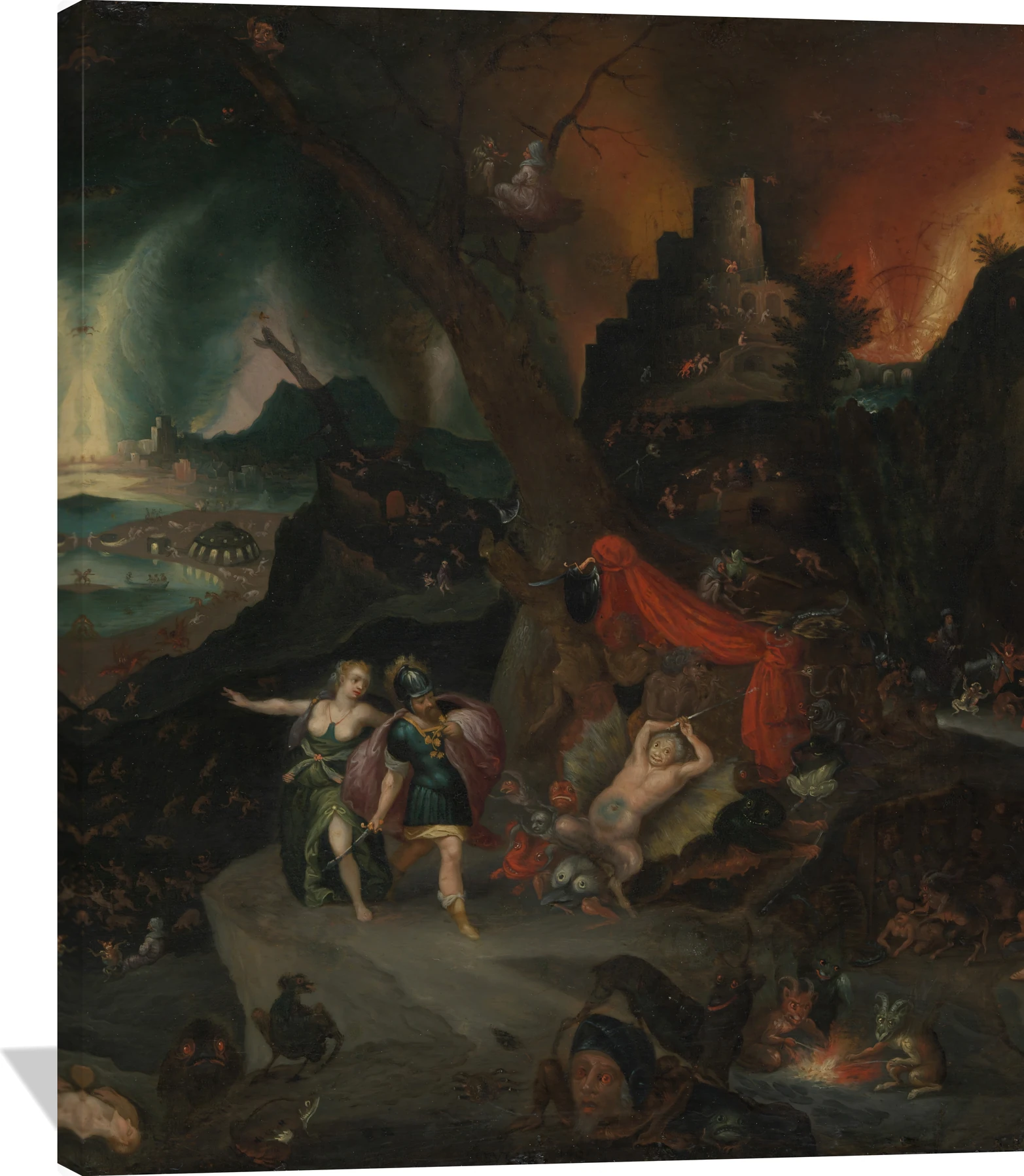
The Jan Brueghel the Younger Aeneas and the Sibyl in the Underworld canvas captures a dramatic mythological journey through a vividly imagined realm of darkness and light. Deep greens, fiery oranges, and shadowed browns swirl together in a masterful composition that evokes both awe and mystery. Every detail draws the viewer into the haunting beauty of the underworld, rendered with Brueghel’s signature precision and atmosphere.
This museum-quality canvas print brings timeless Flemish artistry to your home. Ideal for a study, library, or sophisticated living room, this wall art invites contemplation and conversation—an evocative centerpiece that bridges classical storytelling and fine art elegance.
Jan Brueghel the Younger (Antwerp 1601–1678) was a distinguished Flemish painter who carried forward the celebrated legacy of the Brueghel family while cultivating a refined artistic identity of his own. Trained in the workshop of his father, Jan Brueghel the Elder, he inherited a deep mastery of intricate detail, luminous color, and harmonious composition qualities that remained central throughout his career.
Artistic Style and Techniques
Brueghel the Younger is recognized for his meticulous technique, characterized by jewel-like precision and a polished finish. His paintings often exhibit a remarkable clarity, balancing ornate detail with an elegant sense of order. He worked within the Flemish Baroque tradition, yet his style retained a delicate, almost lyrical quality that made his work instantly recognizable. His ability to orchestrate elaborate scenes without sacrificing visual harmony remains one of his most distinctive strengths.
Subjects and Themes
He is best known for vibrant floral still lifes, allegorical compositions, and landscapes animated with bustling activity. His bouquets frequently combine botanical accuracy with rich symbolism, celebrating nature’s abundance. In his landscapes and genre scenes, Brueghel the Younger continued the family’s fascination with everyday life, crafting intricate settings filled with narrative detail. He also produced religious works and decorative series that catered to an international clientele, reflecting the broad appeal of his meticulous craftsmanship.
Legacy and Cultural Significance
As the steward of a famed artistic lineage, Brueghel the Younger played a crucial role in sustaining and expanding the Brueghel workshop’s influence across Europe. His workshop management and collaborative projects helped disseminate the Brueghel aesthetic far beyond Antwerp. Though rooted in tradition, his work carries its own voice, marked by refinement, consistency, and an enduring commitment to visual splendor.
Today, Jan Brueghel the Younger is admired for his exquisite detail and his ability to transform familiar subjects into compositions of remarkable richness and balance. His paintings continue to resonate with collectors and art historians, offering a vivid window into the sophistication of seventeenth-century Flemish art.