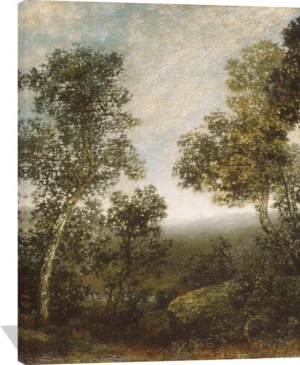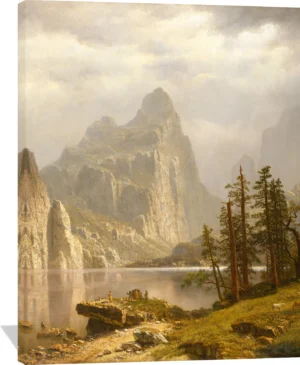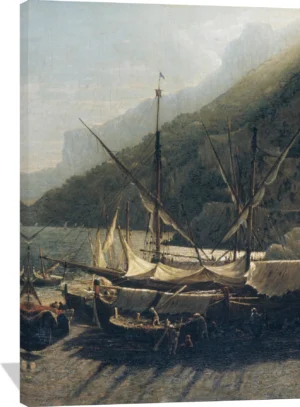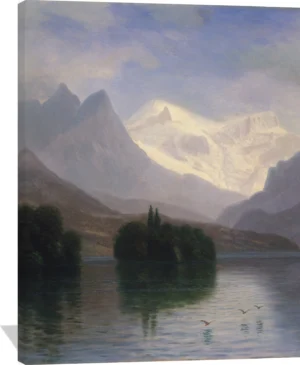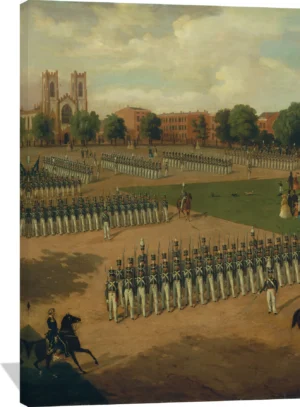
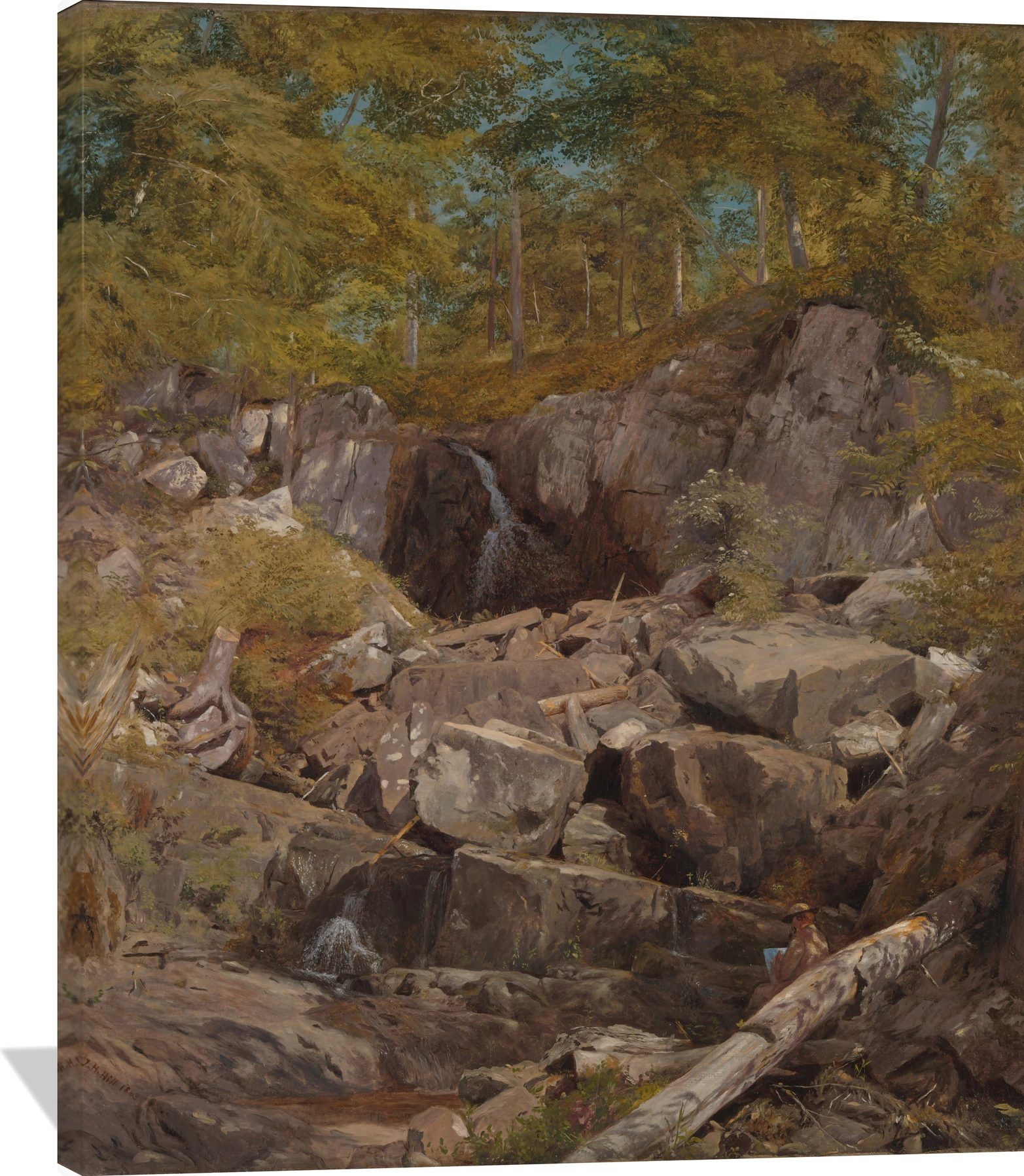
The John Henry Hill A Study of Trap Rock (Buttermilk Falls) canvas captures the serene power of nature in exquisite detail. Hill’s mastery of light and texture brings to life a rocky woodland ravine, where cascading water glimmers among mossy stones and sunlit trees. Earthy browns, muted greens, and soft sky blues create a tranquil palette that feels timeless and grounded.
This finely reproduced canvas print brings the quiet majesty of the American landscape into your home. Ideal for a living room, study, or entryway, this wall art evokes reflection and harmony—an elegant statement of natural beauty and artistic precision.
John Henry Hill (American, West Nyack, New York, 1839–1922) was a distinguished painter and draftsman whose work extended the legacy of his father, John William Hill, and the broader American landscape tradition. Celebrated for his meticulous technique and devotion to nature, Hill became known for artworks that embody a quiet lyricism and a commitment to close observation.
Artistic Style
Hill’s style reflects the influence of the Hudson River School, yet it is rooted just as strongly in the crisp precision of the American Pre-Raphaelite movement. His paintings and watercolors are marked by finely rendered detail, luminous surfaces, and an almost scientific attentiveness to natural forms. This combination of clarity and atmosphere gives his work a distinctive sense of both immediacy and contemplation.
Subjects and Approach
Focusing primarily on landscapes, botanical subjects, and geological formations, Hill approached nature with a reverence that bordered on the meditative. Rocks, trees, and waterways are depicted with careful exactitude, turning ordinary scenes into visual studies of structure, texture, and light. His use of watercolor in particular demonstrates a mastery of transparent layering, elevating even modest subjects into compositions of quiet depth.
Significance
Hill holds an important place in nineteenth-century American art for his role in advancing a mode of landscape painting that balanced scientific precision with poetic clarity. His work continues to be admired for its refined naturalism and its contribution to the era’s evolving vision of the American landscape.