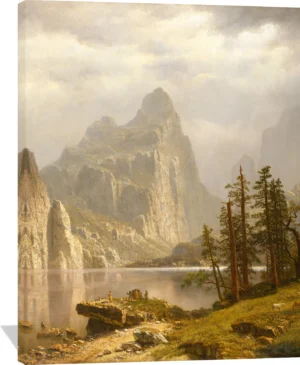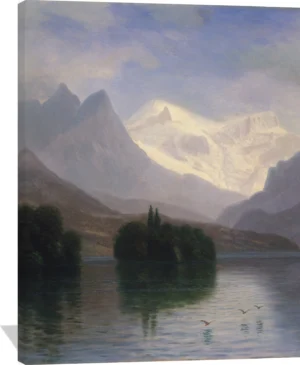
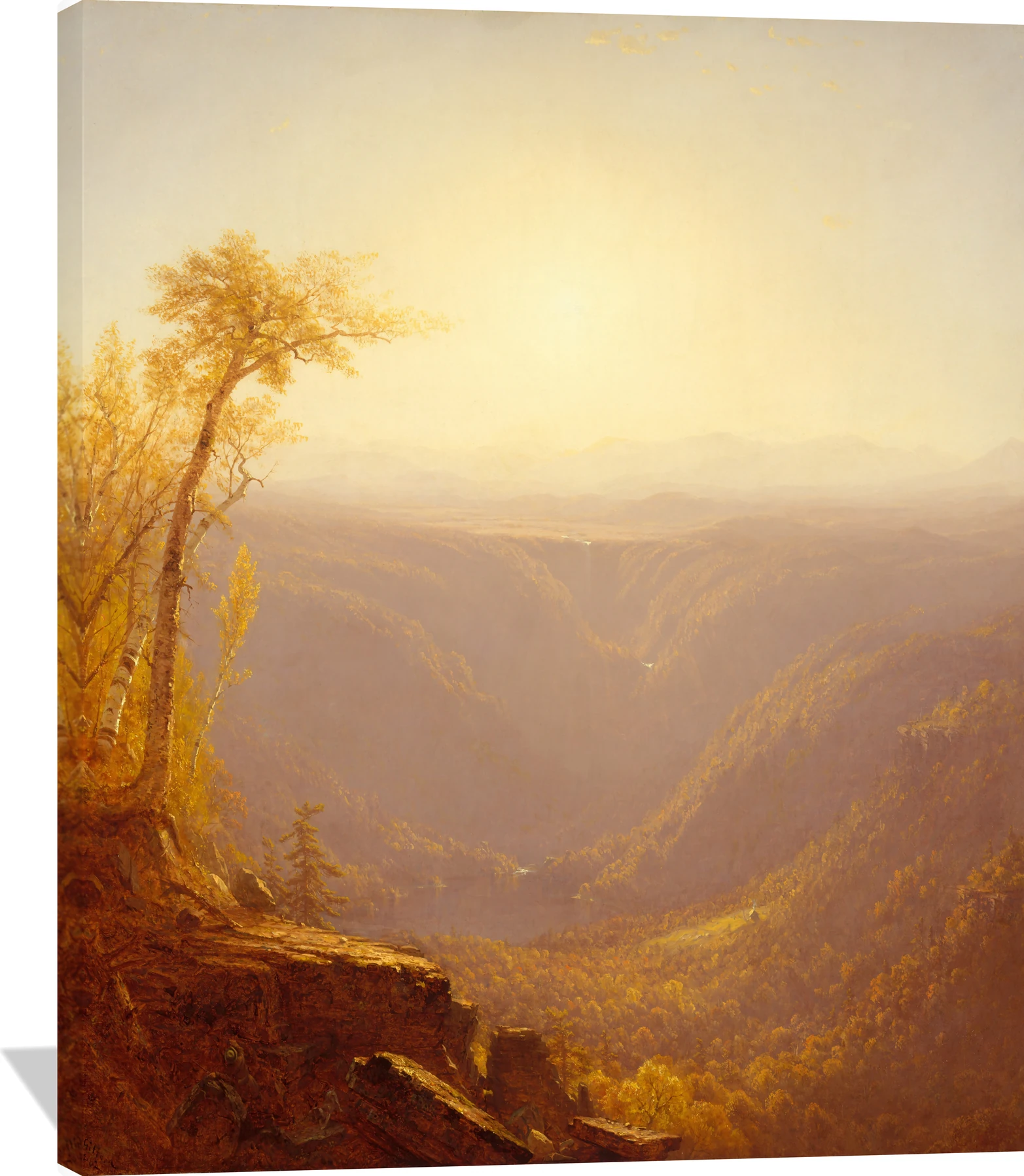
The Sanford Robinson Gifford A Gorge in the Mountains (Kauterskill Clove) canvas captures the serene majesty of the Catskills bathed in golden light. Layers of sunlit mist drift across rolling hills and rugged cliffs, rendered in warm amber, ochre, and soft violet tones that evoke the quiet grandeur of nature at dawn. Gifford’s luminous style invites calm reflection and a sense of boundless space.
This museum-quality wall art brings timeless elegance to any living room, study, or entryway. A canvas print that radiates tranquility and depth, it transforms your space with the poetic beauty of 19th-century American landscape painting.
Sanford Robinson Gifford (Greenfield, New York, 1823–1880 New York, New York) was a leading figure of the Hudson River School whose luminous landscapes helped define American art in the nineteenth century. Celebrated for his mastery of atmospheric effects, he created serene, meditative vistas that capture the poetic interplay of light, land, and sky.
Artistic Style and Approach
Gifford is best known for his distinctive use of what he termed “air painting,” a technique that bathes scenes in glowing, diffused light. His canvases often feature balanced compositions, subtle tonal transitions, and a gentle radiance that evokes a sense of harmony. This approach became a signature element of his work and a defining contribution to the evolution of American landscape painting.
Subjects and Notable Themes
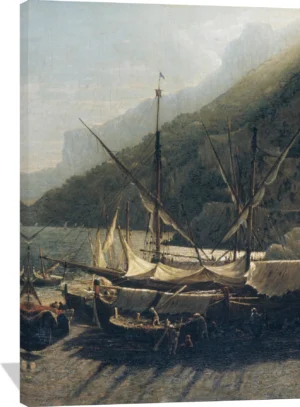
While he frequently depicted the landscapes of the northeastern United States, Gifford also traveled widely, painting views inspired by the American West, the Adirondacks, and various locales across Europe and the Middle East. His works often present tranquil lakes, sweeping valleys, distant mountain ranges, and atmospheric coastal horizons, rendered with a rare sensitivity to mood and light.
Cultural and Historical Significance
As a central figure in the Hudson River School’s second generation, Gifford played an important role in shaping American artistic identity during a period of rapid national expansion. His emphasis on luminosity and contemplative space helped usher in a more poetic and expressive vision of the natural world. Today, his paintings are admired for their refined beauty, technical precision, and the quiet, immersive experience they offer viewers. His legacy endures as a testament to the enduring appeal of the American landscape and the power of light to transform the familiar into the sublime.