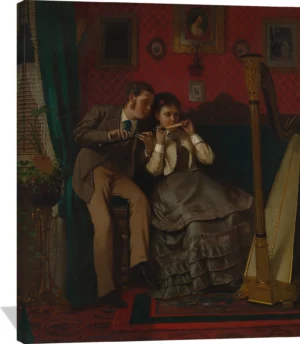
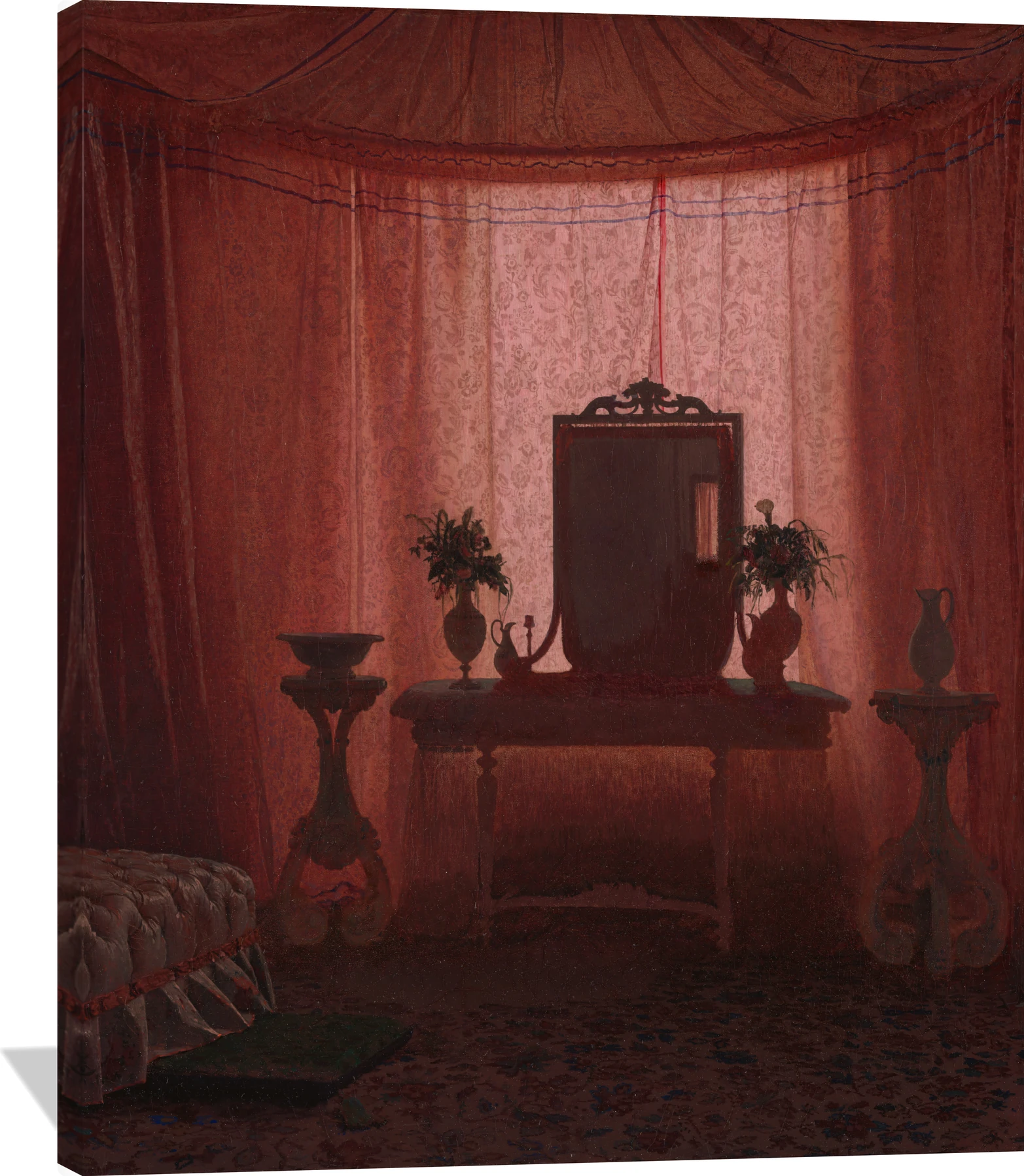
The Johan Vilhelm Gertner A Bedroom in Bernstorff Palace near Copenhagen canvas captures the quiet elegance of a 19th-century interior bathed in soft, rose-hued light. Rich shades of crimson, blush, and deep brown envelop a refined dressing table and ornate furnishings, evoking a mood of intimacy and timeless grace.
This exquisite wall art brings a sense of calm sophistication to any space. Ideal for a bedroom, study, or entryway, this museum-quality canvas print celebrates Gertner’s mastery of light and atmosphere, offering a serene glimpse into Danish aristocratic life with enduring charm.
Johan Vilhelm Gertner (1818–1871) was a distinguished Danish painter whose refined realism and sensitive approach to portraiture secured him an enduring place in 19th‑century Danish art. Trained and active in Copenhagen, he became known for capturing the character and presence of his sitters with remarkable precision.
Artistic Style
Gertner’s work is defined by a clear, naturalistic style rooted in the Danish Golden Age. His paintings balance meticulous detail with a calm, measured composition, reflecting his dedication to truthful representation. Subtle lighting, carefully rendered textures, and a restrained palette allowed him to emphasize mood and personality without excess embellishment.
Subjects and Themes
Although Gertner created genre scenes and historical compositions, he is best known for his portraits of prominent Danish cultural and political figures. His depictions often reveal a quiet psychological depth, presenting individuals with dignity and intimacy rather than overt dramatization. Works such as Portrait of N. F. S. Grundtvig exemplify his ability to convey intellectual presence through pose, gaze, and refined execution.
Legacy and Significance
Gertner contributed significantly to shaping Denmark’s visual record in the mid‑19th century, producing portraits that remain important both artistically and historically. His role at the Royal Danish Academy and his influence on contemporary portrait practice helped establish standards for professional portraiture in Denmark. Today his paintings are appreciated for their enduring clarity, emotional restraint, and the way they illuminate the cultural life of his era.