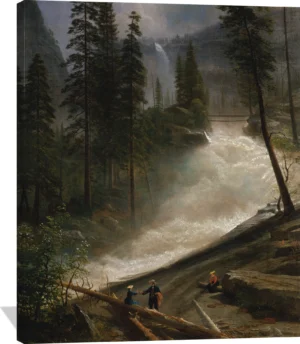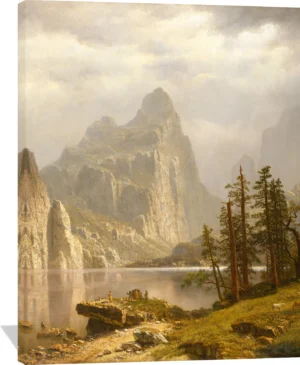
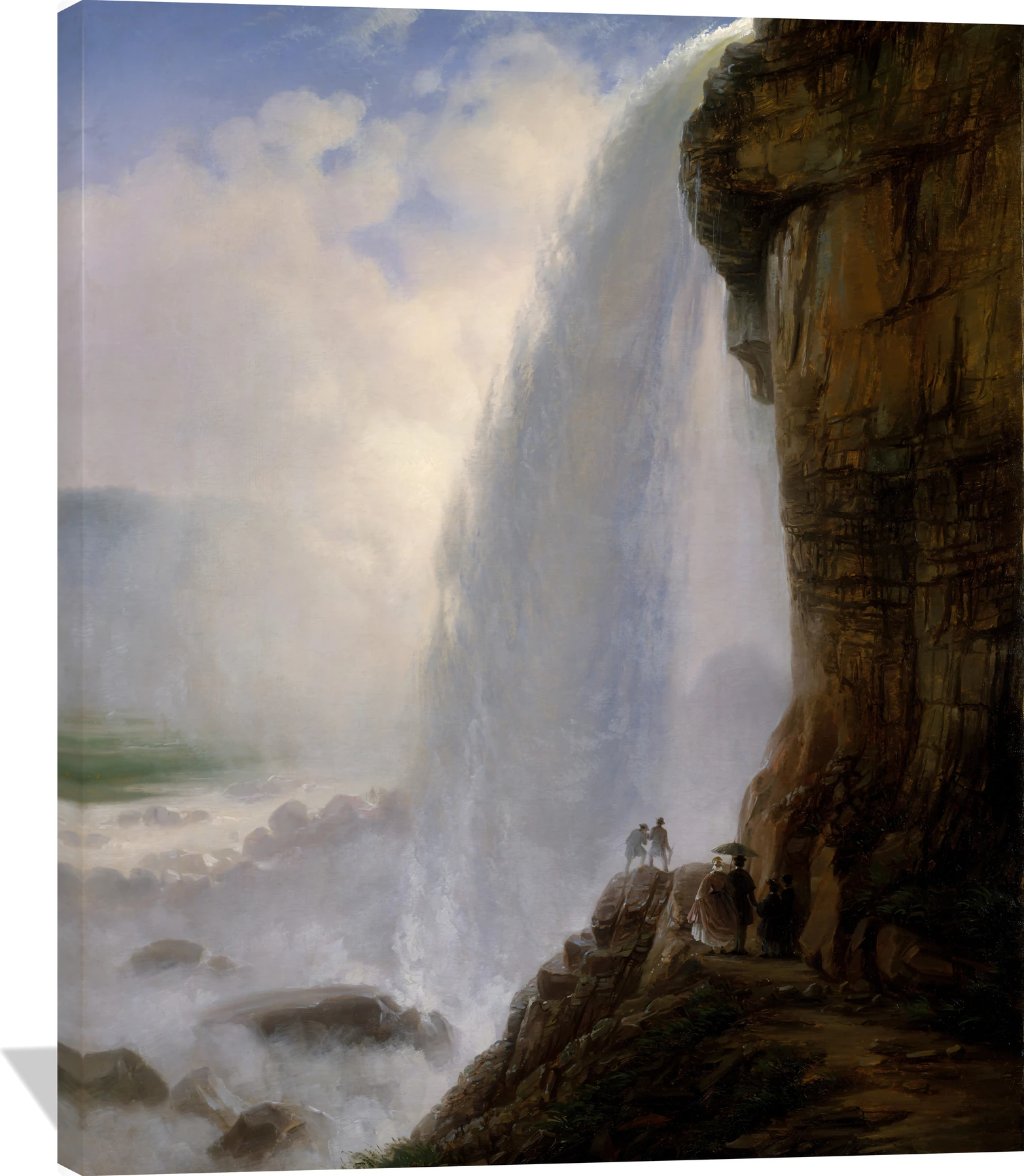
The Ferdinand Richardt Underneath Niagara Falls canvas captures the awe-inspiring power and misty grandeur of one of nature’s most iconic wonders. Bathed in soft blues, earthy browns, and luminous whites, this vertical composition draws the viewer into the cascading force of water and the quiet figures dwarfed by its majesty. Richardt’s 19th-century mastery evokes both serenity and sublime energy.
This museum-quality wall art brings timeless elegance to any living room, study, or entryway. A refined Underneath Niagara Falls canvas print transforms your space with the beauty of natural spectacle and the romance of classic landscape artistry.
Ferdinand Richardt (1819–1895) was a Danish-American painter celebrated for his meticulously detailed landscapes and architectural views. Working at a time when transatlantic curiosity and the spirit of discovery defined visual culture, Richardt became known for images that combined topographical precision with a refined sense of atmosphere.
Artistic Style
Richardt’s work is distinguished by its clarity, exacting draftsmanship, and luminous rendering of natural light. His paintings often exhibit a calm, measured composition that reflects his grounding in the Danish Golden Age tradition, yet they also reveal an expansive vision shaped by his travels abroad. His approach blends documentary accuracy with an almost poetic stillness, highlighting both the grandeur and subtlety of the landscapes he portrayed.
Subjects and Themes
Richardt is widely admired for his sweeping views of American and European landmarks, including castles, river valleys, and emerging urban centers. In the United States, he became especially recognized for his representations of Niagara Falls, capturing the site’s power with remarkable precision while emphasizing the sublime qualities of nature. Many of his works including notable vistas of historic estates, coastal panoramas, and mountainous terrain possess a sense of order and clarity that made them highly appealing to collectors of the era.
Notable Contributions
By uniting European academic training with the visual ambitions of nineteenth-century America, Richardt played a significant role in shaping how both continents viewed their own landscapes. His paintings served as elegant, almost encyclopedic records of important sites at a time when travel imagery held both cultural and commercial importance. Through his skill in rendering architectural details and natural settings, he contributed to a growing appreciation for topographical painting as both an art form and a means of visual documentation.
Cultural Significance
Richardt’s work offers insight into a transformative period in global visual culture, when technological progress and geographic exploration fueled new ways of seeing the world. His paintings stand as enduring testaments to this moment, capturing places of cultural and historical significance with a level of precision that remains impressive today. Because of his keen observational eye and commitment to accuracy, Richardt is often associated with elegant landscape realism and the nineteenth-century pursuit of visually cataloging the natural world.
Across his career, Richardt created images that combined scientific attention to detail with a refined artistic sensibility. Whether depicting the cascading force of Niagara or the stately architecture of European landmarks, his work continues to resonate for its balance of beauty, clarity, and historical presence.