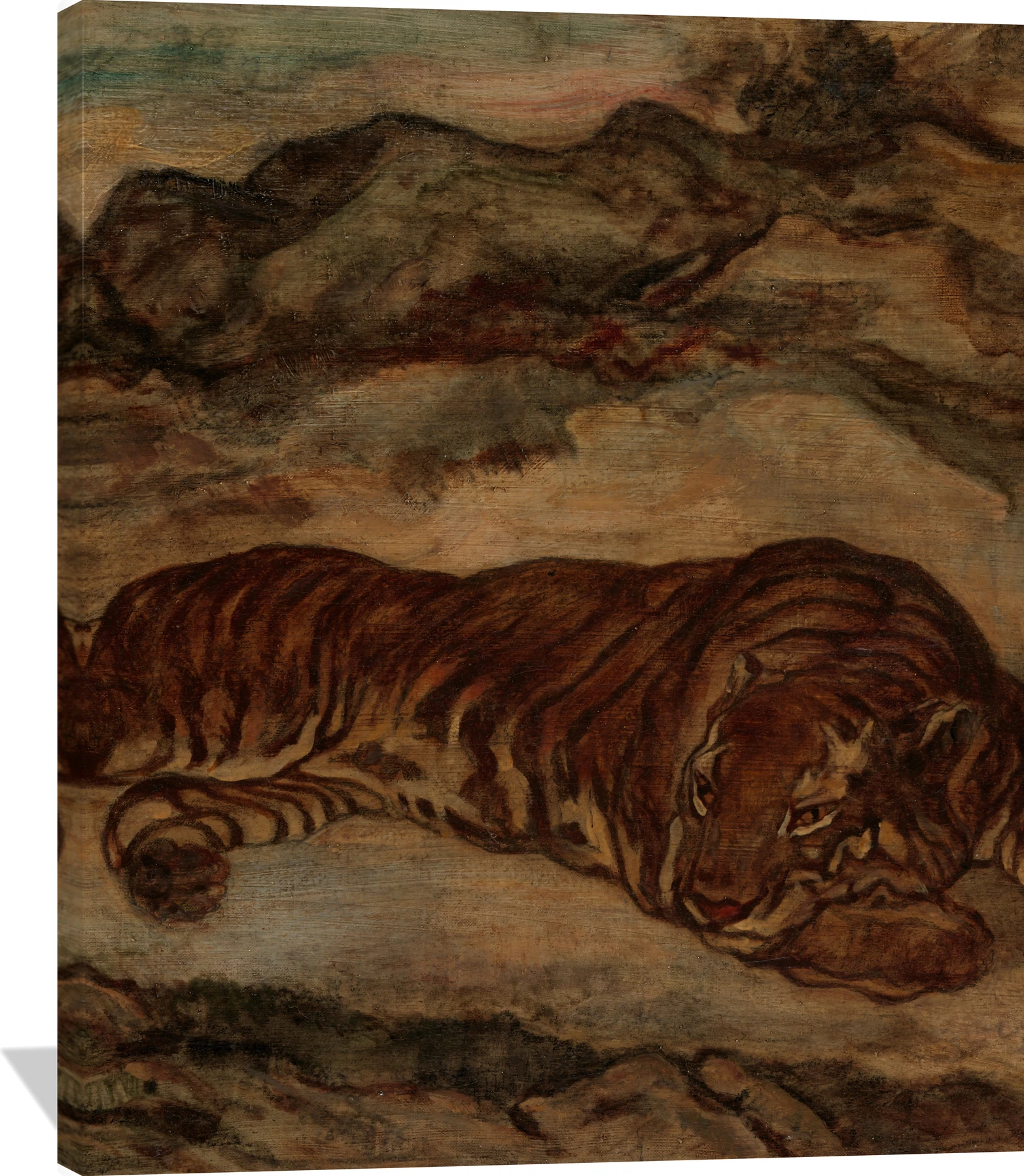
The Antoine-Louis Barye Tiger in Repose canvas captures the serene power of a resting tiger rendered in warm earth tones of amber, sienna, and muted green. Barye’s masterful brushwork and subtle contrasts evoke both the strength and quiet grace of the animal, set against a softly textured natural backdrop that feels timeless and contemplative.
This elegant wall art brings a sense of calm majesty to any space—perfect for a living room, study, or entryway. A refined choice for collectors and admirers of 19th-century French artistry, this canvas print celebrates Barye’s enduring fascination with the beauty and dignity of the wild.
Antoine-Louis Barye (1795–1875) was a French sculptor renowned for his masterful renderings of animals and his role in elevating animal sculpture to a respected fine-art genre. Born and active in Paris throughout his life, Barye became one of the foremost figures of the Romantic period, celebrated for his dynamic studies of wildlife in motion and his deep understanding of anatomical form.
Artistic Style and Approach
Barye’s work is defined by its vigorous naturalism, expressive detail, and dramatic energy. His sculptures often capture moments of intense action, combining scientific precision with an emotional force that resonated strongly with the Romantic movement. His meticulous observation of nature contributed to a body of work notable for its authenticity and vitality.
Subjects and Contributions
Specializing in animal bronzes, Barye created powerful images of lions, tigers, elephants, and other exotic creatures. His ability to convey both the physical tension and psychological presence of these animals set his work apart. Pieces such as Tiger Devouring a Gavial exemplify his commitment to portraying the raw drama of the natural world. As a pioneer of animalier sculpture, Barye inspired generations of artists and transformed public perception of animal subjects in art.
Legacy and Significance
Barye’s influence extended beyond sculpture; his designs informed the decorative arts, and his technical mastery in bronze casting remains a benchmark in the field. Through his striking, lifelike depictions, he shaped a richer cultural understanding of wildlife and secured his place as one of the most distinguished sculptors of nineteenth‑century France.