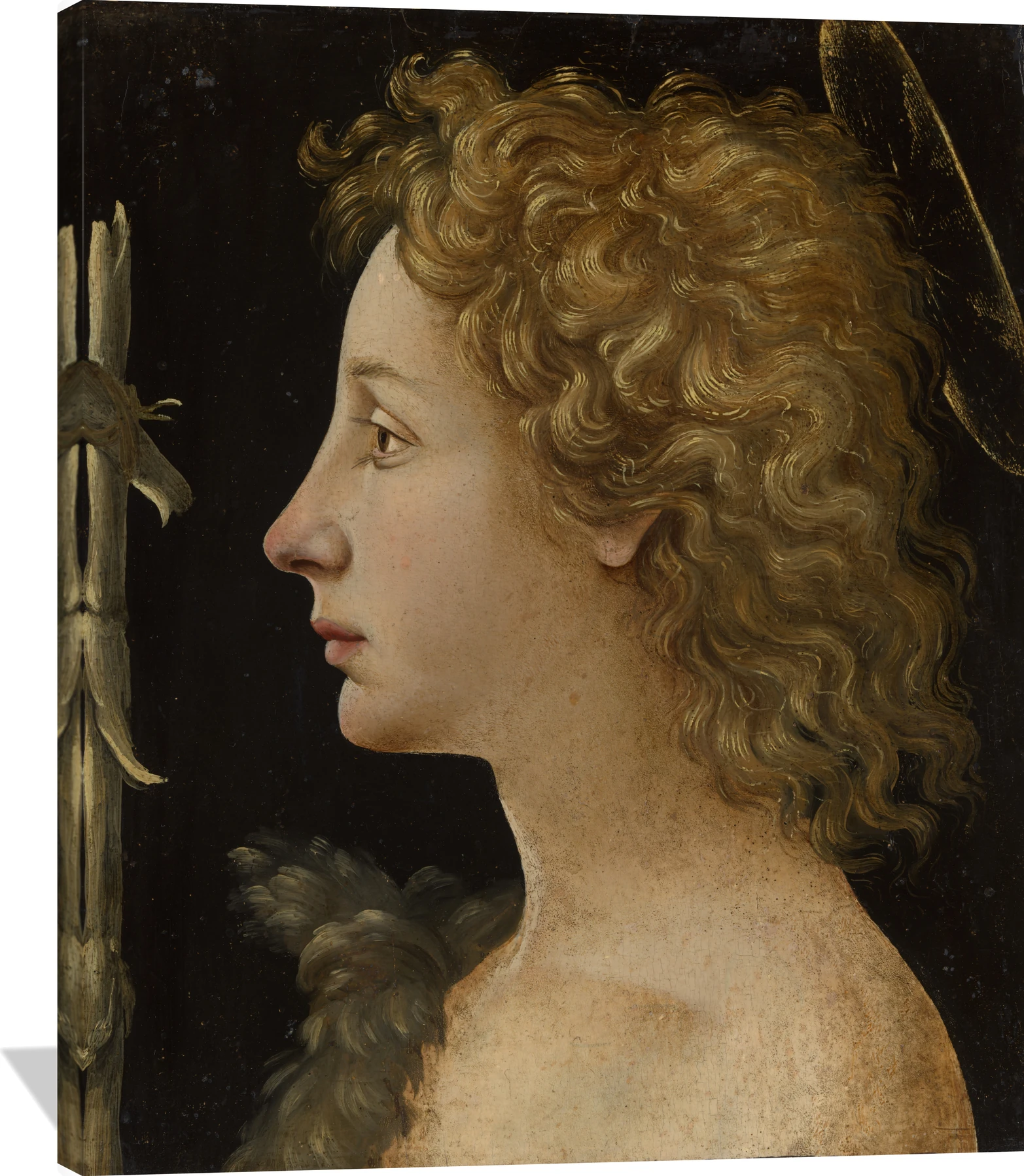
The Piero di Cosimo The Young Saint John the Baptist canvas captures the serene beauty of Renaissance devotion through delicate detail and luminous color. Against a deep, shadowed background, the youthful saint’s golden curls and soft flesh tones radiate quiet grace, while subtle highlights in bronze and ivory evoke divine light and introspection.
This exquisite wall art brings timeless sophistication to any interior—ideal for a study, entryway, or refined living space. A masterwork by the Florentine painter Piero di Cosimo (1462–1522), this canvas print embodies the harmony and spiritual depth that define Renaissance artistry, offering a contemplative focal point for modern and classical décor alike.
Piero di Cosimo (Piero di Lorenzo di Piero d’Antonio) was an Italian Renaissance painter active in Florence from 1462 to 1522. Recognized for his imaginative temperament and technical finesse, he developed a singular visual language that blended classical mythology, religious devotion, and an often fantastical interpretation of the natural world.
Artistic Style
Piero di Cosimo’s style is distinguished by its atmospheric luminosity, delicate modeling, and inventive compositions. Influenced early by Cosimo Rosselli and later by Northern European painting, he combined precise detail with a poetic, sometimes dreamlike sensibility. His works frequently reveal a fascination with nature, from lush landscapes to intricate depictions of flora and fauna.
Notable Subjects and Themes
His repertoire spans religious scenes, mythological narratives, and portraiture. Paintings such as The Discovery of Honey and The Liberation of Andromeda reflect his ability to merge classical storytelling with emotional nuance and visual whimsy. In devotional works, he brought a contemplative warmth and expressive clarity that set him apart from his contemporaries.
Cultural Significance
Piero di Cosimo holds a distinctive place in Renaissance art for his unconventional imagination and innovative approach to narrative painting. His blend of humanist curiosity and artistic experimentation influenced later generations and secured his legacy as a painter of exceptional sensitivity and creative originality. Today, his surviving works remain celebrated for their mystery, refinement, and vivid reflection of Florence’s artistic vitality during the High Renaissance.