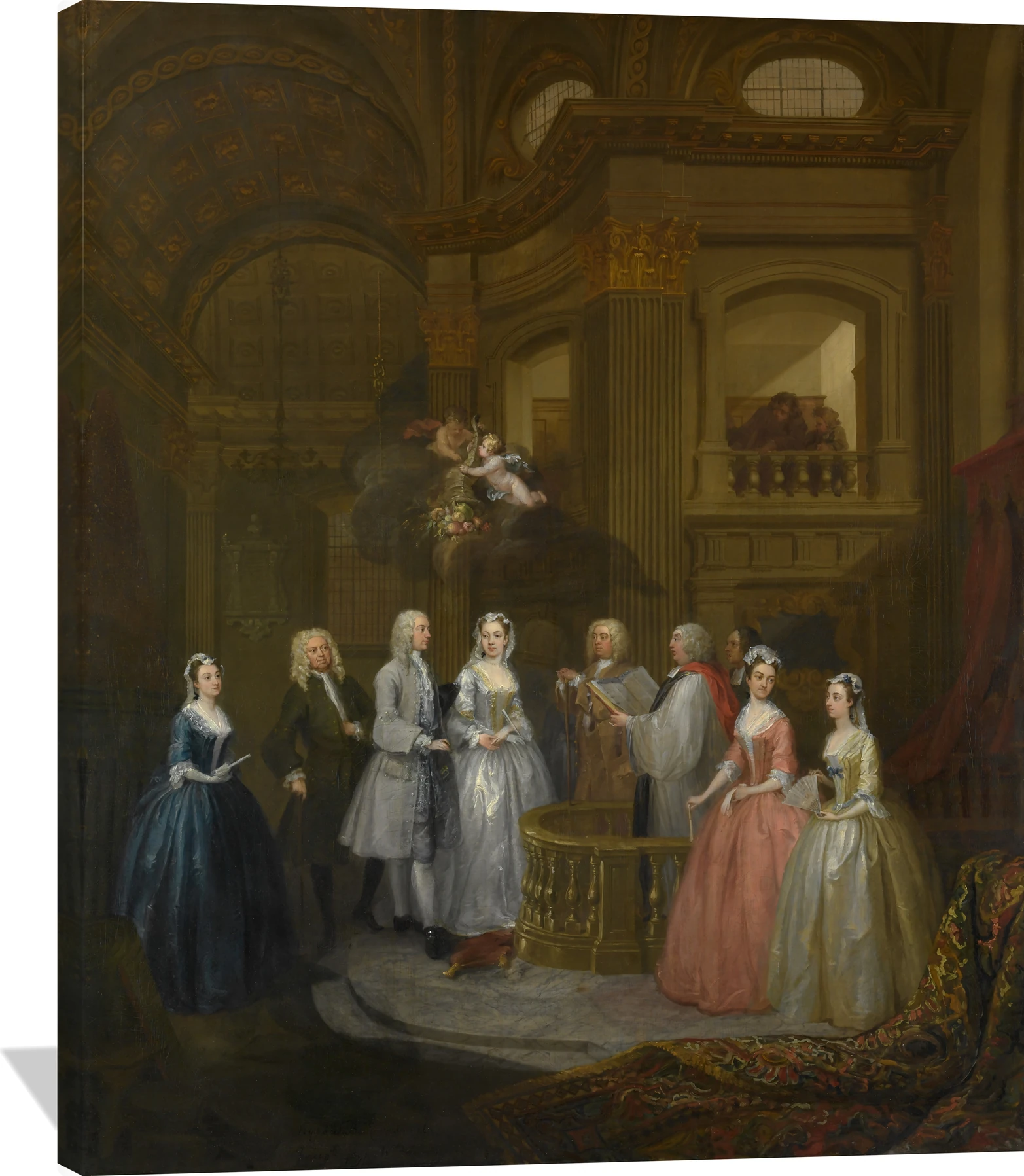
The William Hogarth The Wedding of Stephen Beckingham and Mary Cox canvas captures the elegance and ceremony of 18th-century London society. Set within a grand architectural interior, the artist’s refined palette of gold, ivory, rose, and deep blue brings warmth and sophistication to this timeless depiction of matrimony. Each figure is rendered with exquisite detail, creating a scene that feels both intimate and regal.
This premium canvas print adds a sense of history and grace to any space. Ideal for a living room, study, or entryway, this Hogarth wall art invites conversation and admiration, celebrating the beauty of tradition through masterful composition and light.
William Hogarth (1697–1764) was a pioneering British artist whose vivid observations of London life helped shape the visual culture of the eighteenth century. Active throughout his life in London, he merged sharp social critique with a dynamic painterly style, creating works that remain influential for their wit, moral commentary, and narrative depth.
Artistic Style and Approach
Hogarth’s work blended portraiture, satire, and narrative invention into a uniquely expressive visual language. His technique combined lively brushwork with meticulously observed detail, resulting in scenes that feel both theatrical and grounded in everyday reality. His mastery of sequential storytelling positioned him as a forerunner of modern graphic novels and serialized imagery.
Subjects and Themes
Hogarth is best known for his moral and social satires, portraying the complexities of urban life with equal measures of humor and critique. Whether depicting the follies of fashionable society or the hardships of the working class, he infused each composition with psychological nuance and symbolic richness. Works such as A Rake’s Progress and Marriage A-la-Mode reveal his fascination with human behavior, vice, ambition, and the consequences of moral choice.
Cultural and Historical Significance
As one of Britain’s most influential eighteenth‑century artists, Hogarth played a central role in shaping the national visual identity. His satirical cycles offered a vivid commentary on social structures, making him a key voice in the development of modern British art. Hogarth also championed artistic rights, contributing to early copyright protections that supported the creative independence of painters and printmakers.
Celebrated for his innovative narrative vision and his incisive engagement with the society around him, William Hogarth remains a defining figure in the history of European art, admired for works that are as insightful today as they were in his own time.