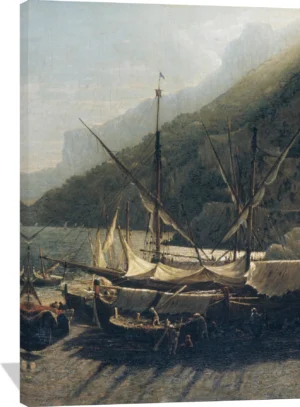
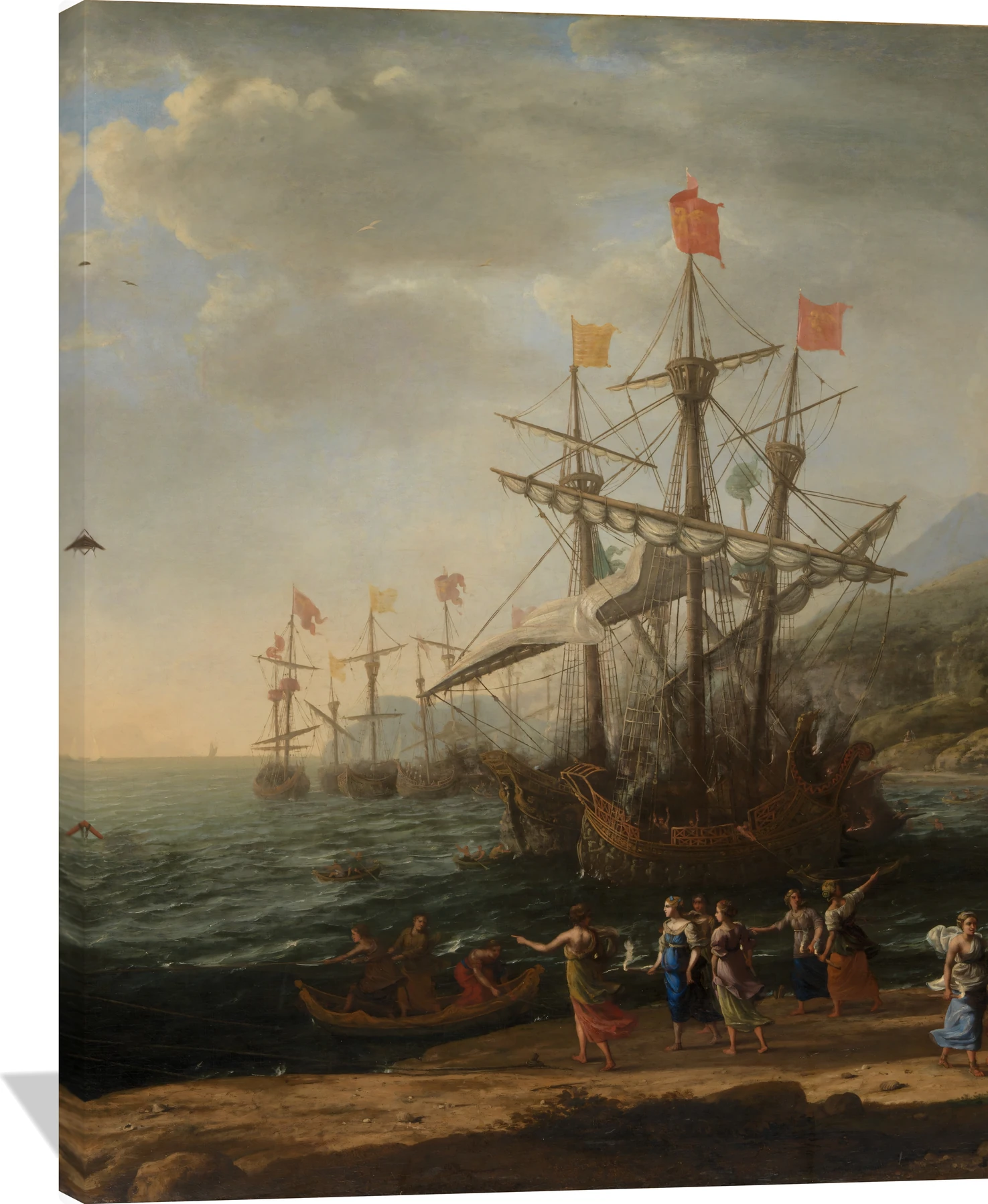
Claude Lorrain’s The Trojan Women Setting Fire to Their Fleet canvas captures a dramatic moment of myth and emotion, rendered in luminous tones of gold, blue, and soft earth. The sweeping seascape and majestic ships glow beneath a vast sky, while figures on the shore animate the scene with movement and tension, hallmarks of Lorrain’s poetic mastery of light.
This museum-quality wall art brings classical elegance and serene grandeur to any space. Ideal for a living room, study, or entryway, this Claude Lorrain canvas print evokes timeless beauty and the power of myth through refined Baroque composition and atmospheric depth.
Claude Lorrain (Claude Gellée) was a French painter born in Chamagne around 1604/5 who spent most of his life in Rome, where he became one of the most influential landscape artists of the seventeenth century. Celebrated for his poetic vision and masterful treatment of natural light, he helped define the foundations of the ideal landscape, shaping the direction of European painting for generations.
Artistic Style and Vision
Lorrain’s work is distinguished by its harmonious compositions, serene atmosphere, and luminous golden light. His paintings often feature balanced vistas where natural and architectural elements coexist with effortless grace. The subtle gradation of light across sky and water creates a sense of depth and tranquility that became his signature. His refined technique made him a central figure of the classical landscape tradition and a pioneer in establishing landscape as a subject worthy of high art.
Subjects and Themes
Although best known for landscapes, Lorrain frequently incorporated small figures drawn from mythological, biblical, or pastoral narratives. These narrative elements, often secondary to the surrounding scenery, allowed him to explore themes of journey, contemplation, and the relationship between humanity and nature. Works such as Harbor Scene at Sunset or Landscape with the Marriage of Isaac and Rebecca exemplify his ability to blend storytelling with expansive, idealized environments.
Legacy and Cultural Significance
Lorrain’s influence extended far beyond his lifetime. His paintings inspired later generations of European artists, particularly in England, where his serene compositions shaped the aesthetic of the picturesque and guided landscape painters such as Turner and Constable. His meticulous drawing practice, documented in his so‑called Liber Veritatis, also set a precedent for cataloging one’s own works, emphasizing authenticity and artistic integrity.
Today, Claude Lorrain remains revered for his ability to transform nature into a realm of balance and radiance. His mastery of atmospheric light and the poetic grandeur of his idealized landscapes continue to resonate, securing his place as one of the most important figures in the history of landscape painting and a foundational artist in the evolution of the European visual imagination.