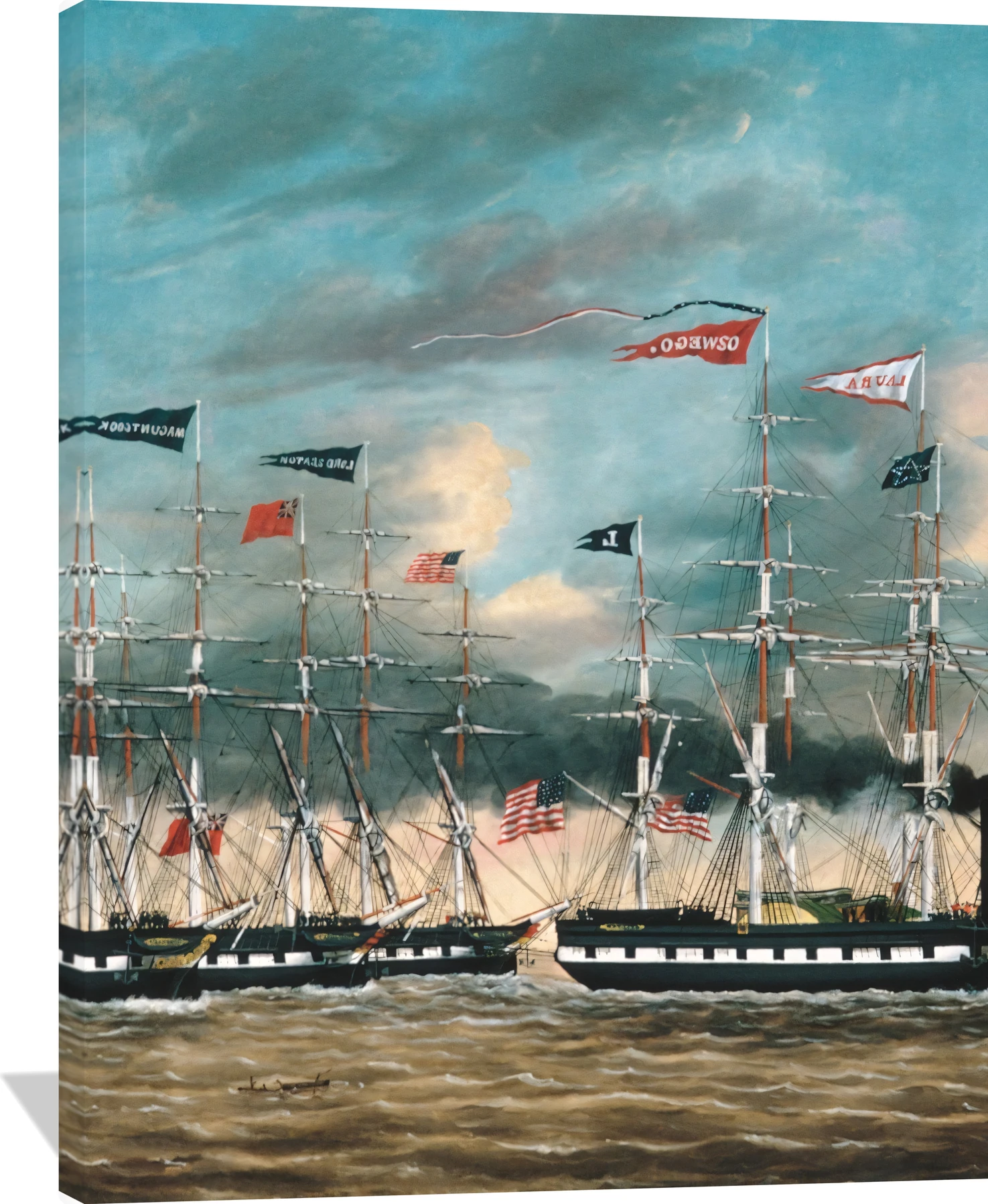
The James Guy Evans The Tow Boat Conqueror canvas captures the commanding presence of 19th-century maritime power. With its sweeping blue sky, dynamic clouds, and the rich contrast of deep navy, crimson, and white, this nautical scene evokes both motion and mastery. Evans, active ca. 1835–60, brings precision and drama to every mast and flag, celebrating the age of steam and sail.
This premium canvas print adds timeless sophistication to any living room, study, or entryway. Ideal for admirers of maritime history and classic seascapes, The Tow Boat Conqueror invites a sense of exploration and grandeur into your space.
James Guy Evans (active ca. 1835–60) was a distinguished American maritime painter whose vivid portrayals of seafaring life captured the spirit of the nineteenth-century Gulf Coast and Atlantic waterways.
Artistic Style
Evans is celebrated for his precise handling of marine subjects, blending documentary clarity with atmospheric nuance. His works often feature carefully rendered vessels set against dynamic skies and detailed coastal settings, creating a compelling balance between technical accuracy and expressive mood.
Notable Subjects and Themes
Drawing on his own maritime experiences, Evans portrayed ships with a characteristic sensitivity to rigging, proportion, and movement. He frequently depicted naval engagements, bustling harbors, and ships at anchor or under sail. Scenes such as The Battle of Lake Borgne and other historical maritime compositions highlight his ability to pair narrative significance with painterly finesse.
Historical Significance
Evans contributed to a formative era of American marine painting, documenting a rapidly evolving maritime world shaped by commerce, naval conflict, and expanding trade routes. His paintings serve as valuable historical records, offering insight into shipbuilding practices and coastal life during a period of national growth. Though not as widely known as some contemporaries, his work remains respected for its authenticity, detail, and expressive quality.
Today, Evans is appreciated for his meticulous maritime draftsmanship and his enduring role in preserving the visual history of nineteenth-century American seafaring culture.