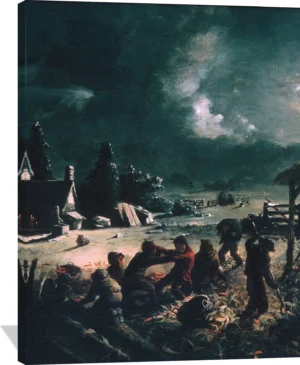

The Herri met de Bles The Temptation of Saint Anthony canvas captures a mesmerizing vision of faith and struggle rendered in rich earth tones, smoky reds, and cool blues. In this fantastical landscape, surreal architecture and flickering fires frame Saint Anthony’s spiritual trial, blending the sacred and the strange in a scene alive with detail and mystery.
This masterful Netherlandish composition brings a dramatic, contemplative energy to any space. As a fine art canvas print, it lends depth and historical intrigue to a living room, study, or entryway—an evocative conversation piece that bridges Renaissance imagination with timeless interior style.
Herri met de Bles (Netherlandish, Bouvines 1480?–after 1550) was a distinguished painter of the Northern Renaissance, celebrated for his inventive landscapes and evocative narrative settings. Active during a period of flourishing artistic exchange across the Low Countries, he developed a distinctive visual language that blended precise observation with imaginative detail.
Artistic Style
Renowned for his sweeping panoramic vistas, Herri met de Bles combined meticulous Northern European naturalism with lyrical, sometimes fantastical elements. His compositions are often anchored by a characteristic high viewpoint, allowing scenes to unfold in layered depth. A subtle, atmospheric light and richly textured surfaces further define his signature approach, contributing to the enduring appeal of his work.
Subjects and Themes
Religious narratives appear frequently in his paintings, set within expansive landscapes that invite close study. The small yet symbolic owl often included in his scenes has become one of his most recognizable motifs, reinforcing his identity as a painter attentive to allegory and visual wit. Even when addressing spiritual themes, he grounded his compositions in vivid depictions of everyday life, rural architecture, and the natural world.
Legacy and Significance
Herri met de Bles is regarded as a key figure in the development of sixteenth‑century landscape painting. His ability to merge narrative storytelling with atmospheric settings influenced later generations and helped shape the emerging tradition of landscape as an independent artistic genre. His work remains valued for its imaginative detail, its balance between realism and invention, and its role within the broader evolution of Northern Renaissance art.