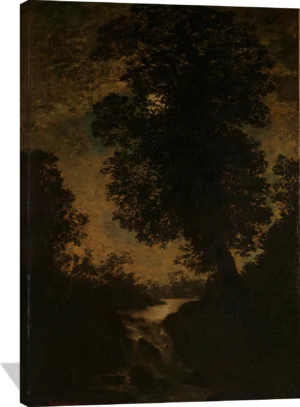
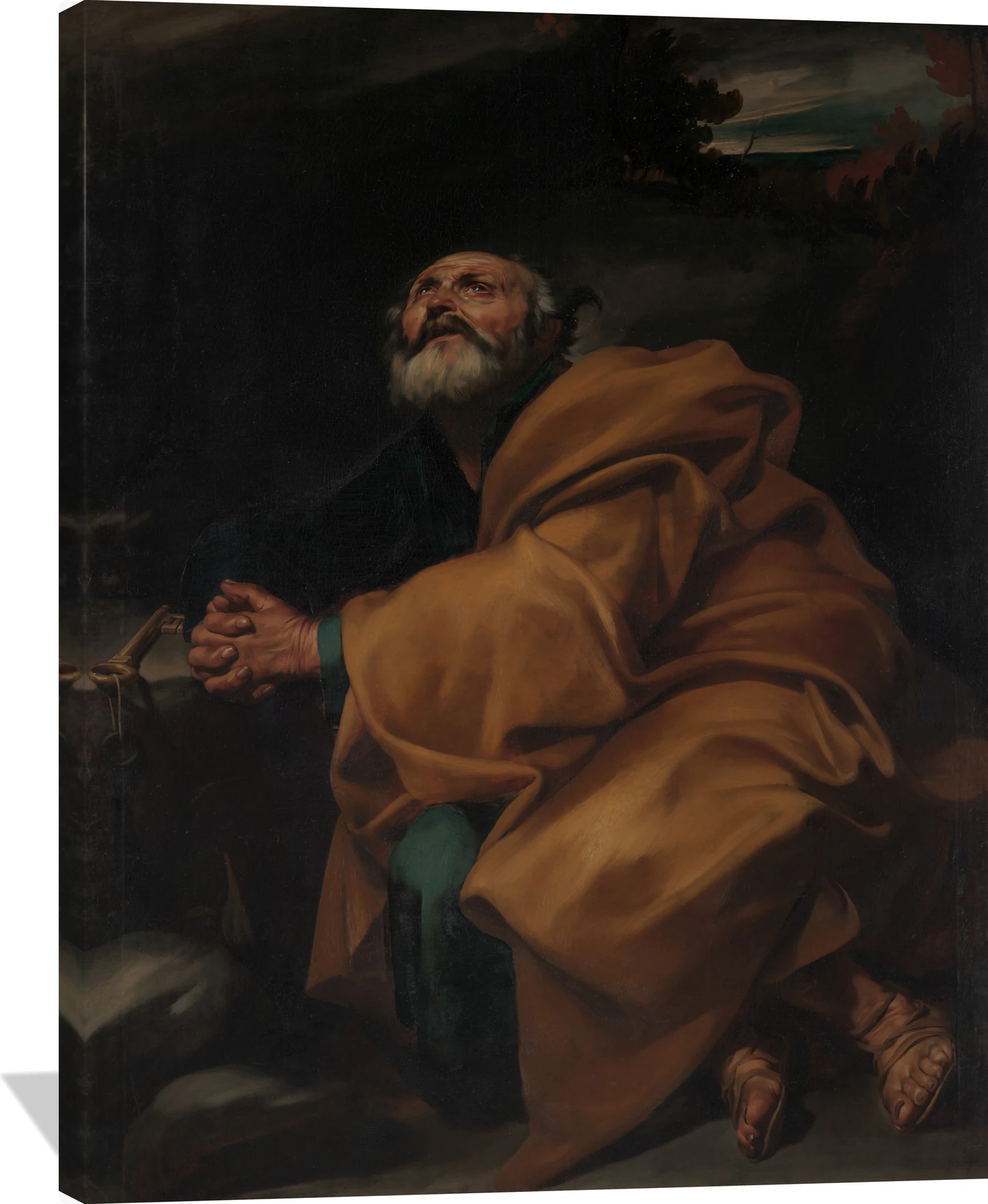
Jusepe de Ribera, known in Italy as Lo Spagnoletto, was a Spanish painter born in Játiva in 1591 who built his career in Naples, where he lived until his death in 1652. Celebrated for his powerful realism and emotional intensity, Ribera became one of the foremost interpreters of the Baroque style in southern Italy.
Artistic Style
Ribera’s work is characterized by dramatic chiaroscuro, tactile surfaces, and an unflinching commitment to naturalism. His paintings often feature strong contrasts of light and shadow, giving his figures a sculptural presence that heightens their psychological depth. Influenced by Caravaggio yet distinct in his gritty precision, Ribera emerged as a leading voice in the Neapolitan school.
Subjects and Themes
He is especially known for intense portrayals of saints, philosophers, and martyrs, capturing moments of revelation, suffering, or contemplation. Works such as The Martyrdom of Saint Bartholomew and The Clubfoot reflect his ability to portray humanity with both empathy and stark realism. Ribera’s figures often bear the marks of lived experience, grounding spiritual and mythological subjects in the physical world.
Legacy
Ribera played a central role in shaping Baroque painting in Naples, influencing generations of Italian and Spanish artists. His command of naturalistic detail and emotionally charged composition secured his reputation as one of the era’s most compelling painters. Today, his work is celebrated for its bold technique, profound expressiveness, and enduring contribution to the visual language of the Baroque.